Why "Bad" Can Be Better - The Region Beta Paradox
Based on Better Than Yesterday's video on YouTube. If you like this content, support the original creators by watching, liking and subscribing to their content.
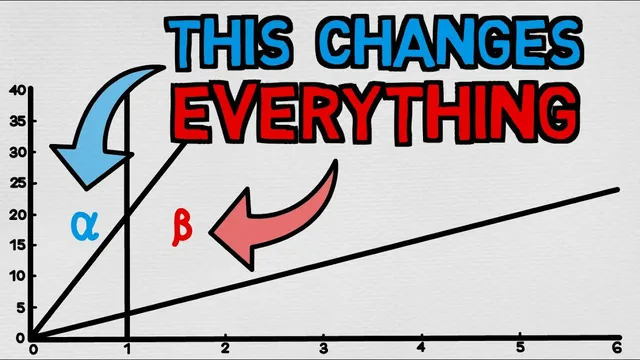
The “region beta paradox” shows how crossing a boundary can flip outcomes: a farther option can be faster when it changes the strategy used.
Briefing
“Bad” can be better—not because people should seek misery, but because mild discomfort often fails to trigger the kind of change that life improvements require. The core insight is the “region beta paradox,” a behavioral pattern where situations that feel “not too bad” can keep people stuck longer than situations that are clearly worse. That matters because many people tolerate sub-optimal jobs, relationships, housing, or health conditions until the pressure becomes unbearable—at which point action finally arrives.
The paradox is illustrated with a simple commute model. Bob lives 1 mile from work, so he walks at about 3 miles per hour, taking roughly 20 minutes. For groceries, the nearest store is 2 miles away. Walking would take about 40 minutes, so he cycles instead at about 15 miles per hour, cutting the trip to around 8 minutes. The result is counterintuitive: Bob reaches the grocery store faster than his workplace. If his workplace were 2 miles away—switching from walking to cycling—he’d get there sooner. In “region beta,” the choice of a different mode (walking vs. cycling) makes the “worse-looking” option actually faster than the “better-looking” one.
That same logic is applied to personal life decisions. Consider a person trapped in a dead-end job with mediocre pay but manageable workload and decent benefits. Their apartment is flawed—leaky pipes and mold—but sits in a good neighborhood with friendly neighbors. Their relationship includes frequent arguments and limited shared interests, yet the partner cooks well and there are mutual friends. Health issues exist too—fatigue and lower back pain—but hobbies still happen, just with less energy. Each element is “passable,” creating a comfortable middle ground. The argument is that this middle ground reduces urgency: the person doesn’t feel enough pain to justify the disruption of searching, negotiating, relocating, or seeking medical help.
Change, the transcript argues, requires “activation energy.” Psychological pain acts like a switch. When discomfort crosses a personal threshold, people mobilize—job hunting, moving, ending relationships, or pursuing treatment. When discomfort stays below that line, adaptation kicks in. People normalize the situation, tolerate it, and lose momentum toward better options.
A frog-in-boiling-water analogy reinforces the point: gradual worsening can be endured until it becomes fatal, while sudden heat triggers escape. The transcript warns that staying in “region beta” for too long can damage mental health—frustration, hopelessness, even depression—and can culminate in a midlife crisis when someone realizes years have passed in the wrong job, city, or relationship.
The practical takeaway is not to deliberately make life worse, but to identify areas that are sub-optimal and confront the cost of inaction. After acknowledging dissatisfaction and limiting beliefs, the transcript recommends “fear setting,” popularized by Tim Ferriss. The exercise asks people to define what they fear, list steps to reduce those risks, outline ways to repair damage if the worst happens, weigh benefits even with partial success, and—most importantly—calculate the cost of not acting over the next 6 months, 1 year, or 3 years. The goal is to push “mild discomfort” into the kind of clarity that triggers decisive change—so life can improve rather than slowly stagnate.
Cornell Notes
The “region beta paradox” describes how a seemingly worse situation can lead to better outcomes when it forces a different choice. Bob’s commute shows this: a 1-mile workplace is walked (about 20 minutes), while a 2-mile grocery trip is cycled (about 8 minutes), so the farther destination can be faster. The transcript extends the idea to life decisions: when circumstances are “not so bad,” people adapt and avoid the disruption required for change, staying in a comfortable middle ground. Psychological pain works like a threshold—action tends to happen only when the cost of staying exceeds the cost of changing. “Fear setting” is offered as a tool to surface the real cost of inaction and reduce fear enough to move.
What is the “region beta paradox,” and why does it produce counterintuitive results?
How does “mild discomfort” keep people from changing their lives?
What does the frog-in-boiling-water analogy add to the argument?
What kinds of “sub-optimal but passable” circumstances are used as examples?
How does “fear setting” work, and which step is treated as most important?
What practical conclusion does the transcript draw about when to act?
Review Questions
- How does the commute example demonstrate a threshold effect, and what real-life decision does that resemble?
- Why does psychological pain function as a trigger for action in the transcript’s framework?
- In fear setting, how can calculating the cost of inaction change someone’s willingness to take a risk?
Key Points
- 1
The “region beta paradox” shows how crossing a boundary can flip outcomes: a farther option can be faster when it changes the strategy used.
- 2
People often stay stuck when circumstances are “passable,” because the discomfort never reaches the personal threshold that triggers action.
- 3
Change requires activation energy; psychological pain supplies that energy only after it becomes intense enough.
- 4
Gradual decline can be endured until it becomes severe, which is why “not so bad” situations can still lead to long-term harm.
- 5
Staying in a comfortable middle ground can contribute to frustration, hopelessness, depression, and later life regret or midlife crisis.
- 6
“Fear setting” helps convert vague fear into concrete planning by mapping worst cases, prevention steps, repair options, and benefits.
- 7
The most decisive part of fear setting is estimating the cost of inaction over time, which often reveals that tolerating the status quo is the bigger risk.