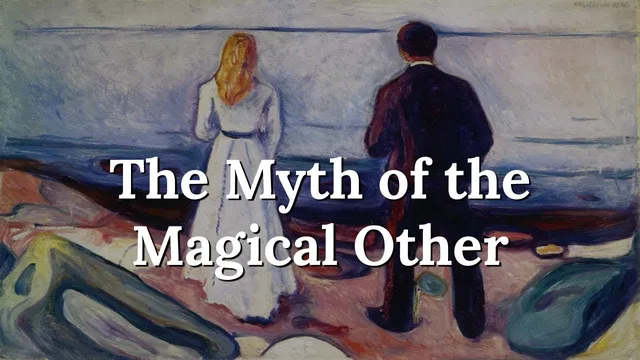
Why do Most Relationships Fail? - The Myth of the Magical Other
Based on Academy of Ideas's video on YouTube. If you like this content, support the original creators by watching, liking and subscribing to their content.
The “myth of romantic love” treats a partner as a cure-all source of lifelong fulfillment, setting unrealistic expectations that often collapse after the honeymoon phase.
Briefing
Most relationships fail because people treat romance as a cure-all—an emotional shortcut to wholeness—rather than as a relationship between two real, separate adults. The central claim is that the “myth of romantic love” pushes partners to expect a “Magical Other”: one perfect person who will repair past wounds, meet every need, and deliver lifelong harmony. When that fantasy collides with ordinary human limitations, resentment, disappointment, and power struggles often replace early infatuation.
The transcript ties this pattern to both culture and psychology. Popular media repeatedly rewards the story of a lonely person finding the perfect match and then living happily ever after, intensifying the belief that romantic love is the main source of meaning. Psychologist James Hollis calls the imagined savior figure the “Magical Other,” arguing that as traditional anchors of purpose—religion, family, community—erode, the search for romance becomes even more intense. That longing can also originate in childhood when steady parental affection and dependable caregiving were missing, leaving adults with insecurity, fragile identity, and emptiness. In that setup, a relationship can become a substitute for the missing “mirroring” of a loving parent, with romantic attachment taking on the role of emotional repair.
Early romance can feel like proof of the myth. The transcript describes how dopamine and oxytocin, along with evolved mating instincts, amplify illusion: partners idealize each other, overlook flaws, and experience euphoria that can make life seem complete. It also likens falling in love to regression—an ego-boundary collapse that resembles the psychological merging of infancy. But as reality intrudes, the “Magical Other” dissolves into an all-too-human partner with habits, rough edges, and unmet needs. Feelings like indifference or disdain are framed as normal in long-term relationships; the problem arises when people interpret those feelings as evidence that the fantasy partner has failed them.
At that point, the transcript describes a destructive dynamic. One partner may try to control or mold the other into an idealized image, while the other—fearing abandonment—tries to earn love through submission and constant caretaking. Hollis describes this shift as moving from “naive relatedness” into “joustings of power,” often through tactics like criticism, withdrawal, sabotage, or emotional and sexual disengagement. Even when these behaviors are not fully conscious, the relationship becomes a battleground for compliance rather than mutual growth.
The proposed remedy is to discard the myth and stop outsourcing fulfillment. The transcript argues that healthy love depends on self-love: recognizing that people are “inescapably alone” in the deepest sense—born alone, die alone, and never fully transcend separateness. Meaning comes from personal growth, vocation, hobbies, friendships, and goals. With that foundation, a partner can enrich a shared journey without being treated as salvation. Genuine love, it concludes, respects individuality and can even seek growth “at the risk of separation or loss,” because the union is strengthened by two people who can live without each other and choose each other anyway.
Cornell Notes
The transcript argues that most relationship breakdowns stem from the “myth of romantic love,” which promises that one perfect partner—the “Magical Other”—will fix personal wounds and deliver lifelong happiness. Early infatuation feels like confirmation because biology and psychology intensify idealization and blur ego boundaries, but reality eventually reveals ordinary human flaws and unmet needs. When partners cling to the fantasy, disappointment turns into resentment and power struggles: one person tries to control or reshape the other, while the other tries to earn safety through submission. The remedy offered is to abandon the search for salvation in romance and cultivate self-love and personal meaning, accepting that separateness is permanent. Healthy love then becomes mutual enrichment rather than dependency or emotional rescue.
What is the “myth of romantic love,” and why does it predict relationship failure?
How do early-stage feelings of love create a false sense of certainty?
Why does the “Magical Other” search often begin before adulthood?
What does the transcript say happens when reality intrudes on the honeymoon fantasy?
How do power struggles emerge from the Magical Other fantasy?
What is the proposed alternative to romantic salvation?
Review Questions
- How does the transcript connect childhood caregiving deficits to adult romantic dependency or idealization?
- What mechanisms (biological and psychological) make early love feel uniquely certain, and how does that certainty break down?
- Describe the control/submission dynamic the transcript links to the Magical Other fantasy. What triggers it and what behaviors sustain it?
Key Points
- 1
The “myth of romantic love” treats a partner as a cure-all source of lifelong fulfillment, setting unrealistic expectations that often collapse after the honeymoon phase.
- 2
Popular culture’s “perfect match” narratives intensify the belief that romance—not other sources of meaning—should repair personal history and provide salvation.
- 3
Early infatuation is amplified by neurochemistry (dopamine and oxytocin) and mating instincts, which encourage idealization and blur ego boundaries.
- 4
When reality reveals ordinary human flaws and unmet needs, people who cling to the fantasy may respond with resentment rather than adjusting to the normal ebb and flow of long-term love.
- 5
A common destructive pattern is power struggle: one partner tries to control or reshape the other, while the other tries to prevent abandonment through submission and constant caretaking.
- 6
Healthy love is framed as mutual enrichment between two separate individuals, not dependency or emotional rescue.
- 7
Self-love and personal meaning—built through growth, work, hobbies, friendships, and goals—are presented as the foundation for sustaining realistic, fulfilling relationships.