Why Do Stupid People Think They're Smart? The Dunning Kruger Effect (animated)
Based on Better Than Yesterday's video on YouTube. If you like this content, support the original creators by watching, liking and subscribing to their content.
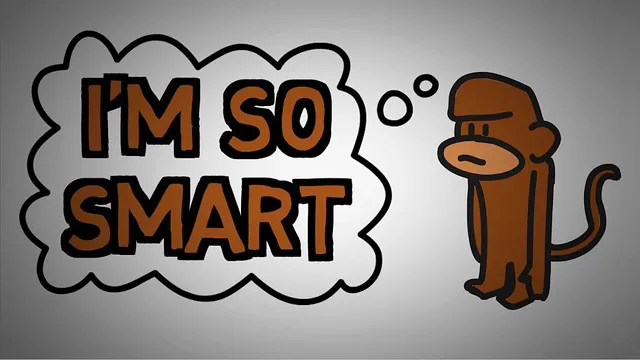
Low performers often overestimate their abilities because they lack the skills needed to recognize their own incompetence.
Briefing
A man who robbed two Pittsburgh banks in broad daylight believed lemon juice on his face would make him invisible to security cameras—then acted genuinely shocked when the footage proved otherwise. The story is a punchy entry point to a well-studied pattern: people with low skill often show high confidence, not because they’re right, but because they lack the knowledge needed to judge their own performance.
In lab work tied to social psychologists David Dunning and Justin Kruger, participants took tests in areas such as grammatical writing, logical reasoning, and humor. After receiving their scores, they estimated both their overall performance and how they ranked relative to other students. Those who scored lowest consistently overestimated how well they did—sometimes dramatically—thinking they were above average despite landing near the bottom. The mismatch wasn’t just inaccurate self-belief; it reflected a deeper problem of self-awareness. Low performers lacked the very skills required to recognize their incompetence.
High performers showed the mirror-image error. Because the tasks came easily to them, they assumed others would find them just as easy. Their estimates were therefore less inflated than the low scorers’—but they still tended to underestimate their relative standing, even when they were truly top performers.
This confidence gap isn’t confined to academic tests. The same dynamic appears in talent competitions such as American Idol: auditioners who are bad at singing often don’t realize how far off they are, leading to disappointment when rejection follows. Broader surveys point to the same self-evaluation bias—most people rate themselves as better than average drivers, and even older adults place themselves among the best. Professors show a similar tendency, with a large majority believing they outperform colleagues.
A key explanation uses a “knowledge of the field” visualization. An amateur photographer (Mike) knows only a small slice of photography, so he also fails to grasp how large the field really is. With limited understanding, he assumes he knows most of what matters, which inflates confidence. A more experienced photographer, by contrast, recognizes the existence of a much wider “gray area” of what remains to learn—so their self-assessment is more grounded. Experts can still misjudge, but often in the opposite direction: they may assume others know what they know, especially when other people display confidence.
The practical takeaway is straightforward: confidence should be treated as a hypothesis, not a verdict. The most reliable antidote is education—especially exposure to what you don’t know. In the Dunning-Kruger studies, even minimal tutoring helped low performers estimate their abilities more accurately. The central lesson is a paradox: as knowledge grows, awareness of complexity grows too, and certainty often falls. That humility is not weakness; it’s a sign the mind can finally see the boundaries of its own understanding.
Cornell Notes
Low-skill people often display high confidence because they lack the meta-knowledge needed to recognize their own incompetence. In Dunning and Kruger’s experiments, students who scored worst on tasks like writing, logic, and humor overestimated both their scores and their rank. Top performers were more accurate in absolute terms but tended to underestimate their relative standing because they assumed others would find the tasks equally easy. The effect generalizes beyond tests—appearing in settings like talent auditions and in everyday self-ratings such as “better than average” driving. The best countermeasure is learning: even small amounts of targeted tutoring can improve self-assessment by revealing what remains unknown.
What pattern did Dunning and Kruger find when participants estimated their own test performance?
Why do low performers overestimate themselves in the first place?
How does the “amateur vs. expert photographer” model explain the effect?
Where else does the Dunning-Kruger pattern show up besides lab tests?
What helps people correct their self-assessments?
Review Questions
- In Dunning and Kruger’s findings, how do low scorers’ self-estimates differ from high scorers’ self-estimates, and why?
- Explain the “gray area” idea using the amateur vs. professional photographer example—what does each person fail to account for?
- What kinds of interventions (e.g., tutoring) improve self-estimation accuracy, and what mechanism does the transcript suggest is responsible?
Key Points
- 1
Low performers often overestimate their abilities because they lack the skills needed to recognize their own incompetence.
- 2
High performers can underestimate their relative rank when they assume others find the tasks as easy as they do.
- 3
The effect generalizes beyond cognitive tests, showing up in talent auditions and everyday “better than average” self-ratings.
- 4
Confidence can be distorted by limited knowledge of how large and complex a field really is.
- 5
Experts may misjudge others by assuming other people have similar knowledge, especially when others display confidence.
- 6
Targeted learning and tutoring can improve calibration by making people aware of what they don’t know.