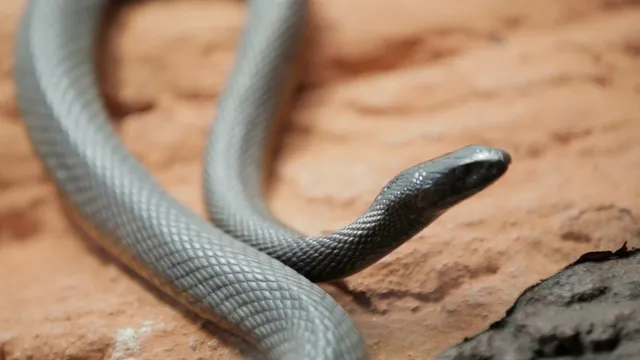
Why Do Venomous Animals Live In Warm Climates?
Based on Veritasium's video on YouTube. If you like this content, support the original creators by watching, liking and subscribing to their content.
Warm climates correlate with higher counts of venomous species largely because most venomous animals are ectotherms and warm regions support more ectotherm diversity.
Briefing
Warm climates are packed with venomous animals—at least in raw counts—and that pattern matters because it shapes where people face the highest risk of medically significant bites and stings. A global temperature map lines up broadly with a country-by-country tally of venomous species, with Mexico leading the list, followed by Brazil and Australia. But the apparent “hotter equals more venom” story doesn’t hold up cleanly once the biology of venom and the geography of species are separated.
A key biological reason is that most venomous animals are ectotherms—organisms whose body temperature depends on the environment. Ectotherms can’t sustain long bursts of activity the way warm-blooded animals can, so many evolved venom as a survival strategy instead of relying on constant chasing or rapid escape. Warm regions tend to support greater diversity of ectotherms, which in turn increases the number of venomous species. Venom itself is also not a single-purpose toxin: in many fang-bearing animals it evolved from saliva and functions first as a digestive aid, liquefying prey so it can be consumed. Over time, some lineages repurposed or amplified that cocktail of proteins into neurotoxins, hemotoxins, and other specialized components.
Yet Australia illustrates why temperature alone can mislead. In southern Australia, the most venomous snakes are found in colder areas, while tropical regions around Darwin show fewer venomous snakes—mostly pythons and harmless colubrids. The explanation offered is historical: roughly 20 million years ago, an itinerant sea snake carrying venom arrived as Australia drifted toward Asia. With few or no snakes already present, venomous lineages radiated through the continent, and later-arriving non-venomous snakes filled other niches. That kind of “who arrived first” effect can override climate signals.
On a global scale, the transcript argues that the proportion of venomous species may not be higher in warm places; instead, warm regions simply contain vastly more animals overall. So the headline pattern—more venomous species in hot countries—may reflect biodiversity and evolutionary history rather than heat directly driving venom evolution. Even after the ice ages, species distributions shifted: places like Ireland lacked snakes because ice sheets wiped out populations, and some warm islands such as Hawaii and Jamaica reportedly have no venomous snakes today, suggesting losses or failures of colonization.
The discussion ends by widening the mystery beyond distribution. Some species produce extremely potent venom while others have weaker effects, and some recently evolved snake lineages have actually lost venom production altogether—despite venom being an ancestral trait. The cost of making venom may not be dramatically higher than producing saliva, so giving it up remains puzzling. Overall, the strongest takeaway is that climate helps set the stage through ectotherm diversity, but evolutionary timing and historical contingencies often decide who ends up where—and how dangerous they are.
Cornell Notes
Venomous animals cluster in warm regions largely because most venomous species are ectotherms, and warm climates support more ectotherm diversity. Venom itself often evolved from saliva and initially helped digest prey, later becoming a weapon via protein “cocktails” that can target nerves or blood. Still, temperature-based patterns can fail locally: Australia shows a reverse trend where the most venomous snakes occur in colder southern areas, explained by a historical arrival of venomous sea snakes about 20 million years ago. Across the globe, ice ages, colonization history, and lineage-specific losses (including venom loss in some snakes) can matter as much as climate. The result is a distribution shaped by both ecology and deep evolutionary history.
Why does warmth correlate with venomous animals in broad country-level comparisons?
What’s the biological origin of venom, and why does that matter for understanding potency?
Why does Australia show an opposite pattern in snake venom distribution?
If heat doesn’t directly “create” venom, what else could explain the global pattern?
How do history and geography (ice ages, islands) complicate the climate story?
Why do some snakes lose venom, even though venom is ancestral?
Review Questions
- How do ectotherm biology and warm-climate diversity jointly explain why venomous species are more numerous in hot regions?
- What historical event is proposed to explain Australia’s reverse pattern of venomous snakes between tropical and southern areas?
- Why might the proportion of venomous species not increase with temperature even if raw counts do?
Key Points
- 1
Warm climates correlate with higher counts of venomous species largely because most venomous animals are ectotherms and warm regions support more ectotherm diversity.
- 2
Venom often evolved from saliva and initially helped digest prey, later becoming a defensive/offensive weapon through protein cocktails.
- 3
A simple “heat makes venom” explanation is questioned; a 10°C temperature change near room temperature would only modestly speed chemical reactions, making large evolutionary shifts unlikely.
- 4
Australia demonstrates that local patterns can contradict global temperature trends due to evolutionary history, including a proposed ~20 million-year-old arrival of venomous sea snakes.
- 5
Raw counts of venomous species can rise in warm countries because there are more animals overall, even if the proportion of venomous species stays similar.
- 6
Ice ages and colonization history can eliminate venomous lineages in places regardless of warmth, such as Ireland (ice-sheet wipeout) and some islands like Hawaii and Jamaica.
- 7
Some snake lineages have evolved to lose venom production despite venom being ancestral, leaving potency and loss as unresolved biological puzzles.