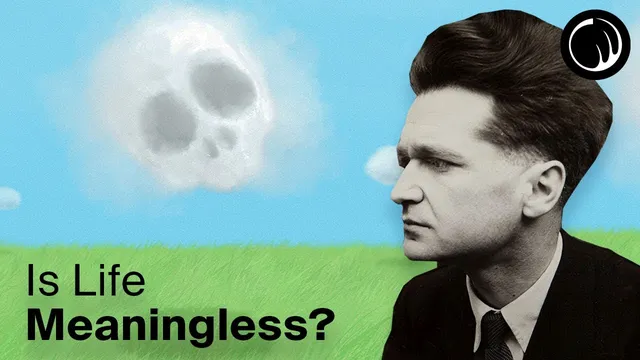
Why Do We Live For No (Real) Reason? - Nihilism & The Philosophy of Emil Cioran
Based on Pursuit of Wonder's video on YouTube. If you like this content, support the original creators by watching, liking and subscribing to their content.
Cioran’s nihilism is presented as anti-systematic: it relies on aphoristic, emotionally charged observation rather than a logically built worldview.
Briefing
Emil Cioran’s brand of nihilism isn’t presented as a tidy worldview built on reasoned premises; it’s portrayed as an anti-system—an aphoristic, emotionally charged practice that treats death, failure, and the collapse of meaning as the starting conditions of human life. The central claim is that once birth makes death unavoidable, the mind’s attempt to “solve” mortality becomes the engine of philosophy, religion, and science—and also the force that breaks them. In that sense, Cioran’s darkness matters because it targets the limits of explanation itself: reason can’t reconcile existence, but it can still generate a kind of lived response.
Cioran’s work is framed through recurring themes—despair, suffering, social isolation, absurdity, futility, decay, and death—shaped by a personal life marked by severe insomnia and depression. Writing becomes less a route to optimism than a therapy that lets him endure the very meaninglessness he describes. The transcript links this to a paradox: even if nihilism denies value, the act of writing and thinking still produces form, style, and intensity—making “meaning” out of what appears void. That tension is treated as the heart of his philosophy: the process of forming meaning may be inescapable, even for someone who insists that life lacks inherent reason.
Death is described as both the cause of life’s futility and the limit that reason hits immediately. Yet the transcript adds a sharper twist from Cioran’s most famous work, *The Trouble with Being Born*: the tragedy isn’t death itself but the memory of birth—the awareness that death follows. From there, philosophy becomes contemplation on failure: human endeavors are repeatedly equated with collapse, and the most “defeated” failure is optimism. Still, Cioran’s stance isn’t reduced to despair. The transcript emphasizes an attitude of embracing the absurd—loving “absolute uselessness,” using it against itself, and living anyway.
The discussion also wrestles with interpretation. One reading casts Cioran as someone who hates life, writing from bitterness. Another reading treats his candor as a refusal to lie—an austere honesty that implies a hidden acceptance of existence despite its bleakness. In either case, the transcript argues that Cioran’s work functions like an “invincible” posture: not by curing suffering, but by confronting the void and the inevitability of creating meaning from nothingness. For readers drawn to art that speaks to what people fear to think, Cioran’s writings are positioned as a rare, bracing confrontation with the depths of despair—paired with the unsettling comfort that consciousness forces everyone into the same confrontation, and that shared human experience can be found there.
(There is also a sponsorship segment for Blinkist, a service that condenses nonfiction books into short summaries.)
Cornell Notes
Emil Cioran’s philosophy is presented as an anti-system of aphorisms rather than a structured doctrine. Death—rooted in the awareness that birth guarantees mortality—undermines reason and collapses the projects of philosophy, religion, and science. Yet Cioran’s stance toward the absurd is not purely nihilistic resignation: he emphasizes loving “absolute uselessness,” accepting failure, and living anyway. The transcript highlights a paradox at the core of his work: even claims that life is meaningless are expressed through creative action, which inevitably generates form and meaning. That tension is framed as why his writing can feel both devastating and strangely redeeming.
Why does death become the central limit on reason in Cioran’s outlook?
How does the transcript connect Cioran’s personal life to his philosophical themes?
What does “loving the absurd” mean in the transcript’s account of Cioran?
What paradox does the transcript highlight about nihilism and creative expression?
How does the transcript interpret Cioran’s attitude toward life—bitterness or reverence?
What role does failure play in the transcript’s summary of Cioran’s philosophy?
Review Questions
- How does the transcript distinguish between death as an event and the “memory of birth” as the true tragedy in Cioran’s view?
- What paradox arises when nihilism is expressed through writing, and how does the transcript resolve (or complicate) that tension?
- Why does the transcript portray optimism as a kind of failure, and what alternative posture replaces it?
Key Points
- 1
Cioran’s nihilism is presented as anti-systematic: it relies on aphoristic, emotionally charged observation rather than a logically built worldview.
- 2
Death functions as the limit that collapses reason; birth guarantees mortality, making the awareness of death unavoidable.
- 3
In *The Trouble with Being Born*, the tragedy is framed as the memory of birth—knowing death follows—rather than death alone.
- 4
Writing is portrayed as both therapy and creative practice: it helps Cioran endure the meaninglessness he describes.
- 5
“Loving the absurd” means sustaining life after traditional reasons (moral, religious, social, aesthetic) lose their grip, by embracing uselessness and living anyway.
- 6
A central paradox is that nihilistic claims are communicated through creative meaning-making, suggesting meaning formation may be inescapable.
- 7
Cioran’s tone is interpreted in two ways—bitterness or reverent honesty—both grounded in a refusal to lie about life’s bleakness.