Why Do We Play Games?
Based on Vsauce's video on YouTube. If you like this content, support the original creators by watching, liking and subscribing to their content.
Bernard Suits defines a game as a voluntary attempt to overcome unnecessary obstacles, capturing why play differs from survival.
Briefing
Humans play games because real life is too ambiguous to deliver fast, legible rewards—so people build structured challenges that make goals, rules, and feedback clearer. Bernard Suits’ definition frames the core oddity: a game is a voluntary attempt to overcome unnecessary obstacles. That “unnecessary” part matters, because it turns uncertainty into something manageable, letting players pursue psychological payoff without the fog that surrounds everyday decisions.
A useful way to sort what counts as a game comes from computer game designer Chris Crawford. Crawford draws a line between toys, puzzles, and challenges: toys are interactive and fun but lack objectives; puzzles are objective-driven with no other agents; competitions involve other agents but forbid interference; full games allow interaction and interference between agents. Under that framework, life itself can be treated as a game—interactive, goal-oriented, and full of other agents—yet the rules are complicated, goals are often indeterminate, and feedback is delayed or unclear. In life, it can take years to learn whether a job choice was right, whether a relationship move helped, or whether a conversation landed well. Games, by contrast, compress time and clarify causality.
That compression helps explain why sports and games can feel especially rewarding. The video connects play to Maslow’s hierarchy of needs: when basic safety and survival needs are threatened, higher motivations like exploration and confidence matter less. Play tends to flourish when lower-tier needs are met. But even when play isn’t strictly “necessary” for brain development, it appears to support learning and growth. Evidence from animal studies—such as juvenile rats deprived of play—suggests play may influence brain development, including structures like the cerebellum, though the case isn’t airtight because other interventions can produce similar outcomes (a concept called equifinality).
The discussion then pivots to why games are so good at delivering the rewards life withholds. In many games, the next move is knowable: Bomberman power-ups have consistent effects, poker hands have clear rankings, and team sports often use visible roles and color-coded coordination. Life rarely offers that certainty. Games therefore let people experience competence, belonging, and respect with fewer unknowns. Even spectatorship can satisfy needs through BIRG-ing—basking in reflected glory—where fans treat a team’s success as their own, and CORF-ing—cutting off reflected failure—where distance from a team’s disgrace protects self-image.
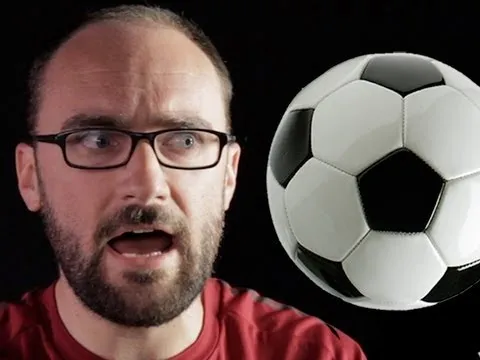
The payoff comes with a warning: when games substitute for real-life problem-solving, they can slide into procrastination or addiction. Still, the underlying claim is optimistic. People play because they can pursue higher needs—social connection, mastery, identity—more reliably in man-made systems than in the sprawling, slow-feedback game of everyday life. The transcript closes by noting the cultural quirks of “soccer” versus “football,” tracing “soccer” to British wordplay (the Oxford habit of adding “-er”) and tying the sport’s naming to the formalization of association football in 1863.
Cornell Notes
Games are framed as voluntary attempts to overcome unnecessary obstacles, and they can be classified using Chris Crawford’s toy–puzzle–challenge ladder. Life fits the definition of a game, but it’s harder to play because rules are complex, goals are unclear, and feedback arrives late. Games and sports simplify those conditions, delivering faster, more legible rewards—often tied to Maslow’s hierarchy of needs once basic safety is secured. Play may also support brain development, though it’s debated whether it’s uniquely necessary because other methods can yield similar outcomes (equifinality). The result is a psychological engine: games help people pursue competence, belonging, and respect, sometimes at the cost of procrastination or addiction.
How does Bernard Suits’ definition explain why games feel “weird” compared with everyday survival?
What does Chris Crawford’s framework say distinguishes toys, puzzles, competitions, and full games?
Why does the transcript claim life can be treated as a game, even though it’s harder than most games?
What role does Maslow’s hierarchy play in explaining why people play?
What evidence is cited for play’s effect on the brain, and what limitation is acknowledged?
How do BIRG-ing and CORF-ing connect games to psychological rewards?
Review Questions
- Using Crawford’s definitions, classify a scenario where two players can interfere with each other’s actions—what category does it fall into and why?
- Why does delayed feedback in real life make games psychologically attractive, according to the transcript?
- What does equifinality imply about whether play is uniquely necessary for brain development?
Key Points
- 1
Bernard Suits defines a game as a voluntary attempt to overcome unnecessary obstacles, capturing why play differs from survival.
- 2
Chris Crawford’s framework distinguishes toys (interactive, no goal), puzzles (objective, no other agents), competitions (objective, other agents, no interference), and full games (objective, other agents, interference allowed).
- 3
Life fits the broad structure of a game but is harder to “play” because rules are complex, goals are unclear, and feedback is often delayed or ambiguous.
- 4
Maslow’s hierarchy links play to higher needs: exploration and confidence become more relevant when safety and basic needs are satisfied.
- 5
Animal evidence suggests play can support brain development, but the transcript notes it’s not proven as uniquely necessary because other methods can produce similar outcomes (equifinality).
- 6
Games and sports deliver faster, clearer rewards than life, helping people pursue competence and belonging while reducing uncertainty.
- 7
BIRG-ing and CORF-ing explain how spectatorship can provide identity and self-esteem benefits, though heavy reliance on games can slide into procrastination or addiction.