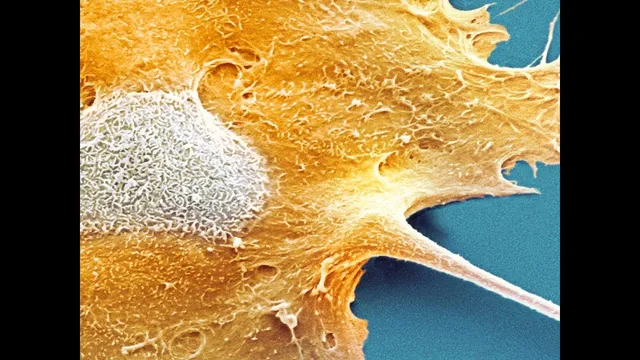
Why Don't We All Have Cancer?
Based on Vsauce's video on YouTube. If you like this content, support the original creators by watching, liking and subscribing to their content.
Cancer is driven by accumulated DNA mutations that occasionally let cells ignore growth controls, secure blood supply, and spread.
Briefing
Cancer is less a sudden invader than the predictable outcome of constant cell division colliding with imperfect DNA copying. Every day, the body sheds and replaces tissue—yet that same relentless renewal means DNA must be copied again and again. During each cell division, enzymes that build DNA introduce around 120,000 mistakes while copying roughly three billion nucleotides. Most errors are harmless or corrected, but a subset can become mutations that let a cell ignore growth signals, recruit its own blood supply, and spread through the body—hallmarks of cancer. With about 200 diseases fitting that pattern, “cancer” is best understood as a family of related failures rather than one disease with one cause.
The transcript also ties cancer risk to both randomness and environment. Mutations can arise spontaneously, be inherited, or be triggered by external damage such as ultraviolet radiation from the Sun. Uneven long-term exposure—like a truck driver with one side of the face getting far more sunlight than the other, or a worker with a window on one side—illustrates how environmental factors can accumulate genetic harm over time. The broader point is that DNA faces threats constantly, and the body’s defenses—proofreading and mismatch repair—catch and stop more than 99% of errors. Still, the internal “autocorrect” is not perfect, so cancer can emerge later as mutations accumulate.
Why doesn’t cancer happen immediately after birth, given how many errors occur? The answer is partly biological maintenance and partly evolution. Natural selection has limited leverage against problems that appear late in life because many organisms reproduce before those diseases fully take hold. This “selection shadow” helps explain why long-lived animals can carry late-acting diseases: mice live only about 2–3 years under protected conditions, while bats can live 30 years or more, likely because bats historically faced fewer early deaths from predators, giving selection more time to shape cancer-related outcomes.
Human longevity adds another layer. Although life expectancy used to be low—often pulled down by high infant mortality—people who reached adulthood could live well into their 60s in earlier centuries. Lifespans beyond reproduction can still be favored in humans because social and cooperative living makes older relatives valuable for raising offspring to independence. That said, extending life also extends the window for late-acting diseases to surface.
The transcript ends with a practical message: progress against cancer is real and accelerating, even if a single universal cure is unlikely. Cancer Research UK is cited for improvements in survival after diagnosis—rising from one in four people living at least ten years 40 years ago to two in four today, with a possible increase to three in four within 20 years. Gains come from multiple fronts: refrigeration and sanitation reducing infection-related stomach cancers, vaccines preventing cervical cancer, anti-smoking and obesity reduction lowering risk, and removing cancer-causing chemicals from everyday life. Detection and treatment are also improving, including advances in proton beam control linked to work from the Large Hadron Collider. The overall framing shifts cancer from a war with clear winners to a long-term mutiny against accumulated mutations—one where natural selection laid the groundwork, and modern science is now steering the outcome.
Cornell Notes
Cancer emerges when DNA copying errors during cell division occasionally produce mutations that let a cell grow uncontrollably, evade stop signals, build its own blood supply, and spread. Each division involves copying about three billion nucleotides, with roughly 120,000 mistakes introduced—most are corrected by proofreading and mismatch repair, which stop more than 99% of errors. The remaining failures accumulate over time, and environmental exposures like ultraviolet radiation can add genetic damage. Evolution helps explain why cancer often appears late: natural selection is weaker against diseases that strike after reproduction, a “selection shadow” seen in comparisons such as mice versus bats. Modern prevention, vaccines, lifestyle changes, better detection, and improved treatments are steadily improving outcomes even without a single cure for all cancer types.
If DNA errors happen constantly, why doesn’t everyone get cancer right after birth?
What specific cellular changes turn a DNA mutation into cancer?
How do environmental factors contribute to cancer risk?
What is the “selection shadow,” and how does it relate to cancer?
Why do humans live long enough for late-acting diseases to matter?
Why is a single “cure for cancer” unlikely, and what progress is still possible?
Review Questions
- How do proofreading and mismatch repair reduce cancer risk, and why doesn’t that elimination of errors fully prevent cancer?
- Explain how the selection shadow can allow late-acting diseases to persist despite natural selection.
- What combination of prevention, lifestyle, and treatment improvements does the transcript cite as driving better cancer outcomes?
Key Points
- 1
Cancer is driven by accumulated DNA mutations that occasionally let cells ignore growth controls, secure blood supply, and spread.
- 2
Each cell division requires copying about three billion nucleotides, with roughly 120,000 mistakes introduced during DNA synthesis.
- 3
Proofreading and mismatch repair correct or stop more than 99% of DNA errors, but the remaining fraction can still matter over time.
- 4
Environmental exposures such as ultraviolet radiation can add genetic damage, increasing the mutation burden that cancer depends on.
- 5
Natural selection is less effective against diseases that appear after reproduction, creating a “selection shadow” that helps explain late-acting cancers.
- 6
Differences in lifespan and early mortality—illustrated by mice versus bats—can influence how strongly selection can act on cancer-related vulnerabilities.
- 7
Cancer outcomes are improving through multiple channels, including vaccines, sanitation, anti-smoking efforts, reduced obesity, removal of cancer-causing chemicals, and better detection and treatments like proton beam advances.