Why Don't We Taxidermy Humans?
Based on Vsauce's video on YouTube. If you like this content, support the original creators by watching, liking and subscribing to their content.
Space burials and diamond-making show that post-death options can extend far beyond burial or cremation, but they depend on logistics and providers.
Briefing
What happens to a body after death isn’t just a matter of personal preference—it’s constrained by biology, practicality, and law. Cremation, burial, and donation to science are common routes, but alternatives like space burials, diamond-making from ashes, and even taxidermy-style preservation exist. The catch: realistic “keep-me-looking-like-me” preservation is technically difficult, and legal permission often blocks the most creative requests.
For ashes, the options can get surprisingly elaborate. Some remains have been launched into space: in 1997, a rocket carried the ashes of 24 people into orbit, and in 1999 cremated remains were placed on the Moon. Clyde Tombaugh’s ashes were later sent aboard New Horizons, with the probe expected to pass near Pluto and continue beyond the solar system. On Earth, companies can transform carbon extracted from remains into diamonds through extreme heat and pressure—one person even had a diamond made from the ashes of a cat.
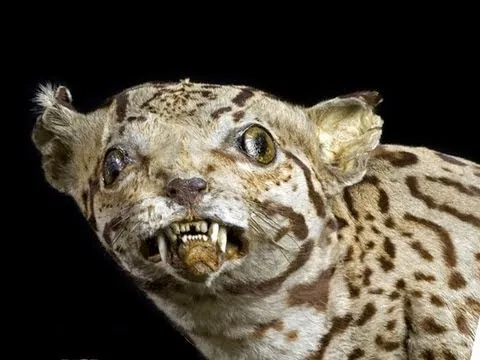
Taxidermy sounds like a straightforward way to preserve a recognizable form, but it runs into limits. Traditional taxidermy removes skin and mounts it on a mannequin-like form made of materials such as wood, wire, or foam. That approach can make animals look “generic,” because subtle internal structures—cartilage, fat, and muscle contours—are hard to recreate once the original body is gone. The precision required to satisfy clients becomes even more daunting with humans, where “recreating” a person’s specific look demands far more than a museum-style approximation.
Mummification and embalming offer longer display times, yet they still fall short of permanence. Jeremy Bentham’s 19th-century mummified body was dressed and displayed at University College London, but the result was imperfect enough that a wax head was added. Embalming can slow decomposition dramatically: Abraham Lincoln’s body was reportedly preserved so well that multiple coffin openings and moves still produced the impression that he looked like Lincoln. Mao and Lenin’s bodies have also remained on display for decades, though they require ongoing special treatments.
Freeze-drying and mummification are described as unsatisfactory or impractical for realistic human preservation. Plastination—used in exhibits like Body Worlds—emerges as the most durable option. It replaces bodily fluids with polymer after a specimen is soaked in a volatile solvent and placed in a low-pressure environment, leaving a flexible, poseable specimen that can last for a long time even at room temperature. Donation to the Institute for Plastination is relatively accessible, but control is limited because corpses are not legally property.
That legal principle—no one owns a corpse—drives the central constraint. Even if a person requests taxidermy or other unusual treatment, mortuaries may refuse, and courts have sided with them. A 1994 case involving David Eugene Russell, who wanted his skin tanned and used to bind a book, ended with the mortuary refusing and the court upholding that decision. Meanwhile, a 1998 case involving Anthony-Noel Kelly complicates the picture: when anatomical specimens were specially prepared by licensed workers, a judge treated them as property. The implication is stark—if a body is processed in a way that creates ownable specimens, it may become something survivors can legally “have” in a literal sense, even if the original corpse could not be owned.
Cornell Notes
After death, “preserve me” options range from space burials and diamond-making from ashes to taxidermy, mummification, embalming, freeze-drying, and plastination. Realistic preservation is limited by what can be maintained biologically and by what institutions and courts will allow. Taxidermy struggles because it typically preserves skin mounted on generic forms, making subtle features hard to recreate; embalming can last for decades but requires ongoing care. Plastination stands out as the most durable method for lifelike display, replacing bodily fluids with polymer so specimens remain flexible and stable for long periods. Even with strong preferences, legal control is constrained because corpses are not property—though specially prepared anatomical specimens can be treated as property in some circumstances.
Why does taxidermy often fail to preserve a person’s recognizable look?
What are some notable ways ashes have been sent beyond Earth?
How long can embalming preserve bodies, and what does that require?
Why are freeze-drying and mummification portrayed as poor fits for realistic human preservation?
What is plastination, and why is it considered durable?
How does the law limit control over what happens to a body after death?
Review Questions
- Which preservation methods rely primarily on skin, and why does that matter for realism?
- What steps in plastination replace bodily material with polymer, and how does that affect flexibility and longevity?
- How do court decisions in the Russell and Kelly cases illustrate the difference between a corpse and specially prepared anatomical specimens?
Key Points
- 1
Space burials and diamond-making show that post-death options can extend far beyond burial or cremation, but they depend on logistics and providers.
- 2
Taxidermy’s realism is limited because it typically preserves skin mounted on artificial forms, making internal contours difficult to recreate.
- 3
Mummification and embalming can extend display time, yet they still involve imperfections, ongoing maintenance, or both.
- 4
Freeze-drying and other long-term methods are described as impractical or unsatisfactory for lifelike human preservation.
- 5
Plastination replaces bodily fluids with polymer under low pressure, producing flexible, long-lasting specimens suitable for exhibit-style display.
- 6
Legal control is constrained because corpses are not property; requests can be denied even when families agree.
- 7
Court outcomes suggest that once anatomical material is specially prepared by licensed workers, it may be treated as property in certain contexts.