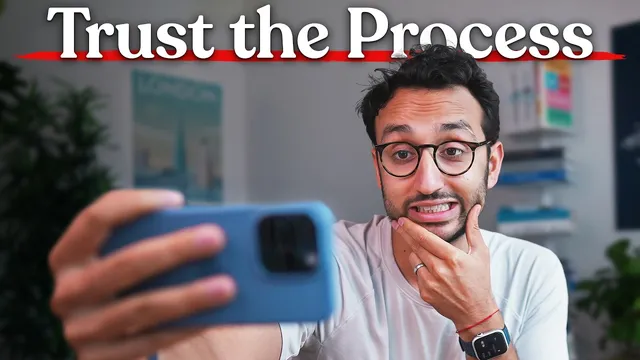
Why Everyone Should Start a YouTube Channel
Based on Ali Abdaal's video on YouTube. If you like this content, support the original creators by watching, liking and subscribing to their content.
Starting a YouTube channel without viewers is positioned as a route to emotional and spiritual growth through confronting fear of judgment.
Briefing
Starting a YouTube channel—even when nobody watches—can be a powerful engine for internal growth, not just a path to views or income. The most consequential benefit isn’t audience size; it’s the emotional and spiritual work that happens when someone puts their ego “outside the body” by recording themselves and publishing it online. Hitting record triggers fear, self-consciousness, and the sting of potential judgment: worrying about how the face looks, how colleagues might react, or how a comment might target something as small as an accent, a zit, or the shape of a nose. Over time, that discomfort becomes a training ground for transcending ego and building resilience against the identity-shaking effects of public feedback.
That internal shift is paired with a practical psychological lesson: learning new skills requires tolerating being bad at something at first. Many people lose the childhood belief that everything is “figure-outable” and replace it with a fixed mindset—often after feedback in school, at work, or from authority figures who label competence. YouTube forces a beginner to confront early failure modes: awkward delivery, basic editing, and the reality that the first uploads may perform poorly. Yet the payoff is a “meta-skill” that matters beyond content creation—the ability to learn again, even later in life. Ali Abdaal describes how even senior professionals can feel trapped by specialization and sunk costs; starting a channel becomes a way to prove to the brain and heart that learning is still possible.
There’s also a sense of agency that comes from turning a vague interest into a repeatable practice. Abdaal frames YouTube as a hobby-like experiment at the beginning: make a few videos to see whether the process feels rewarding. He argues against treating the project like a business plan from day one, warning that money-first creator advice can distort expectations. Instead, the early goal should be experimentation—especially the first seven videos—so creators can test whether they enjoy the art of filming, editing, and expressing ideas publicly.
Abdaal’s own path illustrates the long arc. He started in 2016 with music videos that went nowhere, but the effort taught him camera use and editing. In 2017, he later saw a business opportunity to help students get into med school, using YouTube as lead generation. He emphasizes that the money-making angle wasn’t the original driver; the channel’s later success emerged from skills built during years of low or no traction. He also points to course participants who didn’t become full-time YouTubers but still found the journey valuable—because making even a handful of videos can reshape confidence, learning habits, and emotional tolerance.
For beginners wondering what to post, he offers prompts through a “seven video challenge” designed for complete newcomers, with accountability and a refund if seven videos are made within seven months. The overarching message is a permission slip: take the bet on yourself, publish something imperfect, and let the growth—internal, emotional, and skill-based—arrive even if the audience never materializes immediately.
Cornell Notes
Starting a YouTube channel without immediate viewers is framed as a growth practice, not a quick route to fame or revenue. Publishing forces creators to confront ego, fear of judgment, and self-consciousness—then gradually build resilience by learning to act despite discomfort. The process also develops a “meta-skill”: the ability to learn new things again, countering the fixed mindset that often forms after negative feedback or workplace specialization. Abdaal recommends treating early uploads like a hobby or art experiment—especially through a structured “seven video challenge” with prompts—so beginners can test whether they enjoy the work before thinking about business outcomes.
Why does putting a face on camera matter more than chasing views at the start?
What “meta-skill” does starting a channel build beyond video-making techniques?
How does Abdaal suggest beginners should approach the first uploads?
What does the “seven video challenge” do for someone who doesn’t know what to post?
How does Abdaal’s personal timeline support the “start even if nobody watches” message?
What role does tolerating being “bad at something” play in the growth argument?
Review Questions
- What specific emotions does publishing to an audience trigger, and how does that connect to the idea of transcending ego?
- How does the transcript distinguish between learning video skills and learning the broader ability to learn new skills?
- Why does the advice discourage starting with a money-first or business-first approach, and what alternative goal is proposed for the first videos?
Key Points
- 1
Starting a YouTube channel without viewers is positioned as a route to emotional and spiritual growth through confronting fear of judgment.
- 2
Publishing content forces creators to externalize ego, making self-consciousness and criticism feel real—then teaching resilience over time.
- 3
The process builds a “meta-skill”: the ability to learn new things again, countering fixed mindset patterns formed by feedback and specialization.
- 4
Early uploads should be treated like a hobby or art experiment, not a business plan designed to monetize immediately.
- 5
A beginner-friendly structure like a “seven video challenge” can reduce overthinking by providing prompts and accountability.
- 6
Abdaal’s own experience shows that skills learned during low-visibility periods can later enable business opportunities and sustained creation.
- 7
Even if a creator never becomes a large-channel YouTuber, making a few videos can still deliver meaningful confidence and learning gains.