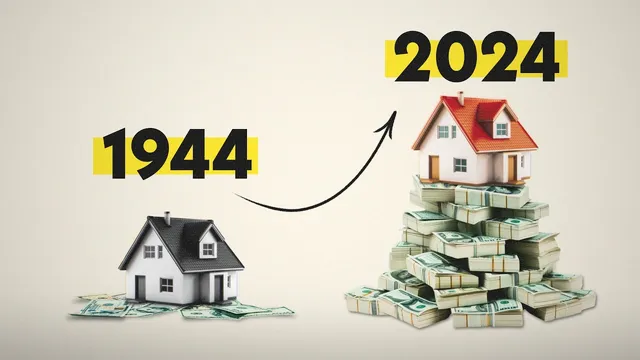
Why Housing Keeps Getting More Expensive
Based on Second Thought's video on YouTube. If you like this content, support the original creators by watching, liking and subscribing to their content.
Housing affordability has worsened sharply, with 2023 described as the least affordable year to buy a home in over a decade and record shares of renters paying above 30% (and even 50%) of income.
Briefing
Housing has become dramatically more expensive not because there aren’t enough homes, but because the economics of housing finance and landlord behavior have been reshaped to serve profit and liquidity for investors—pushing costs onto renters and homeowners year after year. In 2023, the least affordable year to buy a home in over a decade coincided with record numbers of renters paying more than 30% of their income. The result is a widening affordability gap: the median home now sits around $400,000, and the average household earning about $80,000 faces housing costs consuming over 40% of income. The rental squeeze is even sharper, with more than half of renters paying above the recommended 30% and over a quarter paying above 50%.
A common explanation—supply and demand for homes—doesn’t hold up in practice, according to the transcript’s critique. Home prices rise largely regardless of whether housing construction lags or accelerates, and the key driver is framed as “finance supply and demand”: the availability and appetite of capital for housing-related returns. That shift, the transcript argues, is tied to government policy changes since the 1980s, the growth of generational wealth gaps, and the way housing debt became a tradable financial instrument.
The rental market illustrates the mechanism. During the post-2020 inflation cycle, rents rose sharply, and a New York Times quote attributed the increase to basic supply and demand. But the transcript points to real estate software—especially RealPage—as a force that can coordinate pricing behavior without formal collusion. RealPage aggregates landlord and market data and recommends rent levels and occupancy targets. Instead of maximizing occupancy, the software has reportedly pushed property managers to lower occupancy (keeping more units empty) while raising rents on the occupied units. ProPublica is cited for findings that RealPage recommendations reduced occupancy toward about 94% while increasing net revenue by roughly 3–4%. The transcript also claims that higher turnover—through more frequent lease terminations and evictions—can accelerate rent increases, with the RealPage CEO reportedly describing a “net effect” of driving revenue and pushing people out as $10 million in income.
Beyond software, the transcript argues that private finance has scaled up its control of housing. It cites increased investment by private equity firms such as Apollo Global Management, The Carlyle Group, and Blackstone, including purchases of single-family homes and mobile homes. In the first quarter of 2022, nearly a third of single-family homes sold were bought by private investors, and in 2020–2021, about 25% of mobile home purchases were made by private equity groups. The transcript claims rents can rise substantially for affected residents.
At the core is a broader financial system shift: governments moved toward neoliberal policies that weakened labor protections and relied more on personal debt. Mortgage securitization—turning home loans into mortgage-backed securities—created a secondary market that made housing debt liquid and investable. The transcript describes how institutions like Fannie Mae and Freddie Mac, along with later legislation, helped expand this market, enabling capital to pour into housing-related assets. In this framework, housing prices reflect not the number of homes or their usefulness, but the power of capital to enforce debt repayment and maintain asset values.
The transcript concludes that the system requires ever-rising prices and ever-growing debt to stave off financial crises, leaving households to absorb the costs. It argues that wages and even union gains won’t be enough while housing remains privatized and treated as collateral and liquidity for investors, calling instead for tenant organizing, social housing, rent strikes, and a fundamental shift away from capitalism.
Cornell Notes
Housing affordability has deteriorated because housing is treated less like shelter and more like a financial asset. The transcript challenges the standard supply-and-demand story, arguing that home and rent prices track “finance supply and demand”—how much capital wants housing returns—rather than the number of homes available. It highlights RealPage’s rental-algorithm recommendations as an example of how pricing and occupancy strategies can increase landlord revenue while leaving more units empty and pushing out tenants. It then links rising costs to private equity’s growing role in buying homes and mobile homes. Finally, it traces the system to government policy since the 1980s that expanded mortgage securitization, making housing debt liquid for investors and tying household affordability to financial markets.
Why does the transcript reject the usual “not enough homes” supply-and-demand explanation for rising housing costs?
How does RealPage’s algorithm allegedly affect rents and occupancy?
What role does turnover play in the transcript’s account of rent increases?
How does private equity expand the housing squeeze beyond traditional landlords?
What policy and financial mechanism does the transcript blame for turning housing into an investor liquidity engine?
Review Questions
- What does the transcript mean by “finance supply and demand,” and how does that differ from the standard supply-and-demand story for housing?
- Explain the transcript’s claim about how lowering occupancy can still increase landlord revenue. What numbers are cited?
- Trace the transcript’s causal chain from post-1980s policy changes to mortgage securitization and then to rising housing costs.
Key Points
- 1
Housing affordability has worsened sharply, with 2023 described as the least affordable year to buy a home in over a decade and record shares of renters paying above 30% (and even 50%) of income.
- 2
The transcript argues that housing prices rise largely independent of physical housing supply, pointing instead to the role of capital and financial demand.
- 3
RealPage is presented as a key example of algorithmic pricing that can increase landlord revenue by lowering occupancy (toward ~94%) while raising rents.
- 4
The transcript claims RealPage-linked strategies can also increase turnover (about 15%), using evictions or lease-end pressure to accelerate rent gains.
- 5
Private equity is described as expanding housing control at scale, including purchases of single-family homes and mobile homes, with reported rent increases for residents.
- 6
Government policy since the 1980s is framed as enabling mortgage securitization, turning housing debt into liquid assets that attract investors and inflate prices.
- 7
The transcript concludes that wages alone won’t solve affordability while housing remains privatized and treated as collateral and liquidity for financial markets.