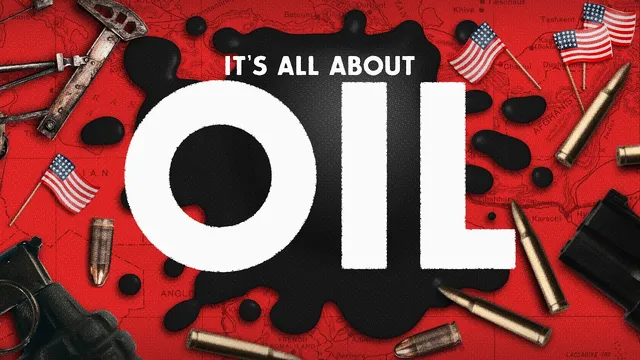
Why Is The US Always At War?
Based on Second Thought's video on YouTube. If you like this content, support the original creators by watching, liking and subscribing to their content.
The transcript claims Pentagon spending includes large-scale waste, citing an official report that says trillions of dollars of equipment are unaccounted for.
Briefing
The U.S. stays locked into frequent Middle East wars not because conflict is inevitable, but because oil and weapons profits are tightly linked to a system that rewards instability—turning war risk into higher prices, higher arms sales, and political cover for both industries and governments. The core claim is that “waste” and “excess” aren’t side effects; they’re functional outcomes of a profit-driven international arrangement that repeatedly steers major powers toward conflict.
A major pillar of that system is massive military spending paired with poor accountability. An official report cited in the transcript says trillions of dollars of Pentagon equipment are “unaccounted for,” with the department unable to locate it. The argument also points to procurement dysfunction: militaries sometimes reject new equipment because they don’t know how to use it—suggesting spending that doesn’t translate into effective capability.
The second pillar is the geographic pattern of conflict. While Western Europe and North America have seen relatively little direct conflict since World War II, West Asia and North Africa have experienced dozens of wars. The transcript frames recent events—Israel’s campaign in Gaza and moves toward regional escalation—as part of a long-running U.S. pattern: invasions of Iraq and Afghanistan and extensive drone campaigns across Pakistan, Libya, and Somalia.
Those wars are then connected to oil through a proposed predictive relationship: a graph is described as showing that when major fossil-fuel companies’ returns fall below average, wars in the Middle East tend to follow, and during conflicts those companies’ performance improves. The transcript argues that oil is often disguised behind familiar justifications—WMD claims in Iraq, retaliation for 9/11 in Afghanistan, and the framing of later violence as responses to specific attacks—while officials have allegedly admitted oil interests are behind conflicts.
The mechanism is laid out as a post–World War II shift in control. As newly independent oil-rich states gained leverage, OPEC and other producers restricted Western access and demanded better terms. Western “oil majors” allegedly responded by ceding formal control while still benefiting from high prices—helped by a world where actual oil supply and demand don’t swing enough to explain large price spikes. Instead, the transcript emphasizes expectations: perceived future scarcity, especially the fear that war could disrupt production or shipping, is what drives oil prices upward.
Once oil prices rise, the transcript claims, a feedback loop forms. Oil exporters accumulate dollars and need to recycle them into imports. Weapons purchases become a convenient outlet because governments can justify them as security necessities, and there’s no clear limit to how much military hardware a state can buy. The transcript cites data suggesting that for oil exporters, a 1% increase in oil revenue corresponds to a 3.3% increase in arms exports three years later.
Finally, the transcript argues that U.S. policy and lobbying reinforce the loop. It points to administrations staffed with personnel from defense and oil industries, and to policies like the Nixon Doctrine that shift the burden of arming allies onto those allies rather than the U.S. The result, in this telling, is a permanent tension economy: weapons manufacturers, oil producers, and political elites benefit from the conditions that keep wars plausible, while other sectors—like healthcare or technology—lose out.
The conclusion is conditional: peace isn’t automatic because powerful actors can steer policy. Change would require disrupting the profit motive that the transcript portrays as dictating who lives and who dies, and replacing the default path toward war with a different set of incentives.
Cornell Notes
The transcript argues that U.S. wars—especially in the Middle East—persist because oil and weapons profits rise when instability rises. It links military waste and procurement failures to a broader system in which oil price expectations and arms sales reinforce each other. After oil-producing states gained leverage post–World War II, the transcript claims Western oil majors shifted from direct control to benefiting from high prices, with war risk helping drive those prices. It then describes a dollar-recycling loop: higher oil revenue gives exporters money to spend on arms, which increases tensions and helps keep oil prices elevated. The takeaway is that lobbying and government staffing tie this cycle to official policy, making war a default rather than an exception.
How does the transcript connect military spending “waste” to the broader war pattern?
What is the proposed relationship between oil-company performance and wars in the Middle East?
Why does the transcript say oil prices rise even when supply and demand don’t change much?
How does the transcript describe the “dollar recycling” mechanism that turns oil revenue into arms purchases?
What role do U.S. allies and policy shifts play in the transcript’s explanation?
How does the transcript connect lobbying and staffing to escalation incentives?
Review Questions
- What does the transcript claim is the key driver of oil price spikes: actual scarcity or perceived future scarcity—and what evidence does it use?
- Describe the feedback loop the transcript proposes between oil revenue, arms exports, and rising tensions.
- Which examples of “official” war justifications does the transcript use to argue that oil interests are often hidden behind other explanations?
Key Points
- 1
The transcript claims Pentagon spending includes large-scale waste, citing an official report that says trillions of dollars of equipment are unaccounted for.
- 2
It argues that Middle East wars follow a pattern tied to oil-company profitability and oil-price expectations rather than to sudden changes in real supply and demand.
- 3
It emphasizes perceived future scarcity: the fear that war could disrupt oil production or shipping is presented as enough to raise prices even without actual shortages.
- 4
It describes a dollar-recycling loop in which oil exporters spend rising revenues on arms because weapons purchases are politically easier to justify than other imports.
- 5
It claims arms purchases increase tensions and help sustain higher oil prices, creating a self-reinforcing cycle benefiting weapons and fossil-fuel interests.
- 6
It argues that lobbying and government staffing connect defense and oil industries to official policy, making escalation the default option when profits are threatened.
- 7
It concludes that breaking the war cycle requires changing incentives so profit motives no longer dictate policy outcomes.