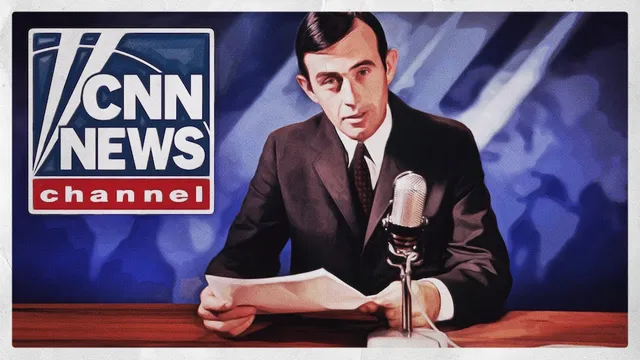
Why Is US Media Becoming More Right-Wing?
Based on Second Thought's video on YouTube. If you like this content, support the original creators by watching, liking and subscribing to their content.
Rail-strike coverage is framed as politically influential because it foregrounds economic disruption while downplaying workers’ stated grievances and the rail industry’s profit and labor practices.
Briefing
US cable news—especially CNN—has been shifting rightward not because of sudden ideological conversion, but because profit-driven media constraints systematically filter what becomes “news,” whose interests get centered, and how conflicts are framed. The clearest example is coverage of a potential rail workers strike: stories emphasize the economic disruption and holiday timing while downplaying the workers’ underlying demands and the rail industry’s record profits, layoffs, and refusal of guaranteed paid sick days. That framing turns a labor dispute into a near-hostage scenario, nudging viewers toward a cost-benefit judgment that treats workers’ bargaining as reckless rather than as a response to employer power.
That tonal change matters because it reshapes public discourse in ways that mainstream both sides of the political spectrum while quietly moving the center. CNN’s post-merger strategy is described as a pivot away from its earlier liberal “watchdog” identity toward a more “centrist” posture that claims to seek nuance and avoid alarming viewers. Staff shakeups—along with the removal or cancellation of more openly liberal voices—signal a deliberate repositioning. A Variety poll cited in the discussion found roughly 40% of viewers detected a right-wing or centrist shift in CNN’s reporting, and some viewers even welcomed the change, including by attracting audiences that might otherwise watch Fox.
The underlying mechanism is framed as structural rather than conspiratorial. Large media organizations generally don’t need to fabricate facts to steer outcomes; they filter reality through constraints: ownership concentration, advertising dependence, reliance on government and elite experts as information sources, and institutional incentives that reward profitability and punish controversy. In this view, the survival logic of capitalist media pushes networks toward either lukewarm challenges to the established order or outright defense of it—often by treating progressive movements as dangerous or dishonest.
Chomsky and Edward Herman’s “manufacturing consent” framework is used to explain why. The argument is that media can be accurate yet still biased in emphasis: what gets prioritized, what gets ignored, and how conflicts are narrated. The discussion points to the business realities of Warner Bros Discovery—debt levels and weaker cable performance—as pressure that encourages audience-catering. It also highlights influence from Liberty Media chairman John Malone, who has praised Fox’s trajectory toward more “journalism” embedded in opinion programming, suggesting that similar strategic pressure can move CNN further right.
Beyond labor coverage, the same filter logic is applied to broader agenda-setting. Topics that align with reactionary concerns—terrorism, immigration, and moral panics—receive sustained platforming, while left-leaning issues receive less attention. The example given is the media frenzy around Critical Race Theory (CRT), described as a manufactured panic that originated from conservative strategists and then spread because outlets treated it as must-cover news. The result is a public sphere where media doesn’t just influence what people think, but what people think about.
Finally, the argument extends to social media: the profit model persists, and platform ownership can reproduce the same asymmetries. The discussion cites Elon Musk’s ownership of Twitter/X and claims that left-leaning accounts were shut down after exchanges with far-right figures, while far-right ideologues remained tolerated—again homogenizing discourse under the banner of free speech.
The takeaway is not blanket distrust of all media, but an insistence on recognizing the incentives and omissions that shape coverage—especially in a media environment where profitability and ownership interests limit how fully power is questioned.
Cornell Notes
The discussion links CNN’s rightward tone to structural incentives in capitalist media rather than to outright fabrication. Coverage of a potential rail strike is used as a case study: economic harm is foregrounded while workers’ grievances and the rail industry’s profit and labor practices are treated as secondary. The argument draws on Chomsky and Edward Herman’s “manufacturing consent” filters—ownership, advertising, elite sourcing, and institutional discipline—to explain how emphasis and agenda-setting can bias outcomes even when facts are broadly correct. It also connects the shift to corporate pressures after Warner Bros Discovery’s merger and to influence from Liberty Media leadership. The same incentive logic is extended to social media, where platform ownership and profit incentives can silence left voices and normalize far-right talking points.
Why does rail-strike coverage become politically consequential even without obvious falsehoods?
What does “manufacturing consent” add to the explanation of media bias?
How do corporate mergers and financial pressure fit into the shift described for CNN?
What role is attributed to John Malone and Liberty Media in the strategy shift?
How does the discussion connect agenda-setting to moral panics like CRT?
Why does the argument claim social media didn’t solve these problems?
Review Questions
- What kinds of media “filters” can bias outcomes without requiring outright fabrication?
- In the rail-strike example, which details are foregrounded versus backgrounded, and how does that shape viewer judgment?
- How do ownership, advertising, and elite sourcing interact to influence what becomes “newsworthy” in a capitalist media system?
Key Points
- 1
Rail-strike coverage is framed as politically influential because it foregrounds economic disruption while downplaying workers’ stated grievances and the rail industry’s profit and labor practices.
- 2
CNN’s post-merger repositioning is described as a shift from a liberal watchdog identity toward a centrist tone that can still align with reactionary priorities.
- 3
Bias is presented as structural: ownership concentration, advertising dependence, elite sourcing, flak, and ideological control can filter emphasis and agenda-setting even when basic facts are accurate.
- 4
Profit and survival pressures push major media networks toward lukewarm challenges to the capitalist order or toward championing it outright, depending on audience and backlash risk.
- 5
Corporate financial strain after Warner Bros Discovery’s merger is cited as an incentive to cater to audience preferences rather than pursue comprehensive adversarial reporting.
- 6
The Overton window is argued to have moved rightward, so “centrist” media can effectively mainstream far-right politics without acknowledging the shift.
- 7
Platform ownership on social media is portrayed as reproducing similar asymmetries, with left voices allegedly more vulnerable to suppression than far-right talking points.