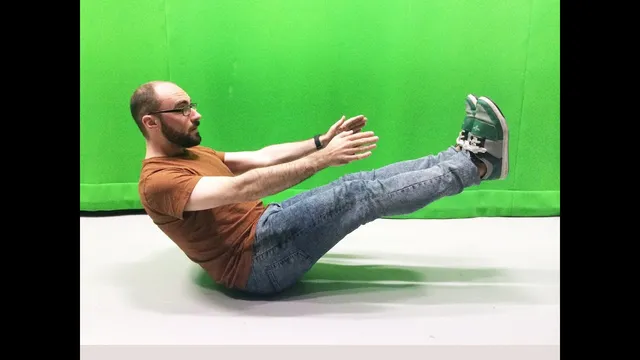
Why Is Your BOTTOM in the MIDDLE?
Based on Vsauce's video on YouTube. If you like this content, support the original creators by watching, liking and subscribing to their content.
“Bottom” originally meant “foundation” or “the lowest level,” and later became a euphemism for the posterior.
Briefing
“Bottom” may sound like a body-part mistake, but the word’s odd placement in language mirrors a deeper truth: the human butt is both anatomically central and functionally crucial. The transcript traces why “bottom” came to mean the rear end even though it sits in the middle of the body, then pivots to what the butt actually does—especially for sitting, movement, and endurance running.
Linguistically, “bottom” originally meant “foundation” or “the lowest level,” and that sense survives in related words like “sole,” which also means “foundation.” Over time, “bottom” shifted toward a euphemistic label for the posterior—an area people often prefer to describe indirectly. Evidence for the rear-end meaning appears in late-16th-century usage, but the first published instance cited arrives in 1794 in Erasmus Darwin’s “Zoonomia.” The transcript also notes that “bottom” as a posterior term is relatively new compared with older alternatives like “bum,” “bum” predating “bottom” for the rear. “Bum” is linked to an onomatopoeic idea: the sound of buttocks slapping against a surface, which then broadened into “loafer” or “idle person,” and later into “bummer” for something worthless or disappointing.
Anatomically, the butt’s prominence isn’t just cultural—it’s built. The shape comes from the gluteus maximus and gluteus medius muscles plus a layer of fat, which turns the posterior into a cushion for sitting. Compared with many quadrupeds, humans can sit with less reliance on the legs because the butt provides a more bulbous contact surface. The transcript then connects form to function through evolutionary psychology: preferences for full, firm buttocks may have been naturally selected because such traits can signal health and youth, and because stored fat acts as an energy reserve during scarce food periods and during pregnancy or breastfeeding.
But the most consequential role is mechanical. Humans are bipedal, and maintaining torso balance during movement requires strong, well-developed gluteal muscles. Those muscles are so pronounced that humans have relatively defined intergluteal clefts—“butt cracks”—which also makes certain hygienic practices more common. The payoff is endurance. Compared with horses and other quadrupeds, humans can sustain long-distance aerobic running thanks to traits including efficient sweating for heat dumping, short toes for force over long periods, stable head mechanics from short neck ligaments, an Achilles tendon that converts elastic energy into kinetic energy, and tall, narrow waists that help counter-rotate the body as legs swing.
The transcript frames endurance running as a survival tool: prehistoric hunters could not always win in a sprint, but they could outlast prey until animals overheated and exhausted themselves. That’s why the butt—despite its name—lands near the top of the list of features that make humans effective runners. The final twist is practical: if the body is specialized for running, modern people may still need to “get off your butt” and use it, even if they don’t all run marathons.
Cornell Notes
“Bottom” began as a word for “foundation” or “the lowest level,” and only later became a euphemism for the rear end. The transcript links that shift to torso-centric thinking and social discomfort, while also contrasting it with older terms like “bum,” which is tied to an onomatopoeic idea and later produced “bummer.” Anatomically, the butt’s shape comes from gluteal muscles and fat, making it a cushion for sitting and a store of energy. Evolutionary arguments connect butt fullness to signals of health and youth, while the butt’s muscle development supports bipedal balance and long-distance running. Those traits help humans sustain aerobic endurance by combining heat management, elastic energy return, and stable mechanics during long runs.
Why does “bottom” mean the rear end even though it’s not literally the lowest part of the body?
How did “bum” and “bummer” develop compared with “bottom”?
What physical structures create the human butt’s shape and sitting comfort?
What evolutionary logic is offered for attraction to “full, firm” buttocks?
How do butt muscles connect to human endurance running?
Why could humans hunt effectively without being the fastest sprinters?
Review Questions
- What older meanings of “bottom” are cited, and how do they relate to “sole”?
- Which anatomical features of the butt are named, and how do they support both sitting and running?
- What specific human endurance-running traits are listed, and how do they help during long hunts?
Key Points
- 1
“Bottom” originally meant “foundation” or “the lowest level,” and later became a euphemism for the posterior.
- 2
“Sole” is used as a linguistic clue because it also means “foundation,” even though feet are typically lower than the butt when standing.
- 3
“Bum” predates “bottom” for the rear and is linked to an onomatopoeic idea about buttocks slapping, later producing “bummer.”
- 4
The butt’s shape is attributed to the gluteus maximus and gluteus medius muscles plus a layer of fat.
- 5
The transcript connects butt fullness to evolutionary arguments about health/youth signals and energy reserves during scarcity and reproduction.
- 6
Human endurance running is tied to gluteal strength for bipedal balance and to multiple heat- and mechanics-related adaptations (sweating, Achilles tendon elasticity, stable head/neck, and waist/leg counter-rotation).
- 7
Endurance hunting is framed as a survival strategy: humans can outlast prey until overheating and exhaustion make capture possible.