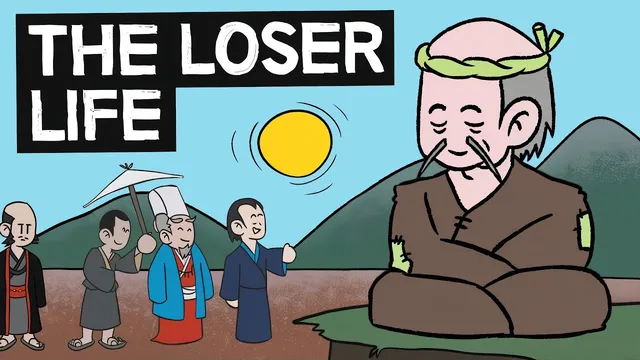
Why It’s Okay to Be a Loser | Taoist Philosophy for the Unambitious, Failures and Nobodies
Based on Einzelgänger's video on YouTube. If you like this content, support the original creators by watching, liking and subscribing to their content.
Taoist philosophy treats “loser” status as a social label rather than a measure of moral worth.
Briefing
Taoist sages treat “losing” not as a moral defect but as a predictable outcome of forces beyond individual control—and that reframing matters because it cuts the stress, shame, and self-erasure produced by modern hustle culture. In the Lieh Tzu tradition, chasing wealth, fame, and social approval is portrayed as a shaky bargain: it can bring pleasures and opportunities, yet it often demands constant strain to acquire resources and maintain a reputation that depends heavily on other people’s shifting opinions. Yang-chu, appearing in the Lieh Tzu scripture, argues that pursuing status ultimately hollows people out, trading happiness for the effort of climbing a social ladder.
That critique lands directly on today’s achievement mindset, where “success” functions like a virtue and “losers” are treated as pariahs. The transcript describes how ambition has become socially mandatory—tied to attractiveness, employability, and even moral worth—so refusing to strive can trigger stigma and guilt. Joost and Iris, two unrelated people from a Dutch article, illustrate the psychological cost: being labeled unambitious is felt as being condemned for refusing to reach one’s “full potential,” while the very idea of not trying becomes a “curse word.” The discussion also invokes Byung-Chul Han’s concept of constant self-optimization, suggesting that modern life pressures people to keep improving as if improvement were an ethical requirement.
Against that backdrop, the Lieh Tzu stories push back on the idea that effort alone determines outcomes. In “Effort Argues with Destiny,” Effort claims his achievements prove his superiority, but Destiny counters with examples showing that neither effort nor talent reliably sets a person’s trajectory—corrupt officials can be rich, honest workers can remain poor, virtuous people can stay unknown, and the untalented can rise. The point is not that effort is useless, but that it is not sovereign; luck, timing, and chance shape results in ways people cannot fully control.
The transcript extends this logic to contemporary debates about success—such as the role of algorithms versus creator effort—arguing that survivorship bias makes effort feel like the whole story. Even when hard work helps, it doesn’t guarantee the same payoff for everyone, because people are dealt different “cards”: intelligence, creativity, environments, mentors, and opportunities. That reality helps explain why labels like “loser” become socially loaded. Terms such as “low-value male” reflect a belief that worth equals achievement, turning misfortune into contempt.
Lieh Tzu’s “Success and Failure” chapter adds a practical warning: obsessing over outcomes breeds anxiety and self-exploitation. The problem isn’t achievement itself; it’s attachment to a desired result. The sages recommend accepting the natural flow of events and detaching from praise and blame. In that stance, “loser” loses its power—not necessarily because others stop judging, but because reputation and outcome are treated as external variables. The transcript closes by arguing that being okay with “losing” can mean letting go of fear—fear of failing and fear of not conforming—so people can live more authentically while staying calm in adversity.
Cornell Notes
Taoist philosophy in the Lieh Tzu treats “loser” status as a social label built on shallow measures of success, not as proof of personal worth. Yang-chu’s view emphasizes how chasing wealth and reputation can drain happiness because both depend on fickle external judgment. Stories like “Effort Argues with Destiny” challenge the belief that effort alone determines outcomes, pointing to corrupt officials, unknown virtuous people, and the untalented rising—evidence that luck and chance matter. The “Success and Failure” chapter warns that attachment to outcomes fuels anxiety and self-damage. The remedy is accepting destiny’s role and detaching from praise and blame, which reduces the emotional weight of being judged a “loser.”
Why does Yang-chu treat wealth and reputation as a poor foundation for a good life?
How does “Effort Argues with Destiny” undermine the idea that hard work always leads to success?
What role does survivorship bias play in modern beliefs about success?
Why does the transcript connect “loser” labels to a broader idea of worth?
What exactly is “bad” in the Lieh Tzu view: achievement or attachment to outcomes?
How does accepting destiny reduce the power of the word “loser”?
Review Questions
- Which Lieh Tzu story (and which character) is used to show that effort and talent don’t guarantee outcomes?
- What distinction does the transcript make between achievement and attachment to outcomes?
- How does the transcript explain why labels like “loser” become emotionally powerful in achievement culture?
Key Points
- 1
Taoist philosophy treats “loser” status as a social label rather than a measure of moral worth.
- 2
Chasing wealth and reputation can create stress because both depend heavily on external, shifting opinions.
- 3
Stories in the Lieh Tzu argue that luck and chance shape life trajectories, so effort alone can’t explain success or failure.
- 4
Modern hustle culture turns ambition into a moral requirement, making non-ambition feel like guilt or blasphemy.
- 5
The transcript distinguishes between achievement (not inherently harmful) and attachment to outcomes (which fuels anxiety and self-exploitation).
- 6
Detaching from praise and blame—and accepting destiny’s role—reduces the emotional weight of being judged a “loser.”
- 7
Letting go of fear of failure and fear of not conforming can help people live more authentically, even if others still judge them.