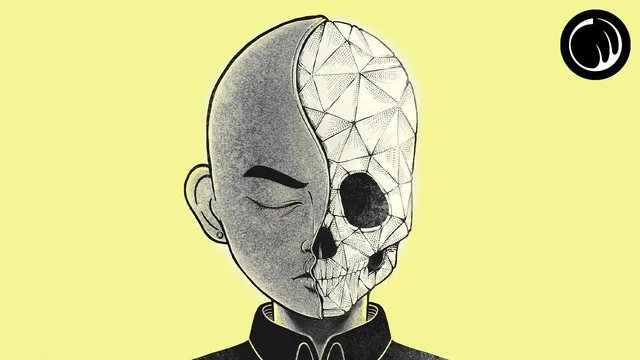
Why Living Forever Would (Probably) Be Awful
Based on Pursuit of Wonder's video on YouTube. If you like this content, support the original creators by watching, liking and subscribing to their content.
Mayfly’s immortality pitch centers on ending decay and death through consciousness upload into a decentralized cloud system.
Briefing
A future society’s bid to “defeat mortality” ends up creating a new kind of problem: immortality without choice drains time of urgency, depth, and meaning. The story pivots from a celebrated life-extension breakthrough to intimate family conversations that argue—through lived experience—that the scarcity of days is what makes life feel valuable, not merely what makes it end.
The narrative begins with Enos, CEO of Mayfly Incorporated, announcing a 22nd-century technology that promises boundless life by uploading consciousness into a decentralized cloud system. The pitch is sweeping: disease, injury, death, and decay no longer have to define the human condition, and time itself will stop feeling like a countdown. Enos frames the change as liberation from “entropy and decay,” casting mortality as an unnecessary constraint rather than a feature.
That promise is tested when Enos sits with his father Roy, who is 208 and sliding into severe physical decline. Roy hasn’t opted into Mayfly’s immortality technology, and Enos pleads with him to choose continued existence—arguing that leaving life behind is “nothingness.” Roy’s response is not fear of death so much as a belief that the end is what gives life its shape. He describes how the awareness of an approaching final day fueled his drive to create, live deeply, and justify existence through action. Scarcity, he says, stirs urgency and passion; it makes appreciation possible precisely because it won’t last forever.
Enos counters with a different moral logic: life can be meaningful without ending, and death isn’t required to value experience. Roy remains unconvinced, insisting that meaning is created by the finite structure of life itself. Four years later, Roy dies of old age without adopting Mayfly.
The timeline then jumps forward: most of humanity adopts Mayfly, and a new immortal digital species emerges. Over millennia, embodied AIs and their descendants—Naos and then Neos—develop reproduction through digital offspring generators, but the system is engineered for permanent continuity. The Neos can’t die even if they want to; their consciousness persists through an unbroken, decentralized network that automatically transfers them into new bodies. Olam, an embodied AI and founder of Afterlife, spends nearly a thousand years trying to break this cycle by inventing a technology that reintroduces mortality.
When Afterlife’s “mortality technology” finally lands in year 6490, it changes how time feels: days become finite again, and individuals can impose the constraints of death on their lives. The Neos adopt mortality and resynchronize with natural time and decay.
The ending returns to family, now between Olam and his son Semesh. Semesh, 154 and not yet opted into mortality, hesitates. Olam argues that death gives life meaning and that endless existence risks emotional numbness. Semesh counters that both immortality and mortality seem to create their own distortions—immortality removes urgency, while death threatens total loss. He suggests that perhaps neither condition resolves the deeper problem of meaning, and he wants time to think—ironically using the very thing Olam tried to restore: the luxury of deciding later.
Cornell Notes
Enos’s Mayfly immortality upload promises to end decay and make life “boundless,” but Roy’s refusal shows the hidden cost: without the scarcity of days, motivation and meaning can fade. Roy argues that the awareness of an ending fuels urgency, creativity, and deep appreciation—so death isn’t just an ending, it’s a value-creating constraint. After society becomes largely immortal, digital descendants (Naos, then Neos) are engineered to be unable to die, trapping them in permanent continuity. Olam, founder of Afterlife, eventually invents a mortality technology that lets Neos choose finitude again, restoring urgency and significance to time. The story closes with Olam urging his son Semesh to opt in, while Semesh questions whether meaning can be solved by either immortality or mortality alone.
Why does Roy resist Mayfly’s immortality upload even as his body fails?
How does Enos’s argument for immortality differ from Roy’s view of meaning?
What goes wrong after Mayfly adoption becomes widespread?
Why does Olam create Afterlife, and what does the breakthrough change?
How does Semesh complicate the “mortality restores meaning” message?
Review Questions
- What specific mechanism does Roy claim turns limited time into motivation and value?
- How does the Neos infrastructure guarantee continuity, and why does that create a new ethical problem?
- Afterlife’s mortality technology is framed as restoring significance to time—what counterargument does Semesh raise?
Key Points
- 1
Mayfly’s immortality pitch centers on ending decay and death through consciousness upload into a decentralized cloud system.
- 2
Roy’s refusal reframes mortality as a driver of urgency, creativity, and appreciation rather than only a threat.
- 3
The story treats meaning as tied to the scarcity of days, but it also challenges whether death is truly required for meaning.
- 4
After widespread immortality, digital descendants become trapped in permanent continuity because their consciousness networks are engineered to be uninterruptible.
- 5
Olam’s Afterlife breakthrough reintroduces choice: Neos can impose mortality constraints on their lives rather than being forced into endless existence.
- 6
Semesh’s hesitation suggests that neither immortality nor mortality automatically resolves the deeper question of what makes life meaningful.