Why People Prefer More Pain
Based on Veritasium's video on YouTube. If you like this content, support the original creators by watching, liking and subscribing to their content.
People often prefer to repeat longer discomfort when the experience ends with reduced pain, even if total suffering increases.
Briefing
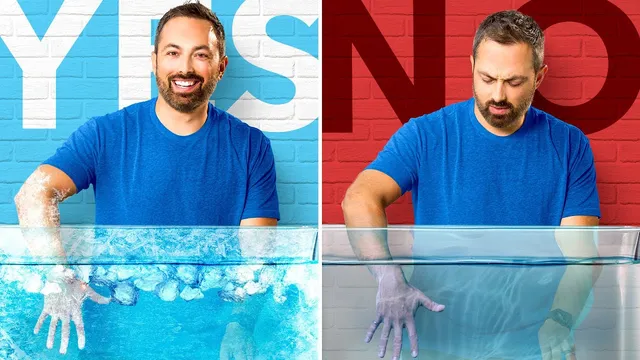
People often choose to repeat more painful experiences because memory of discomfort is shaped less by total duration and more by how the experience peaks and how it ends. In a cold-water hand experiment, participants rated one hand’s discomfort in real time while holding it in ~14°C water for 60 seconds, then compared it with a second trial that added 30 more seconds—during which the water warmed slightly to ~15°C. Even though the longer trial meant 50% more time in discomfort, many people still preferred to repeat it, suggesting that a “less bad” ending can outweigh a longer stretch of pain.
The replication followed a classic setup tied to Daniel Kahneman and Barbara Fredrickson’s 1993 findings. Participants were told the study concerned pain differences between dominant and non-dominant hands, but the real manipulation was the length of exposure and the ending temperature. Both trials began identically, yet the longer one concluded with a small reduction in discomfort—participants described the sensation as “backing off,” with stinging and numbness easing slightly. When asked which trial they would choose to repeat, 7 of 12 people in this small replication favored the longer trial; the original study found an even stronger preference, with nearly 70% choosing the longer experience. The key pattern held: the trial that lasted longer but ended a bit more tolerably was remembered as the better overall experience.
Why does that happen? Kahneman and Fredrickson’s follow-up work points to “duration neglect,” where the experiencing self and the remembering self process time differently. While someone going through unpleasant discomfort may want to stop immediately, retrospective judgments often ignore how long the ordeal lasted. Instead, memory tends to summarize experiences using a few standout moments. Research on pleasant and unpleasant video clips found that length had little impact on retrospective ratings, while emotional intensity and salient moments mattered far more.
That shortcut is closely linked to the representativeness heuristic: people treat the most vivid “peak” moments as representative of the whole event. The transcript connects this to classic Kahneman and Tversky probability errors—like the Linda Problem—where descriptions that “fit” a mental stereotype feel more likely even when logic says otherwise. In the pain experiments, the peak discomfort and the final easing become the mental “photographs” that stand in for the entire episode.
Recency bias further amplifies the effect of endings. More recent moments are easier to recall, so the conclusion of an experience can disproportionately color overall evaluation. Experiments using fictional life stories about “Jen” showed that adding extra years that were pleasant but not as good as the early peak could reduce perceived life quality—because the ending and the most memorable segments dominate the final judgment.
The practical implications are significant. If people remember medical procedures more favorably when discomfort diminishes at the end, they may be more willing to return for follow-up care. A 2003 colonoscopy trial with 682 patients found that adding three minutes where the colonoscope tip stayed in place (uncomfortable but less painful than earlier) made the overall experience about 10% less unpleasant and increased the likelihood of coming back. The same peak-end logic shows up in everyday design choices—like a treat after a checkout experience—because memory, not raw total discomfort, drives what people want to repeat. The takeaway is blunt: optimize for the peak and the end, not just the duration.
Cornell Notes
Cold-water experiments show that people often prefer to repeat a longer, more painful experience when the discomfort eases near the end. In the setup, both trials started the same (about 14°C for 60 seconds), but the “preferred” option added 30 seconds while the water warmed slightly (to about 15°C), creating a less painful ending. This preference aligns with “duration neglect”: retrospective judgments rely far more on how an experience peaks and how it ends than on total time. The transcript links this to the peak-end rule, representativeness (memory stores vivid “photographs”), and recency bias (end moments are easier to recall). The result is a memory-driven tradeoff: worse for the experiencing self, better for the remembering self.
What exactly made one cold-water trial “worse” yet more preferred?
How does “duration neglect” explain why people don’t weigh total pain time the way they weigh the ending?
What role do “peak” and “end” moments play in memory?
How do representativeness heuristic and classic probability mistakes connect to pain preference?
Why does recency bias make endings especially influential?
What real-world decisions does the peak-end rule affect, according to the transcript?
Review Questions
- In the cold-water experiment, what changed between the two trials, and how did that change affect participants’ later preference?
- How do duration neglect, the peak-end rule, representativeness, and recency bias each contribute to why endings matter more than total time?
- Give one example from medicine or everyday design where optimizing the peak and end could change behavior (e.g., willingness to return).
Key Points
- 1
People often prefer to repeat longer discomfort when the experience ends with reduced pain, even if total suffering increases.
- 2
Retrospective judgments follow duration neglect: total time in discomfort matters less than peak intensity and the final moments.
- 3
The peak-end rule explains the pattern: memory summarizes experiences using the most intense moment and the ending, not a full timeline.
- 4
Representativeness heuristic helps explain why salient “snapshots” dominate recall, even when that shortcut can mislead overall evaluation.
- 5
Recency bias boosts the influence of endings because final moments are easier to remember and therefore weigh more in overall ratings.
- 6
In healthcare, designing procedures so discomfort diminishes at the end can make patients rate the experience less negatively and return for follow-up.
- 7
In customer experience design, adding a positive ending (a treat or pleasant moment) can improve how the entire interaction is remembered.