Why People With ADHD Procrastinate
Based on Ali Alqaraghuli, PhD's video on YouTube. If you like this content, support the original creators by watching, liking and subscribing to their content.
ADHD procrastination is framed as a working-memory problem: complicated tasks lose their step-by-step “start” sequence and become vague.
Briefing
People with ADHD procrastinate largely because their brains struggle to hold a complicated task’s steps in working memory—and because chronically lower dopamine makes it harder to sustain interest and urgency once the task is finally in view. When the mind can’t retrieve a clear “how to start” sequence, the task turns vague and gets pushed into “unknown territory,” especially for tedious or multi-step work. The result is emotional anxiety and distraction, not laziness: the first steps simply aren’t accessible enough to initiate.
A second driver is neurochemistry. Higher-ADHD traits are associated with chronically lower dopamine, which affects motivation and the ability to engage with a task long enough to begin. Stimulant medications such as Adderall and Vyvanse can temporarily raise dopamine and norepinephrine—chemicals tied to focus, curiosity, and urgency—so starting feels easier. But the tradeoff is a crash when the medication wears off. The transcript describes how short-term stimulants can create a jolt and then drop below baseline, leading to irritability, moodiness, and impatience. Because of that risk, the speaker says they do not take ADHD stimulants, while encouraging anyone using medication to consult a doctor if crashes are problematic.
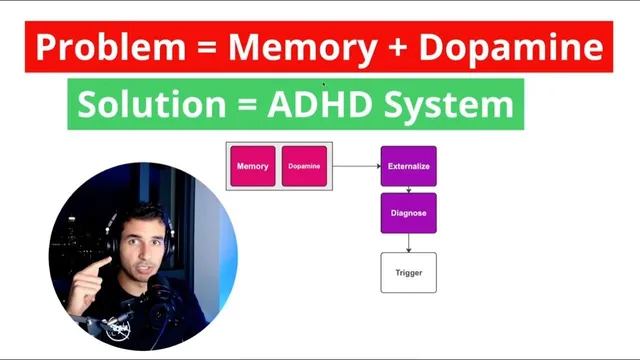
Once the causes are framed as working-memory limits plus dopamine-related difficulty with initiation, the solution becomes practical: externalize the task. The core method is to “diagnose” what’s being avoided, then convert the vague goal into an immediate action trigger—usually by writing or generating a short, readable sequence of steps. The transcript presents ChatGPT as an example tool: prompt it with a question like “Why am I procrastinating?” and ask it to break the task into a short, concrete checklist. The key isn’t the sophistication of the tool; it’s forcing the brain to stop carrying the whole plan internally. Instead of holding “make a YouTube video” as an overwhelming, fuzzy concept, the person receives a small set of steps (e.g., set up camera and mic, record once) that can be read and acted on.
That externalization addresses both bottlenecks at once. It reduces working-memory load by turning the steps into something visible and retrievable. It also supports dopamine by shrinking the initiation demand: the person commits to only the first step—then momentum often takes over. The transcript emphasizes that starting is the hardest part, but once movement begins, many people with ADHD can slip into momentum, flow, or even hyperfocus when the task is engaging.
The takeaway is a repeatable trigger: if procrastination persists, the task likely lacks clarity at the “first step” level. Break it down further—using AI, pen and paper, or talking it out with someone—then execute the first action immediately. The transcript ends by inviting viewers to share their struggles and pointing to a personal productivity system for day-to-day use.
Cornell Notes
Procrastination in ADHD is presented as a two-part problem: limited working memory and lower dopamine-related drive. Complex tasks become vague because the brain can’t reliably retrieve the steps needed to start, so the mind avoids the uncertainty. Dopamine issues make it harder to feel urgency and sustained interest, which is why stimulants like Adderall and Vyvanse can help temporarily—though they may cause crashes. The proposed fix is to externalize the task into a short, visible checklist and focus only on the first step, using tools like ChatGPT, pen and paper, or discussion to create clarity and initiation momentum.
How does working memory explain why ADHD procrastination often looks like “I don’t know where to start”?
Why does dopamine matter for starting, and what’s the role of stimulants like Adderall and Vyvanse?
What is the “two birds, one stone” solution, and why does it work?
How does using ChatGPT fit into the procrastination trigger?
What should someone do if they still feel stuck after externalizing the task?
Review Questions
- What specific mechanism turns a multi-step task into “unknown territory” for someone with ADHD, according to the working-memory explanation?
- How do stimulants like Adderall and Vyvanse change dopamine and norepinephrine, and what downside is described when the effect wears off?
- Why does focusing on only the first externalized step help with both clarity and motivation?
Key Points
- 1
ADHD procrastination is framed as a working-memory problem: complicated tasks lose their step-by-step “start” sequence and become vague.
- 2
Lower dopamine is described as reducing urgency and sustained interest, making initiation harder even when the person wants to act.
- 3
Stimulants such as Adderall and Vyvanse can temporarily raise dopamine and norepinephrine, improving focus and urgency.
- 4
Medication crashes are described as a potential downside, including irritability and moodiness when levels drop.
- 5
The practical fix is to externalize the task by converting vague goals into a short, readable checklist.
- 6
Initiation improves when the person commits to only the first step, then uses momentum to continue.
- 7
If stuck, the first step is still too big—break it down further using AI, writing, or discussion.