Why Simplicity is Power | Priceless Benefits of Being Simple
Based on Einzelgänger's video on YouTube. If you like this content, support the original creators by watching, liking and subscribing to their content.
Simplicity is framed as a route to inner peace by reducing mental noise created by clutter, overanalysis, and excessive desires.
Briefing
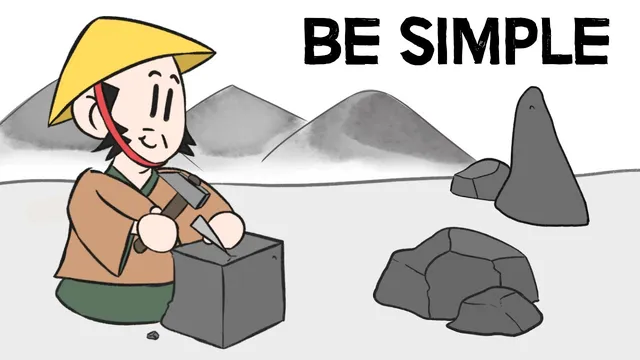
A life built on constant wanting—more money, more status, more control—ends in the same place: restlessness. The story of Taro the stonecutter turns that lesson into a parable, showing how each fulfilled wish (merchant wealth, then princely power, then invulnerability to sun, clouds, and finally even wind and rain) collapses under the reality of fate. The final turn back to simplicity lands the core claim: uncomplicated living—across thoughts, desires, and daily environments—creates clarity, inner peace, and a more stable sense of fulfillment.
Simplicity first shows up as mental hygiene. When Taro’s world becomes cluttered with more than he needs, his mind follows. The transcript reinforces this with a personal anecdote about guinea pigs: when their cage cleaning slipped, the animals became quiet and withdrawn; once the environment was tidied again, they returned to energetic behavior. That observation is then tied to research. A Princeton University study is cited for the idea that clutter undermines focus, while UCLA’s Center on Everyday Lives and Families is cited for linking higher household object counts with higher cortisol—an indicator associated with stress—along with effects on mood and self-esteem. The takeaway is practical: simplifying the immediate surroundings can reduce mental noise and support calm.
The same principle is applied inward. Overthinking is framed not as deep reasoning but as “cluttering” the mind with too many variables, outcomes, and opinions. The transcript argues that accepting uncertainty—and making a choice after reasonable consideration—reduces anxiety because it acknowledges that no amount of analysis can fully predict the future. Simplicity also extends to desire: when pleasures multiply and become hard to satisfy, peace of mind becomes scarce. A grandfather’s example—finding happiness in feeding a small bird rather than needing an expensive yacht—illustrates how modest, repeatable sources of joy can deliver contentment with far less cost.
That contentment is positioned as an antidote to consumerism and the “paradox of choice.” A supermarket toothpaste scene—where a shopper faces an overwhelming range of brands and flavors—sets up a broader point: modern life forces constant decision-making, from electronics to dating apps. With too many options and fear of missing out, people can get lost in acquisition, treating shopping as a kind of religion. Simplicity counters this by cultivating “good enough,” limiting comparisons, and reducing the number of choices rather than exposing oneself to an endless catalog.
Finally, simplicity is presented as resistance to burnout in an achievement-driven culture. Drawing on philosopher Byung-Chul Han, the transcript contrasts disciplinary societies (defined by prohibition) with achievement societies (defined by endless opportunity and self-imposed pressure). In the latter, people “whip themselves” to stay relevant, and the result is exhaustion. Han’s concept of “excess positivity” is countered with “constructive negativity”—hesitation, pausing, boredom, waiting, and rage—described as small breaks from constant striving. The suggested remedy is less doing, slower pacing, fewer simultaneous goals, and more leisure—so life doesn’t become a performance measured by status, purchases, and constant self-optimization.
Cornell Notes
The transcript argues that chasing more—wealth, status, and even invulnerability—doesn’t produce lasting satisfaction. Taro’s escalating wishes end in the realization that fate still wins, so he returns to a simple life as a stonecutter. Simplicity is presented as a practical tool for inner peace: tidier surroundings support focus and calmer mood, and overthinking can be reduced by accepting uncertainty and choosing without exhausting analysis. Desire is also simplified—fewer, easier pleasures can protect contentment. Finally, simplicity is framed as a way to resist consumerism and achievement-driven burnout by limiting options, embracing “good enough,” and building in pauses and leisure.
How does the transcript connect physical clutter to mental clarity?
What does “simplicity in thinking” mean here, and why is uncertainty treated as calming?
How does the transcript argue that simplifying desires increases peace of mind?
What is the “paradox of choice,” and how does simplicity counter it?
How does Byung-Chul Han’s framework explain burnout in an achievement society, and what role does simplicity play?
What final lesson does the Taro parable deliver about power and satisfaction?
Review Questions
- Which cited studies are used to connect clutter with stress or reduced focus, and what specific outcomes do they claim?
- How does the transcript justify choosing despite uncertainty, and what mental habit does it say that replaces?
- What does “constructive negativity” mean in this context, and how would you apply it to reduce achievement-driven burnout?
Key Points
- 1
Simplicity is framed as a route to inner peace by reducing mental noise created by clutter, overanalysis, and excessive desires.
- 2
Tidier living environments are linked to better mood and focus, with citations including a Princeton University study and UCLA research on cortisol.
- 3
Overthinking is treated as a form of mental clutter; accepting uncertainty and choosing after reasonable consideration is presented as a way to calm anxiety.
- 4
Limiting desires and embracing “good enough” protects contentment by reducing the constant struggle to satisfy ever-growing wants.
- 5
The “paradox of choice” is used to explain how consumerism turns simple decisions into exhausting deliberation, from shopping to dating apps.
- 6
Byung-Chul Han’s achievement-society concept connects modern ambition to burnout, and “constructive negativity” (pausing, boredom, waiting) is offered as a counterweight.
- 7
The Taro parable argues that escalating power cannot remove vulnerability to fate, making a return to simplicity the most sustainable form of fulfillment.