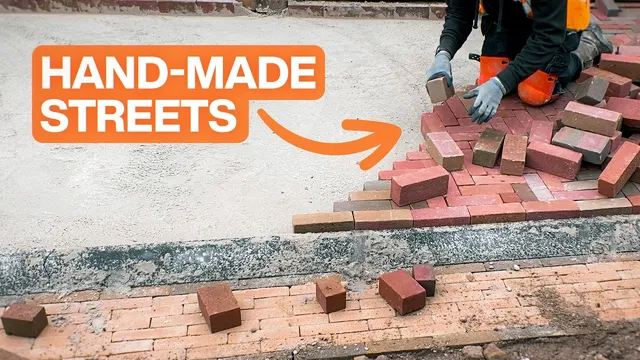
Why Streets in the Netherlands are Made of Bricks
Based on Not Just Bikes's video on YouTube. If you like this content, support the original creators by watching, liking and subscribing to their content.
Clinker pavers are used widely in the Netherlands because they’re durable, reusable after excavation, and often last about 30 years or more.
Briefing
Netherlands street design relies on “clinkers”—preconstructed brick pavers—because they deliver a safer, longer-lasting, and more repairable road surface than asphalt, while also shaping driver behavior through noise and texture. Asphalt is valued worldwide for smoothness, speed of installation, and cost. Dutch cities, however, often choose clinkers not just for historic centers but across newly built neighborhoods, using standardized brick shapes and patterns to manage everything from driving lanes to parking, loading zones, and bicycle areas.
Clinkers (technically “strot baksteen,” or street bricks) are typically made from river clay baked at high temperatures, making them far more durable than ordinary building bricks. They come in several common shapes and are laid in standardized patterns that municipalities can mix and match. Driving surfaces often use a brick orientation designed to resist displacement from tire rolling, while parking areas use different patterns to visually and functionally differentiate space. Even temporary loading zones get their own diagonal brick markings—though the transcript notes newer streets sometimes use a more “pixelated” X, likely reducing the need for extensive diagonal cutting.
Construction and maintenance are central to the case for clinkers. When streets are built, curbs go down first, then clinkers are assembled around them by hand in smaller sections and by machine for larger areas. Crucially, when streets are dug up for utilities, the bricks are removed and reused afterward, avoiding the heavy equipment and concrete trucks associated with asphalt or concrete repairs. The result is often a surface that looks and performs better after reconstruction than the surrounding patches seen in other countries.
The durability argument is backed by maintenance cycles: asphalt streets often need resurfacing every 10 to 15 years, while streets made of clinkers can last 30 years or more. Clinkers also handle temperature swings better because the gaps between bricks allow for expansion and contraction. They absorb less heat than asphalt, reducing urban heat-island effects, and their joints can be designed to manage water infiltration—though not so much that the base erodes.
Safety and traffic management are where Dutch street materials become policy. The transcript ties clinkers to “Sustainable Safety,” a 1990s road-safety framework that categorizes roads into three types: snel (highways/through roads), “distributor” roads (kabid on slou), and neighborhood access streets (a tuang). Neighborhood access streets have strict limits on motor-vehicle volumes (often capped around 5,000 vehicles per day in rural areas and about half that in urban areas) and low speed limits, typically around 30 km/h, enforced through traffic calming.
Clinkers reinforce that calming. Their uneven surface increases road noise, creating a subconscious cue to drivers to slow down. At intersections, raised junctions, standardized curb and ramp components, and “continuous sidewalks” keep pedestrian and cyclist space level and uninterrupted across side streets—signaling priority and reducing the high-speed turning behavior common in car-oriented designs elsewhere. Over time, as municipalities rebuild older streets under newer standards, the transcript suggests the system becomes more consistent, turning roadworks into a recurring improvement rather than a long-term eyesore.
Finally, the transcript acknowledges tradeoffs: clinkers cost more upfront and can deteriorate under heavy motor-vehicle traffic, which is why asphalt remains common on high-volume roads. Still, the overall claim is that Dutch cities save money and improve livability by matching road materials and geometry to the intended function of each street type—using clinkers as both infrastructure and behavioral design tool.
Cornell Notes
Dutch cities use clinker brick pavers widely because they last longer, are easier to reuse during repairs, and help enforce safer driving speeds. Clinkers are usually made from river clay baked at high temperatures, then laid in standardized patterns for driving, parking, loading, and bicycle areas. When streets need utility work, bricks can be removed and reinstalled with minimal heavy equipment, often leaving a better surface than patchwork asphalt. The safety case is tied to “Sustainable Safety,” which limits motor-vehicle volumes and speeds on neighborhood access streets; clinkers add road noise and unevenness that encourages slower driving. Continuous sidewalks and raised intersections further protect pedestrians and cyclists by keeping their space uninterrupted across side streets.
Why do Dutch cities choose clinker pavers over asphalt for many streets?
How do brick patterns and layout communicate different street functions?
What makes repairs with clinkers different from repairs with asphalt or concrete?
How does Dutch road-safety policy connect to street materials and geometry?
What are continuous sidewalks, and why are they important at intersections?
Where does asphalt still make sense in the Netherlands?
Review Questions
- What specific properties of clinkers make them suitable for long-life streets and repeated utility repairs?
- How does the “Sustainable Safety” road classification system determine where clinkers are most appropriate?
- Explain how continuous sidewalks and raised intersections change driver behavior compared with typical car-oriented junction designs.
Key Points
- 1
Clinker pavers are used widely in the Netherlands because they’re durable, reusable after excavation, and often last about 30 years or more.
- 2
Clinkers are commonly made from river clay baked at high temperatures, which makes them tougher than typical building bricks.
- 3
Brick patterns and white clinker markings differentiate driving, parking, loading, and bicycle spaces while keeping the street visually organized.
- 4
Neighborhood access streets are limited by strict motor-vehicle volume caps and low speed targets, and clinkers reinforce those limits through noise and texture.
- 5
Continuous sidewalks keep pedestrian and cyclist routes level across side streets, signaling priority and reducing risky high-speed turning.
- 6
Asphalt still plays a role on high-volume motor-vehicle roads because clinkers can rut and groove under heavy traffic.
- 7
Dutch street design treats material choice as part of safety policy, not just aesthetics or construction convenience.