Why Swiss Trains are the Best in Europe
Based on Not Just Bikes's video on YouTube. If you like this content, support the original creators by watching, liking and subscribing to their content.
Switzerland’s rail strength is built on integrated scheduling: clock-face timetables plus pulse timetabling synchronize connections across the entire network.
Briefing
Switzerland’s rail system earns its reputation less from flashy technology and more from disciplined scheduling: trains run so frequently and connections are so tightly integrated that multi-leg trips often feel nearly as simple as direct ones. The network’s “clock-face” timetable keeps departures consistent at predictable minutes past the hour, while “pulse timetabling” synchronizes those patterns across the country so most passengers wait only a few minutes to transfer. That design matters because it turns public transit from a planning exercise into a default choice—even for travelers moving between small villages where service might otherwise be expected to thin out.
The country’s geography and settlement pattern make the achievement harder, not easier. Nearly half of Switzerland’s population lives in villages under 10,000, yet stations appear across the map with regular service—sometimes every 30 minutes even for stops serving just a café, a ski lift, or a hiking trail. The system’s reach is supported by a national approach to timetable design rather than a patchwork of local schedules. Integrated timetabling also helps squeeze capacity on shared tracks, a practical necessity in a mountainous country where rail lines are expensive to build and routes often have to be shared.
Operational performance backs up the planning. Swiss punctuality is measured strictly: trains are considered “on time” only if they arrive within three minutes of schedule, and the network reports 91.9% arriving on time. More important for passenger experience is connection reliability—98.9% of trains allow travelers to make their connection, which reduces the real-world risk of missing a transfer when services run every 30 minutes. In practice, that means a trip with multiple changes usually adds little time compared with a single ride.
Comfort and accessibility reinforce the convenience. Riders describe modern, clean trains, level boarding, wheelchair access, and accessible restrooms, with stations equipped with ramps or elevators. The Swiss Pass and regional travel cards also reduce friction for residents and frequent travelers, and first class is portrayed as an upgrade that’s often not dramatically better unless a route is busy—though business zones can make onboard work practical.
Even when things go wrong, the system’s baseline quality stands out. One missed connection occurred after a delay traced to another country, but the wait in a small town still felt manageable, and the onward journey typically involved short walks, tram rides, or gondolas because Swiss towns are designed to be mixed-use and walkable around transit. Returning to the Netherlands, the contrast was less about cycling or general transit quality and more about polish and noise levels after Swiss service.
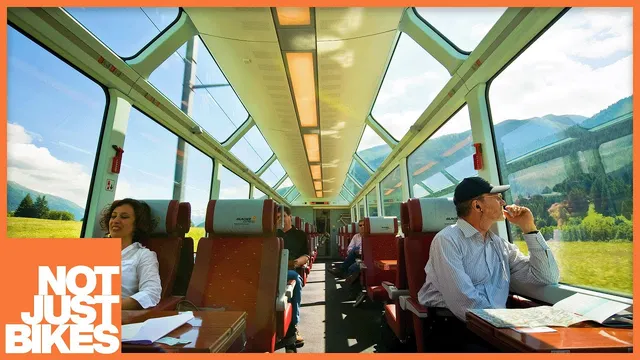
Scenic rail remains part of the appeal too, with the Glacier Express highlighted as a standout experience through the Alps. Overall, Switzerland’s edge in Europe is portrayed as a combination of integrated timetables, strict punctuality, frequent service to dispersed communities, and a passenger-first approach to station design and onboard accessibility—so the journey feels predictable, not stressful.
Cornell Notes
Switzerland’s rail network stands out because it combines frequent service with tightly coordinated timetables that make transfers reliable. “Clock-face scheduling” keeps departures consistent at set minutes past each hour, while “pulse timetabling” synchronizes arrivals and departures across directions so most connections require only about a 10-minute wait. Reported connection performance is strong: the average connection wait is 8.4 minutes, 77% of connections are 10 minutes or less, and 98.9% of trains allow passengers to make their connection. Strict punctuality metrics (on-time defined within three minutes) and accessibility features like level boarding and wheelchair areas further reduce friction. The result is that even multi-leg trips across small villages can feel nearly as easy as direct travel.
What scheduling methods make Swiss train transfers feel effortless?
How do Swiss punctuality and connection reliability differ from common transit metrics?
Why can Switzerland provide frequent rail service to very small towns?
How does integrated timetabling help when rail infrastructure is constrained by mountains?
What passenger experience details reinforce the “best in Europe” claim beyond schedules?
Review Questions
- How do “clock-face scheduling” and “pulse timetabling” work together to reduce transfer stress for passengers?
- Why is connection punctuality (not just arrival punctuality) crucial in a network where trains run about every 30 minutes?
- What infrastructure constraints in Switzerland make timetable integration especially important?
Key Points
- 1
Switzerland’s rail strength is built on integrated scheduling: clock-face timetables plus pulse timetabling synchronize connections across the entire network.
- 2
Frequent service reaches even small villages, with regular 30-minute intervals in places that would often lack intercity rail elsewhere.
- 3
Strict punctuality standards define “on time” as within three minutes of schedule, and reported on-time performance is 91.9%.
- 4
Connection reliability is exceptionally high: average connection wait is 8.4 minutes, 77% of connections take 10 minutes or less, and 98.9% of trains allow passengers to make their connection.
- 5
Shared rail capacity in mountainous terrain is managed through tight timetable coordination, including on single-track tunnel segments.
- 6
Passenger experience is reinforced by modern, clean trains, level boarding, wheelchair access, accessible restrooms, and station ramps or elevators.
- 7
Real-world disruptions still happen (including delays originating from other countries), but the overall system design keeps missed connections and onward travel from becoming overly chaotic.