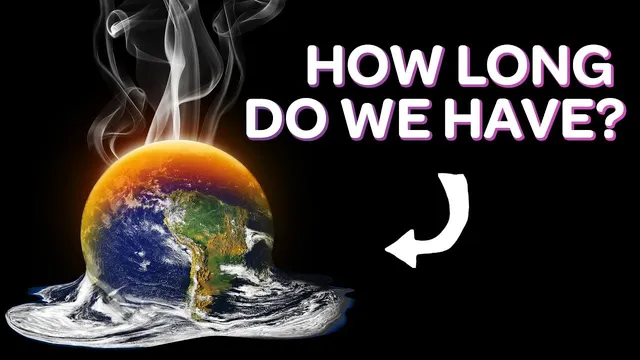
Why the IPCC Report is so Scary
Based on Second Thought's video on YouTube. If you like this content, support the original creators by watching, liking and subscribing to their content.
The IPCC’s SR 15 assessment emphasizes urgency: roughly 12 years to drastically change the warming trajectory.
Briefing
Human-caused climate change is already reshaping the odds of disasters, and the IPCC’s latest assessment warns that the difference between 1.5°C and 2°C of warming is not a rounding error—it maps to sharply different ecosystems, coastlines, and human health outcomes. The report’s central message is urgency: the world has roughly 12 years to drastically change the trajectory of warming, because the window to limit damage narrows quickly as temperatures rise.
The IPCC (Intergovernmental Panel on Climate Change), a United Nations body founded in 1988, doesn’t run new climate experiments itself. Instead, it synthesizes thousands of peer-reviewed studies from scientists worldwide and then drafts reports that are reviewed and approved by government delegates from more than 120 countries. That structure is meant to produce an “objective scientific view” of climate change and its impacts. The assessment referenced here—SR 15 from 2018—distills a large technical literature into a shorter summary for policymakers, citing about 6,000 scientific reports.
SR 15 frames the key target as limiting warming to about 1.5°C above pre-industrial levels, with 2°C as a higher-risk threshold. Even small increases matter because many climate systems behave nonlinearly. In Greenland, for example, a thick ice sheet is already close to the edge in parts of the year; a couple degrees could trigger a runaway melt, raising average sea levels by roughly seven meters. That would submerge coastal property, overwhelm island nations, and force mass relocation. The report also links warming to intensified hurricane impacts and other coastal hazards, with Florida singled out as especially vulnerable.
The assessment then quantifies ecological losses that escalate quickly with temperature. At 1.5°C, roughly 6% of insects, 8% of plants, and 4% of vertebrates are projected to lose more than half of their natural geographic range; at 2°C, those figures jump to 18% of insects, 16% of plants, and 8% of vertebrates. Coral reefs face a similar cliff: about 90% of remaining reefs are projected to be destroyed at 1.5°C, while 2°C is expected to wipe them out entirely. The Arctic is another stark example—an ice-free summer is projected once per century at 1.5°C, but once per decade at 2°C. Fisheries also decline, with global annual catch rates dropping by about 1.5 million tonnes at 1.5°C and 3 million tonnes at 2°C.
Human impacts follow these ecological shifts. The report emphasizes that poorer countries and regions with fragile ecosystems—coastal zones and agricultural areas—bear disproportionate risk. Higher warming is associated with more vector-borne illnesses such as malaria, broader disease ranges, ozone depletion, increased heat-related deaths, reduced crop yields for major staples (including maize, rice, and wheat), lower nutritional quality, and more extreme weather. Limiting warming to 1.5°C could reduce the number of people pushed into poverty and heightened climate risk by up to several hundred million by 2050.
The path forward combines adaptation and mitigation, but the mitigation side is portrayed as politically constrained. Adaptation options include coastal defenses, sustainable aquaculture, and ecosystem restoration, yet the transcript stresses that individuals alone can’t offset the scale of emissions. It highlights corporate concentration—100 companies account for 71% of global emissions—and argues that governments must act, since policy decisions determine whether emissions fall. Meeting the 1.5–2°C challenge would require a sweeping energy transition to renewables, ending fossil-fuel use in transportation, halting deforestation while expanding reforestation, reducing factory farming and meat consumption, and potentially shifting toward lab-grown alternatives. The takeaway is that delay is costly, and meaningful action depends on political pressure now rather than later.
Cornell Notes
The IPCC’s SR 15 assessment warns that limiting warming to 1.5°C versus allowing 2°C produces dramatically different outcomes for ecosystems and people. The report estimates a narrow window—about 12 years—to change the warming trajectory, because many impacts intensify quickly as temperatures rise. It quantifies ecological losses (coral reefs, Arctic sea ice, species range contractions) and links higher warming to health and food-system risks, including more heat deaths, malaria expansion, and reduced yields for major crops. The transcript argues that adaptation helps but can’t substitute for mitigation, and that emissions cuts depend heavily on government policy and large emitters rather than individual lifestyle changes alone.
What makes the IPCC’s assessments influential even though it doesn’t run experiments itself?
Why does the transcript treat 1.5°C and 2°C as fundamentally different?
What concrete ecological numbers does SR 15 provide for warming levels?
Which human risks are emphasized as warming increases, and who is most affected?
What does the transcript say about adaptation versus mitigation, and why does it argue individuals aren’t enough?
If the world aimed to meet the temperature goal, what major changes would be required?
Review Questions
- How does the IPCC’s review-and-approval process work, and why does it matter for trust in its conclusions?
- Pick one impact category (sea level, coral reefs, Arctic ice, fisheries, or health). What changes from 1.5°C to 2°C, and what does that imply for policy urgency?
- Why does the transcript argue that individual lifestyle changes are insufficient on their own? Use the emissions-concentration claim to support your answer.
Key Points
- 1
The IPCC’s SR 15 assessment emphasizes urgency: roughly 12 years to drastically change the warming trajectory.
- 2
Limiting warming to 1.5°C avoids far worse outcomes than 2°C, with many impacts escalating sharply as temperatures rise.
- 3
Nonlinear climate risks include potential runaway ice loss in Greenland, implying large sea-level rise and severe coastal disruption.
- 4
SR 15 quantifies ecological losses: coral reefs are projected to lose about 90% at 1.5°C but be wiped out at 2°C, and species range losses increase substantially at 2°C.
- 5
Human impacts highlighted include more heat deaths, expanded malaria risk, reduced yields for major crops, and greater poverty and climate-risk exposure—especially in poorer regions.
- 6
Adaptation measures (coastal defenses, sustainable aquaculture, ecosystem restoration) can reduce harm, but mitigation depends on policy and large emitters.
- 7
A credible mitigation pathway requires a rapid energy transition away from fossil fuels and major changes in transportation, land use, and food systems.