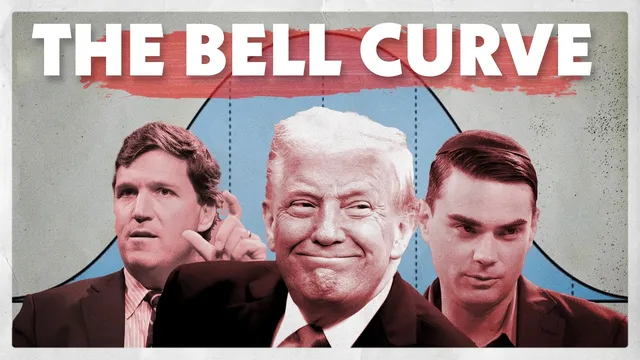
Why The Right Is Obsessed With IQ
Based on Second Thought's video on YouTube. If you like this content, support the original creators by watching, liking and subscribing to their content.
The transcript argues that IQ-based “race science” functions as a political permission structure for inequality, not merely as a measurement debate.
Briefing
Right-wing obsession with IQ is less about measuring intelligence than about building a political permission structure for inequality—linking “race science” to eugenics, welfare-state rollback, and a nationalist politics of exclusion. A key through-line is the Bell Curve’s popularity in the 1990s: by presenting IQ test results as if they reveal stable racial differences, it made racial hierarchy feel like a legitimate subject for mainstream debate. Even when authors hedge about nature versus nurture, the conclusions still treat racial inequality in intelligence as real, observable, and only temporarily maskable—an idea that can be used to justify suppressing “inferior” reproduction and promoting “superior” reproduction.
That framing matters because it doesn’t stay confined to academic controversy. The transcript argues that far-right media ecosystems—figures such as Ben Shapiro, Tucker Carlson, Joe Rogan, and Steve Bannon—either platform Charles Murray directly or cite his work indirectly, helping translate IQ claims into everyday political talking points about who is more intelligent, more violent, or more fit to lead. The Bell Curve is portrayed as a “scientific roadmap” for racial hierarchy, and the political payoff is twofold: it supplies a rationale for ethno-differentialism (the idea that each group should remain in its own “space” rather than compete inside a majority society) and it helps normalize the broader eugenics logic that some people should be prevented from reproducing while others should be promoted.
The transcript also places this “race science” alliance inside a wider ideological coalition. For eugenics-flavored ideas to become influential, they needed partners with institutional power, including neoliberals. A symbol of that alignment is the Bell Curve’s connection to Friedrich A. Hayek and the American Enterprise Institute, where Murray is described as having a named chair. The 1990s are depicted as a moment when neoliberalism believed it had won—global free trade and the end of the Cold War—yet also feared it had lost the political battle because popular welfare programs like Social Security and Medicaid remained politically durable. Instead of dismantling the welfare state openly, the transcript says, elites shifted the narrative: government became the enemy (bureaucrats, “woke” global governance, and social movements), while “new science” supplied a naturalized justification for why inequality should persist.
In this account, the coalition’s endgame is not simply austerity but a reallocation of harm. Cutting government spending is framed as benefiting the wealthy while pushing the first victims onto minorities. The transcript contrasts that with the claim that intelligence is relatively evenly distributed across persons and that poverty-related barriers—access to food, shelter, work, transportation, and education—are better explanations for lower test performance. When markets and austerity create instability, the transcript adds another layer: right-wing politics offers “haven assets” such as gold and national identity, with Trump portrayed as selling belonging as a kind of protective asset. But the transcript insists that citizenship-as-salvation is a fig leaf, pointing to deportations and denaturalizations and arguing that price hikes, detentions, and welfare cuts would still land regardless of who feels “protected.”
Overall, the obsession with IQ is presented as a political technology: it converts contested measurements into a story about inherent human hierarchy, then uses that story to legitimize neoliberal retrenchment and nationalist exclusion.
Cornell Notes
The transcript links modern right-wing IQ obsession to a broader project of legitimizing inequality. It traces the influence of Charles Murray and Richard Herrnstein’s The Bell Curve, arguing that its IQ-test framing made racial hierarchy seem scientifically discussable and helped normalize eugenics logic. The transcript claims that far-right media figures used these ideas to support ethno-differentialism and to rationalize welfare-state rollback, with minorities positioned as the first targets of austerity. It also argues that intelligence is relatively evenly distributed across people and that differences in test outcomes are better explained by unequal access to resources. The political takeaway: “race science” functions as a permission structure for exclusionary nationalism and cuts that benefit the wealthy.
Why does the transcript treat The Bell Curve as politically consequential rather than just a controversial book?
How does the transcript connect IQ claims to ethno-differentialism and modern far-right politics?
What coalition does the transcript describe between “race scientists” and neoliberals?
What problem does the transcript say neoliberals faced in the 1990s, and how did they respond?
According to the transcript, what explains IQ-test differences better than racial inferiority?
How does the transcript describe the role of nationalism and “haven assets” like gold in right-wing appeal?
Review Questions
- What specific mechanisms does the transcript claim turn IQ-test claims into policy permission for eugenics or exclusion?
- How does the transcript distinguish between intelligence as an individual trait and test-score outcomes as a product of unequal access to resources?
- What does the transcript suggest about why neoliberalism and race science could form an alliance despite their different public images?
Key Points
- 1
The transcript argues that IQ-based “race science” functions as a political permission structure for inequality, not merely as a measurement debate.
- 2
The Bell Curve is portrayed as making racial hierarchy and eugenics logic feel mainstream by presenting IQ differences as scientific fact.
- 3
Far-right media influence is described as spreading Murray-related ideas through direct platforming or indirect citation, shaping everyday narratives about groups and fitness.
- 4
A coalition is described between race-science figures and neoliberals, symbolized by institutional ties involving Friedrich A. Hayek and the American Enterprise Institute.
- 5
The transcript claims intelligence is relatively equal across people and that unequal access to basic resources better explains test-score differences.
- 6
Welfare-state rollback is framed as benefiting the wealthy while pushing harm onto minorities, with “nature” narratives used to justify it.
- 7
National identity and citizenship are portrayed as marketed “haven assets,” but the transcript argues they do not prevent economic and enforcement harms.