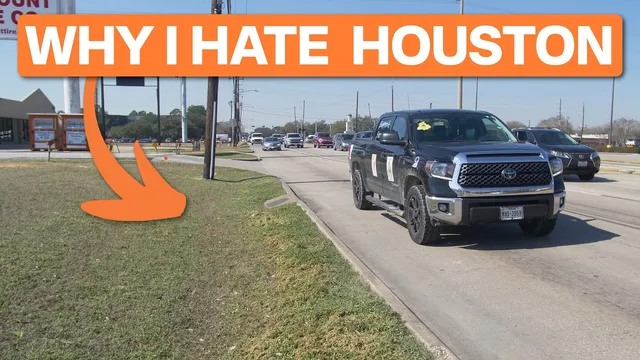
Why This Channel Exists (and why I hate Houston)
Based on Not Just Bikes's video on YouTube. If you like this content, support the original creators by watching, liking and subscribing to their content.
Car dependency is portrayed as an economic burden that can determine whether people can afford to work, apply for benefits, and access basic services.
Briefing
Car-dependent design isn’t just inconvenient—it’s financially crushing, physically dangerous, and politically maintained through regulations that make walking and cycling effectively impossible. That core conviction is driven by years of living in car-centric places, followed by a defining walk in Houston that turned a short errand into a near-death experience and a lasting rejection of “stroad” urban form.
Growing up in “Fake London,” a car-infested city, the narrator says boredom with suburbia pushed him to internships across Ontario and the San Francisco Bay Area, then frequent travel across the U.S. and Canada. Most North American cities looked strikingly similar: wide roads, parking lots, and destinations set far back from the street. Living downtown Toronto later showed a different reality—car-free life was practical and saved substantial money, especially during a period of unemployment after the dot-com crash.
The hostility toward car dependency sharpens when travel for work forces constant movement between countries and cities. Instead of assuming differences were cultural or weather-related, he starts comparing how people actually get around: local trains in Tokyo, rush-hour traffic in Boston, the S-Bahn in Berlin, and taxis to factories in Shenzhen. The pattern becomes clear—cities with safe, frequent alternatives to driving feel fundamentally different, while car-centric sprawl produces sameness.
Houston delivers the turning point. On an around-the-world trip, he needs to walk about 800 meters to a luggage shop, but the route begins with no sidewalks at all, requiring crossings through parking lots. The main road behaves like a “stroad”—a road designed for high-speed vehicle throughput that is expensive, inefficient, and dangerous for pedestrians. He describes walking beside polluted air and constant noise, with drivers focused on oncoming traffic rather than people on foot. The situation worsens when the sidewalk abruptly ends with no warning, forcing him onto a curb beside a guardrail while crossing a 28-metre bridge carrying seven lanes of traffic.
After that walk, he reads about urban design and argues that North American sprawl wasn’t “designed for the car” so much as bulldozed for it—replacing once-compact, walkable neighborhoods with regulations that dictate parking, lot sizes, and other constraints that privilege driving. He also challenges the common excuse that people don’t walk because of weather or hills, pointing to European examples where safe cycling and walking infrastructure exists even in industrial areas.
Houston, he says, is among the worst examples of sprawl but not the worst city overall. Improvements—like a new bus network deployed quickly, added bicycle lanes, and reduced minimum parking requirements in parts of downtown—are acknowledged. Yet he criticizes “pedestrian-friendly” projects that still prioritize vehicle speed, including a multimillion-dollar protected intersection built around two six-lane stroads with dangerous slip lanes. The city’s massive highway expansion plans, he argues, demonstrate induced demand: widening freeways increases travel times out of downtown and locks the region into car dependency.
The lasting takeaway is that car-centric design is not inevitable. People raised inside it may call restrictions “taking away freedom,” but the narrator insists there’s another model—places where driving isn’t required, and where daily life is safer, cheaper, and more humane. He credits Houston’s failures with helping shape the path that ultimately led his family to the Netherlands, and he ends by thanking supporters for funding the channel’s work.
Cornell Notes
The central message is that car-dependent urban design is a deliberate system that makes walking and cycling unsafe and unaffordable, then uses regulations and infrastructure spending to keep it that way. A memorable walk in Houston—starting with no sidewalks, turning into a “stroad” environment, and ending with a sidewalk that abruptly disappears—becomes the turning point for understanding how pedestrian failure is engineered, not accidental. After learning about car dependency and walkability, the narrator argues that North American sprawl replaced walkable neighborhoods through bulldozing and rulebooks that privilege driving (parking minimums, lot-size limits, and deed restrictions). Even when cities add “improvements,” projects that still prioritize vehicle speed (like slip lanes) can undermine pedestrian safety. The result is a call for cities to build infrastructure that makes non-driving life practical and desirable.
Why does the narrator connect car dependency to personal financial hardship, not just transportation inconvenience?
What makes the Houston walk a “design” lesson rather than a one-off bad experience?
How does he argue that sprawl wasn’t merely “designed for cars,” but actively bulldozed into place?
What evidence does he use to counter the claim that people don’t walk or cycle because of weather or geography?
Which Houston changes does he credit, and what does he criticize despite those efforts?
How does he connect highway expansion to induced demand and longer travel times?
Review Questions
- What specific features of the Houston walk (sidewalk gaps, stroad behavior, bridge crossing) illustrate the difference between poor planning and intentional pedestrian exclusion?
- How does the narrator use the concept of “housing PLUS transportation costs” to explain why car dependency harms low- and minimum-wage workers?
- Why does he argue that “pedestrian improvements” can still fail if vehicle speed is prioritized through elements like slip lanes?
Key Points
- 1
Car dependency is portrayed as an economic burden that can determine whether people can afford to work, apply for benefits, and access basic services.
- 2
A short walk in Houston becomes a case study in engineered pedestrian hostility: missing sidewalks, stroad design, and abrupt sidewalk termination.
- 3
The narrator argues sprawl wasn’t inevitable; it was bulldozed and then locked in by regulations such as parking minimums, lot-size limits, and deed restrictions.
- 4
Safe walking and cycling are treated as design choices, not lifestyle preferences, with European infrastructure offered as proof of feasibility outside dense downtown cores.
- 5
Houston’s transit and bike improvements are acknowledged, but vehicle-prioritizing “pedestrian-friendly” projects (like slip lanes) are criticized as undermining safety.
- 6
Highway widening is framed as induced demand, supported by Houston’s freeway expansion leading to longer travel times out of downtown.
- 7
The broader goal is a city model where driving is neither required nor desired because daily life is safer, cheaper, and more humane without cars.