Why Time-Blocking Doesnt Work for You (and How to Fix it)
Based on Irfan Bhanji's video on YouTube. If you like this content, support the original creators by watching, liking and subscribing to their content.
Time-blocking struggles when “contact switching” breaks single-task focus through frequent checks of email, phones, or other tasks.
Briefing
Time-blocking often fails because it demands strict, distraction-free focus—yet most people live in a constant stream of interruptions and context switching. Cal Newport’s “Deep Work” frames the core problem as “contact switching”: checking email, phones, or other tasks while trying to stay on one mental track. That constant switching makes time blocks feel brittle, especially in a world where notifications and overlapping demands pull attention in multiple directions.
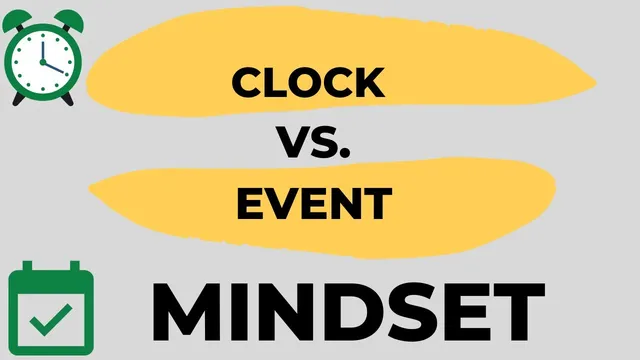
A second reason time-blocking doesn’t stick is personality fit. The transcript draws a sharp line between “clock-based” people, who naturally organize life around time boundaries, and “event-based” people, who organize life around activities. Clock-based individuals can treat 2 p.m. as a clean cutoff and move to the next task. Event-based individuals—like the narrator—stop and start based on what’s happening (a call, a meeting, a conversation), which makes rigid blocks harder to maintain.
For event-based personalities, the proposed fix is to stop trying to cram many short blocks into the day. The common mistake is scheduling four or five time blocks (often 30 minutes or using Pomodoro-style intervals) and then failing to adhere when real life interrupts the plan. Instead, the advice is to schedule only two long time blocks—specifically two 90-minute sessions—so the day centers on a small set of priorities.
This approach aligns with Newport’s concept of “slow productivity,” which emphasizes fewer, deeper efforts that produce higher-quality outputs. Rather than choosing four or five tasks, the method pushes choosing two essential tasks and working deeply on them. The longer duration also helps with flow: short blocks of 25–40 minutes often aren’t enough time to fully orient, settle into concentration, and reach the sustained mental state required for deep work.
The transcript doesn’t claim long blocks eliminate distraction. It acknowledges that distractions will happen, but argues the key is returning to the task you intended to do. It also suggests Pomodoro can work better for clock-based people, while event-based people may struggle with its shorter cadence.
A practical example is offered for deep work scheduling: doing a deep-work session from about 7:30 to 9:00 a.m., then another window after work (roughly 4:30 to 6:00 p.m.), and then stopping for the day. The takeaway is blunt: time-blocking is hard, requires effort and concentration, and works best when the structure matches how a person naturally organizes their attention—especially for event-based personalities who need fewer, longer blocks built around essential work.
Cornell Notes
Time-blocking breaks down when it collides with two realities: constant distraction/context switching and mismatched scheduling style. The transcript distinguishes clock-based people (who plan by time boundaries) from event-based people (who plan by activities). For event-based personalities, the suggested fix is to abandon many short blocks and instead schedule two long 90-minute deep-work sessions. This forces prioritization—pick two essential tasks—and supports “slow productivity” and flow because longer blocks provide enough time to get oriented and stay focused. Pomodoro-style short intervals are presented as more suitable for clock-based people than for event-based ones.
Why does time-blocking fail for many people even when they try to follow it strictly?
What’s the difference between clock-based and event-based personalities, and why does it matter for scheduling?
What common time-blocking mistake is highlighted for event-based people?
What’s the proposed solution for event-based personalities?
How does the transcript treat Pomodoro and flow?
What does the transcript suggest as a practical deep-work schedule?
Review Questions
- How does “contact switching” undermine the purpose of time-blocking, and what behaviors trigger it?
- Why would two 90-minute blocks be more compatible with an event-based personality than four or five shorter blocks?
- What role does flow play in choosing block length, and how does that connect to “slow productivity”?
Key Points
- 1
Time-blocking struggles when “contact switching” breaks single-task focus through frequent checks of email, phones, or other tasks.
- 2
Personality fit matters: clock-based people plan by time boundaries, while event-based people plan by what’s happening.
- 3
Event-based people often fail when they schedule too many short blocks that can’t survive real-life interruptions.
- 4
A practical fix is to schedule two 90-minute deep-work blocks instead of four or five smaller ones.
- 5
Long blocks force prioritization: pick two essential tasks rather than trying to complete four or five.
- 6
Longer sessions support flow because they provide enough time to orient and sustain deep concentration.
- 7
Pomodoro-style short intervals may work better for clock-based people than for event-based ones.