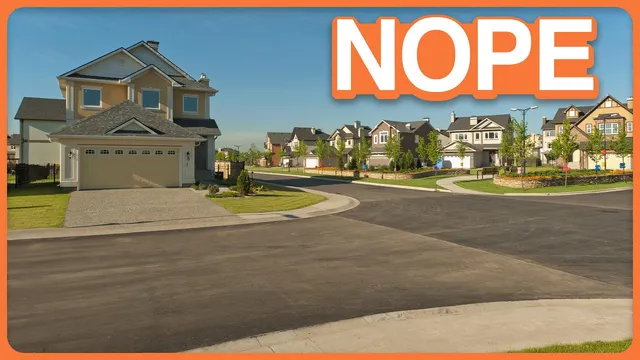
Why We Won't Raise Our Kids in Suburbia
Based on Not Just Bikes's video on YouTube. If you like this content, support the original creators by watching, liking and subscribing to their content.
The transcript links children’s independence to both street safety and neighborhood design, not just parenting choices.
Briefing
Raising children in car-dependent suburbia doesn’t just limit where kids can go—it reshapes what parents believe is safe, and that belief feeds back into even more driving. In contrast, the Netherlands is marked by children cycling, walking, and hanging out in public spaces without constant adult supervision, a pattern the video links to safer streets and neighborhood design that keeps everyday destinations within reach.
A key observation comes from comparing childhood experiences in London, Ontario with life in Amsterdam. In the Netherlands, children are visible everywhere—riding bikes to school, playing with friends, and moving through the city independently. That everyday independence is presented as a major contributor to Dutch children’s well-being, alongside cultural factors like food and family routines. When the narrator returns to Canadian hometown neighborhoods, kids are mostly seen with parents, not on their own, and that absence is framed as “sad” rather than normal.
Parents in suburban Canada are described as citing danger as the reason children aren’t allowed out independently, including fear-based claims about stranger abductions. The transcript pushes back on that narrative by arguing that stranger abductions are exceedingly unlikely in already-safe countries like Canada. Instead, it points to more structural reasons: North American streets are portrayed as genuinely hostile to pedestrians. Even as overall traffic fatalities have declined in developed countries since the 1970s, pedestrian deaths have risen in the US and Canada due to more car traffic, larger vehicles like trucks and SUVs, distracted driving, and higher speeds. The result is a vicious cycle—parents drive children because walking feels unsafe, and more driving further worsens the street environment.
City design then becomes the practical barrier. In car-dependent suburbia, destinations are too far or sidewalks are missing, making independent walking or cycling difficult even when parents want it. The transcript argues that this is why “quiet and boring” suburbs still get defended as good for kids: they may shelter toddlers, but once children are older—around six—living in edge-of-town housing can trap them at home and restrict independence.
The video backs the independence claim with school-travel statistics: about 60% of children in the Netherlands walk or cycle to school versus 28% in Canada. It also contrasts today’s decline in Canada with earlier eras when children walked long distances in winter conditions. Excuses about weather and hills are dismissed as insufficient to explain the drop, with the blame placed on decades of stopping the construction of family-friendly, walkable housing.
Beyond school, the transcript describes a broader culture of children traveling to sports and activities on their own, often in sports gear, rather than being shuttled everywhere until they can drive at 16. It then highlights how North American child-safety rules can become a deterrent: stories from across the US and Canada are cited, including Adrian Crook in Vancouver, whose children rode the bus with him for two years before he allowed unsupervised travel; after an anonymous report, the ministry’s ruling required children under 10 to be supervised for any amount of time, with severe consequences for violations.
The closing message is that the solutions aren’t just personal choices or parenting attitudes. Walkability is hard to retrofit onto existing car-centric suburbs, and zoning rules—such as minimum parking requirements—make new walkable neighborhoods difficult to build. The transcript concludes with a direct inversion of a common North American assumption: children don’t need more cars; they need fewer cars and safer streets so they can walk and cycle independently. The narrator and spouse reportedly chose to move to a place with “the happiest kids in the world,” tying the decision to the built environment that makes independence normal.
Cornell Notes
The transcript links children’s independence to street safety and neighborhood design, arguing that car-dependent suburbia both discourages walking and increases perceived risk. Dutch cities are described as enabling everyday autonomy: children cycle or walk to school and activities, and they can spend time in public spaces without constant adult supervision. In Canada and the US, pedestrian danger—driven by traffic volume, vehicle size, distracted driving, and speed—creates a feedback loop where parents drive more, making streets even less safe. Legal and child-welfare standards then intensify the effect by treating unsupervised time as unacceptable, chilling parents’ willingness to let kids roam. The core takeaway: changing parenting culture alone won’t solve the problem; building walkable, lower-car neighborhoods is the practical path to safer independence.
Why does the transcript treat “stranger abduction” fears as less persuasive than street design?
What is “eyes on the street,” and how does it connect to child safety?
How does car dependence become a practical barrier to independent mobility?
What evidence is used to show differences in school travel between the Netherlands and Canada?
How do child-welfare rules and enforcement affect parents’ willingness to allow independence?
What solution does the transcript propose, given that culture change alone isn’t enough?
Review Questions
- What mechanisms does the transcript describe that turn pedestrian danger into reduced child independence (and then back into more driving)?
- How do zoning and minimum parking requirements factor into the decline of walkable neighborhoods and school travel?
- Why does the transcript treat legal definitions of “adequate supervision” as a major barrier to letting kids roam independently?
Key Points
- 1
The transcript links children’s independence to both street safety and neighborhood design, not just parenting choices.
- 2
Pedestrian risk in North America is attributed to higher traffic volumes, larger vehicles, distracted driving, and speed—conditions that make walking feel unsafe.
- 3
Car-dependent suburbia restricts independent mobility because destinations are often too far and sidewalks are missing or incomplete.
- 4
School-travel rates are used as evidence: about 60% of Dutch children walk or cycle to school versus 28% in Canada.
- 5
The decline in walking to school is attributed to decades of stopping the construction of family-friendly, walkable housing under modern zoning, not to worsening weather or terrain.
- 6
Child-welfare enforcement is described as discouraging unsupervised time, with investigations and custody threats for behaviors like walking to school alone.
- 7
The proposed remedy is structural: build walkable, mixed-use neighborhoods and reduce car dominance so kids can walk or cycle safely.