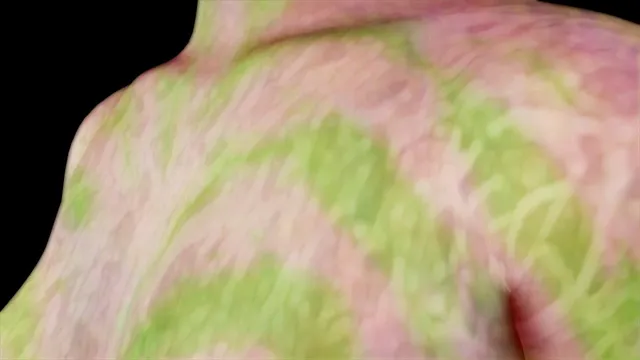
Why Women Are Stripey
Based on Veritasium's video on YouTube. If you like this content, support the original creators by watching, liking and subscribing to their content.
X-chromosome inactivation begins in early female embryos (around four days old) when both X chromosomes start active.
Briefing
Women’s “stripey” bodies trace back to a molecular coin flip early in embryonic development: one of the two X chromosomes gets permanently silenced in each cell, leaving a mosaic pattern that can show up as stripes in skin and spots in calico cats. The key mechanism is X-chromosome inactivation, which begins when a female embryo is only about four days old and contains roughly 100 cells. At that stage, both X chromosomes—one inherited from the mother and one from the father—are initially active. Then, through a competition involving chromatin remodeling, one X chromosome is shut down while the other remains accessible.
Chromosomes are normally compacted only when cells prepare to divide, but in most cells DNA is a loose, wiggly thread. Even so, DNA is far too long to fit without help: it wraps around histones, protein spools with flexible “tails.” Those tails act like regulatory handles. During X-inactivation, the losing X chromosome is packed more tightly, histones are modified, and additional structural proteins bind to keep the DNA inaccessible. Chemical methyl groups are also added as molecular markers that signal the DNA should not be transcribed. The result is a chromosome that is effectively “switched off,” because the transcription machinery—especially RNA polymerase—can’t reach the genes.
The surprising part is that which X chromosome wins appears random from cell to cell. Some early cells keep the maternal X active; others keep the paternal X active. Because these early cells then divide and pass their state to their descendants, the embryo becomes a patchwork: each patch of tissue carries the inactivation choice made in the original cell lineage. That’s why, if someone could map which X chromosome is silenced across a woman’s skin, they would see stripes—reflecting the movement and growth of those first ~100 cells.
Calico cats provide a vivid parallel. Coat-color genes sit on the X chromosome, so the same X-inactivation mosaic that operates in human cells produces patches of different fur colors. Only female cats can be calico because calico requires two X chromosomes with different color alleles; males typically have only one X. The spot pattern therefore becomes a visible readout of which X chromosome was inactivated in different cell lineages.
Beyond X-inactivation, the broader concept is epigenetics: chemical and structural changes that regulate gene activity without changing the underlying DNA sequence. Epigenetic switching enables cell specialization—like a pancreatic cell turning on the insulin gene while keeping it off elsewhere. It also raises a more provocative question: behaviors and environmental exposures can influence epigenetic marks, and some evidence suggests that effects may even persist across generations. The takeaway is that identity isn’t determined by DNA alone; it’s shaped by epigenetic states that can be influenced by life experiences—possibly including those of ancestors.
Cornell Notes
X-chromosome inactivation creates a cellular mosaic that can look like stripes in human skin and patches in calico cats. In early female embryos (around four days old, with ~100 cells), both X chromosomes start active, but a molecular competition silences one X in each cell. The silenced chromosome becomes tightly packed through histone modifications, added structural proteins, and DNA methylation, which prevents RNA polymerase from transcribing its genes. Because the choice of which X stays active is random at the single-cell level, daughter cells inherit the same active/inactive state, producing patterned tissue. This is a clear example of epigenetics—gene regulation without changing DNA sequence—and it connects cell behavior, environment, and potentially even ancestral influences to gene activity.
What is X-chromosome inactivation, and when does it start?
How does the cell silence one X chromosome at the molecular level?
Why do women show a “stripy” pattern rather than uniform gene expression?
Why are calico cats almost always female?
How does epigenetics differ from genetics?
What broader implication does epigenetics raise about behavior and inheritance?
Review Questions
- In a female embryo, what determines which X chromosome becomes inactive in a given cell, and how does that randomness lead to patterned tissue?
- List the main molecular changes associated with X-inactivation and explain how they prevent transcription.
- Why does the location of coat-color genes on the X chromosome make calico patterns a direct readout of X-inactivation?
Key Points
- 1
X-chromosome inactivation begins in early female embryos (around four days old) when both X chromosomes start active.
- 2
A random, cell-by-cell choice silences either the maternal or paternal X chromosome, creating a mosaic of active/inactive states.
- 3
Silencing relies on chromatin compaction: histone modifications, added structural proteins, and DNA methylation reduce access for RNA polymerase.
- 4
Because daughter cells inherit the active/inactive X state, tissue develops as stripes or patches reflecting early cell lineages.
- 5
Calico coat patterns occur because coat-color genes are on the X chromosome and X-inactivation produces different color gene expression in different cell patches.
- 6
Epigenetics regulates gene activity without changing DNA sequence, enabling cell specialization such as insulin production in pancreatic cells.
- 7
Epigenetic states may be influenced by behavior and potentially by ancestral experiences, linking environment to gene regulation.