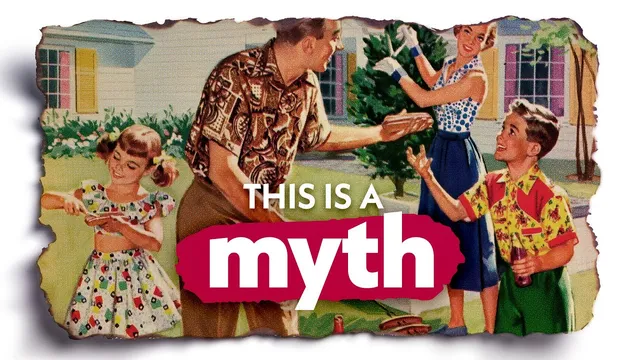
Why You're Not “Middle Class”
Based on Second Thought's video on YouTube. If you like this content, support the original creators by watching, liking and subscribing to their content.
“Middle class” is portrayed as too vague for analysis because people across a wide income range self-identify with it, including households far apart in earnings.
Briefing
“Middle class” is treated as a meaningful social category, but the transcript argues that the label has become analytically useless—and politically convenient—because it’s defined in ways that blur who actually benefits from economic policy. The result is a constant fight over vague status claims while the underlying structure of capitalism, and the incentives it creates, stays largely unchallenged.
A key tension drives the argument: people across a wide range of incomes self-identify as middle class, including households far below $20,000 a year and those near the top of the income distribution. Historical polling shows the same pattern—nearly 90% of Americans reportedly called themselves middle class in the late 1930s, with only a small share claiming “upper class.” That broad self-placement makes “middle class” feel like a universal identity rather than a precise economic category. At the same time, the transcript contrasts two competing narratives. One says the middle class is being hollowed out because the American dream—steady security from work, homeownership, and future stability—has become harder to reach without debt. The other says the middle class never disappears because statistical definitions can always carve out a “middle” using income thresholds or fractions of median income.
The transcript’s central claim is that these income-based definitions fail for structural reasons. Cost of living varies dramatically by place, the same income can come from radically different sources (wages versus investment returns), and the “middle” depends on arbitrary cutoffs. That vagueness, it argues, lets politicians claim they’re helping “the middle class” while opponents can also claim the opposite—both can point to the same numbers and still argue past each other. More importantly, the income framing encourages “working-class infighting”: people are told to fear or resent those below them, even though both groups share many interests as workers trying to get by.
Instead of three or five income bands, the transcript proposes a two-class model based on how people earn. Those who exchange mental or physical energy for a salary belong to the working class, regardless of whether the job is white-collar or blue-collar. Those who earn mainly through rents, speculation, or profit from owning companies or housing make up the capitalist (owner) class. Under this framework, the “lower class” isn’t a separate enemy class; it’s another set of workers with more precarious circumstances. The real threat, the transcript argues, comes from above: capitalists benefit when workers compete with one another because it can suppress wages and distract from the fact that ownership captures the gains.
The transcript also addresses small business owners, noting that many feel pulled toward the capitalist side because the American dream promises growth into ownership without needing to work. Yet the incentives of capitalism—especially the pressure to expand—tend to favor consolidation. Small businesses face high failure rates, and larger firms can cannibalize smaller ones, leading toward monopolies or cartels. Examples cited include Uber and Lyft raising rates after dominating their markets, alongside broader wealth consolidation among mega-billionaires.
The takeaway is a call to stop using “middle class” as a political compass. When policy debates invoke the label, the transcript urges viewers to ask a sharper question: does a proposed change strengthen workers’ bargaining power, or does it increase employers’ power? With class defined by incentives rather than income bands, politics becomes more transparent—and the shared interests of workers become harder to obscure.
Cornell Notes
“Middle class” is portrayed as a politically useful but analytically weak label because income-based definitions are vague, location-dependent, and easily manipulated. The transcript argues that people across a huge income range self-identify as middle class, making the term more like a status claim than a reliable category. It proposes replacing income bands with a two-class framework: working class earns mainly through wages (selling labor), while the capitalist/owner class earns mainly through rents, speculation, and profits from ownership. This shift matters because it clarifies who benefits from policy and exposes how “working-class infighting” can distract from wage suppression and consolidation driven by profitability incentives.
Why does self-identifying as “middle class” undermine the term’s usefulness?
What’s wrong with defining class by income thresholds or “median” math?
How does the transcript’s two-class model work?
How does “middle class” framing encourage conflict among workers?
Why does the transcript argue consolidation is a predictable outcome of capitalism?
What should people do when politicians promise help for “the middle class”?
Review Questions
- What specific weaknesses does the transcript attribute to income-based definitions of “middle class,” and how do those weaknesses enable contradictory political claims?
- How does defining class by the source of income (wages vs. rents/profit) change the way you interpret threats from “below” versus “above”?
- In the transcript’s framework, why are small business owners often conflicted about which class they belong to, and what does the argument say about the long-run incentives they face?
Key Points
- 1
“Middle class” is portrayed as too vague for analysis because people across a wide income range self-identify with it, including households far apart in earnings.
- 2
Income-based class definitions rely on arbitrary cutoffs and ignore major differences like cost of living and whether income comes from wages or investments.
- 3
Vagueness around “the middle class” lets opposing politicians argue both sides using the same statistics without resolving what’s actually happening.
- 4
A two-class model is proposed: working class earns mainly through selling labor for wages; capitalist/owner class earns mainly through rents, speculation, and profits from ownership.
- 5
The transcript argues that “middle class” rhetoric fuels working-class infighting by encouraging fear of people below rather than focus on ownership above.
- 6
Capitalist incentives are described as pushing toward consolidation—monopolies or cartels—at the expense of workers and smaller firms.
- 7
Policy should be evaluated by who gains power: workers’ bargaining power versus employers’ power, not by whether politicians invoke “the middle class.”