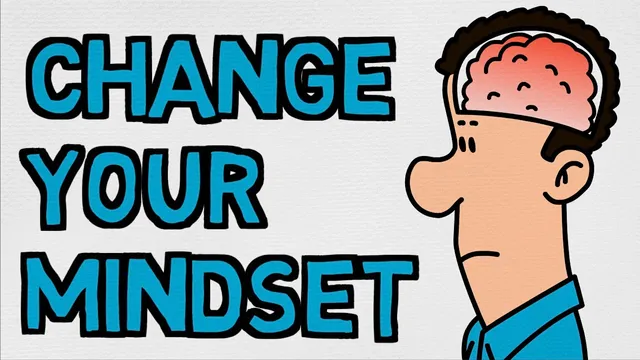
Why You're Poor, Fat & Stupid
Based on Better Than Yesterday's video on YouTube. If you like this content, support the original creators by watching, liking and subscribing to their content.
Learned helplessness can develop when repeated experiences make control feel impossible, causing people to stop trying even when escape is available.
Briefing
A single psychological lesson—learned helplessness—can trap people into believing they have no control, which then quietly shapes their identity and behavior in ways that keep them stuck. The core claim is that negative outcomes don’t just hurt in the moment; they can become a lasting story about who someone is (“I’m unlovable,” “I’m not athletic,” “I’m bad with money”). Once that story hardens, effort drops, actions that contradict the identity get resisted, and failure starts to look like proof rather than a signal—creating a downward spiral that affects money, weight, and achievement.
The mechanism is illustrated through a classic experiment from the 1960s involving three groups of dogs. One group experienced shocks they could later escape; a second group could stop shocks by pushing a panel; a third group received the same shocks but the panel didn’t work for them—so shocks appeared to start and stop randomly. Afterward, all dogs were placed in a grid with an electric area separated by a small barrier that allowed escape. The first two groups jumped the barrier quickly. The third group—having learned that their actions didn’t matter—didn’t try, even though escape was available. Researchers had to physically move them back and forth before they eventually learned that action could change outcomes. That pattern is labeled learned helplessness: when control seems absent, the brain stops attempting control.
The transcript argues that humans can fall into the same trap after repeated setbacks. Someone trying to find a partner, build an athletic body, earn more money, or improve grades may work hard, fail, and then conclude they’re simply not good enough. Over time, those conclusions become identity statements that guide behavior. If a person believes they’re bad at math, they may study less; poor grades then reinforce the belief; and the person may avoid actions that don’t fit the identity. The result is a self-sustaining loop where beliefs shape behavior and behavior confirms beliefs.
Yet not everyone responds the same way. Roughly one in three subjects in animal and human studies reportedly wasn’t impacted by learned helplessness, raising questions about why some people recover faster. The transcript uses two fictional employees, Bob and Lily, to show how interpretation changes everything after the same event: both were fired without explanation. Bob treats the setback as permanent, universal, and self-caused—so he generalizes it into “I’m a failure at everything.” Lily treats it as temporary, specific to her work situation, and influenced by external conditions—so she still believes she has value in other areas. Both feel depressed initially, but Bob’s explanatory style keeps helplessness alive longer.
From there, the prescription is practical: recognize automatic negative explanations (often learned in childhood), then challenge them with contrary evidence and reframing that doesn’t deny responsibility. Journaling is suggested to surface identity-based beliefs, followed by searching for times the belief wasn’t true and rewriting rejection or failure into more specific, changeable interpretations. The transcript also points to interventions based on fixed versus growth mindsets, including a study where teaching students that abilities can improve—along with the brain’s capacity to form new neural pathways—helped failing students reverse course, while a control group continued to fall behind.
The closing message is that past experiences don’t have to dictate the future. Setbacks can be painful, but they aren’t necessarily permanent. With consistent daily actions that reinforce a more controllable, improvable story, people can break the helplessness loop and move toward better outcomes.
Cornell Notes
Learned helplessness describes how repeated experiences of having no control can lead people to stop trying—even when escape or improvement is possible. The transcript links this to identity: beliefs like “I’m unlovable” or “I’m bad at math” reduce effort, encourage avoidance of helpful actions, and turn setbacks into “proof.” A comparison of Bob and Lily shows how explanatory style matters: permanent/universal/self-blame keeps helplessness going, while temporary/specific/external explanations support recovery. The transcript then recommends journaling to spot automatic thoughts, challenging them with contrary evidence, and reframing events in a more changeable way. Growth-mindset training is presented as an evidence-backed way to reverse failure by emphasizing effort, learning, and the brain’s ability to adapt.
What is learned helplessness, and how does the dog experiment demonstrate it?
How can a setback turn into an identity that blocks progress?
Why do Bob and Lily respond differently to the same firing?
What practical steps are suggested to break the helplessness loop?
How does growth-mindset training relate to improving outcomes after failure?
Why does consistency matter more than occasional drastic change?
Review Questions
- What features of an event (permanence, universality, internal vs external cause) most strongly predict whether someone spirals into helplessness?
- How would you challenge a belief like “I’m unlovable” using the transcript’s journaling and contrary-evidence approach?
- What’s the difference between fixed and growth mindsets, and how does that difference change how people respond to failure?
Key Points
- 1
Learned helplessness can develop when repeated experiences make control feel impossible, causing people to stop trying even when escape is available.
- 2
Identity-based beliefs (“I’m bad at math,” “I’m unlovable”) reduce effort and increase avoidance of actions that could contradict the belief.
- 3
Explanatory style after setbacks matters: permanent/universal/self-blame tends to prolong helplessness, while temporary/specific/external explanations support recovery.
- 4
Breaking the cycle starts with spotting automatic negative thoughts, often by journaling the identity statements that appear after failure.
- 5
Challenging beliefs requires contrary evidence—remembering and replicating situations where the negative identity wasn’t true.
- 6
Reframing should be more specific and changeable without denying responsibility, so setbacks don’t become lifelong labels.
- 7
Consistent small actions reinforce new beliefs and create a positive feedback loop that makes improvement more likely.