Will You Travel to Space?
Based on PBS Space Time's video on YouTube. If you like this content, support the original creators by watching, liking and subscribing to their content.
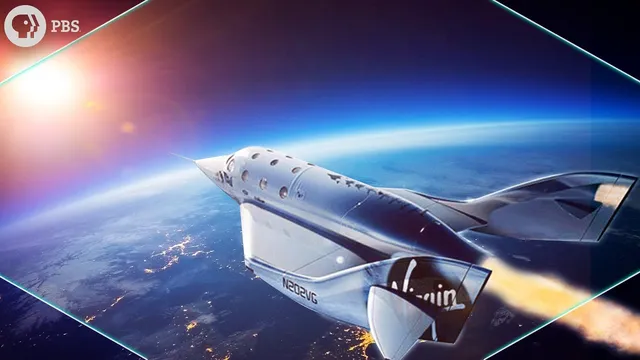
Virgin Galactic’s defining move is air-launching a spaceplane for sub-orbital tourism rather than competing primarily on reusable rocket landings.
Briefing
Virgin Galactic’s air-launched spaceplane program is reframing what “private spaceflight” can mean—shifting attention from reusable rocket landings to a business built around putting paying customers into sub-orbital space. The milestone that pulled the spotlight back came in 2014, when SpaceShipOne carried a pilot across the Kármán Line, making that pilot an astronaut, and then on February 22, 2019, when VSS Unity flew with the first passenger-astronaut on a private spacecraft. The implication is bigger than bragging rights: if sub-orbital flights can be made reliable and scalable, space access could expand from a tiny astronaut club into a mass market.
Richard Branson’s pitch ties the engineering approach to a different mission than the interplanetary-colonization narrative associated with other billionaires. Branson frames spaceflight as “earth-changing” in the Overview Effect sense—seeing Earth from space—and argues space can help protect the planet through satellite networks that could monitor issues like illegal fishing and reef health. He also emphasizes environmental impact, claiming Virgin Galactic’s air-launch approach can reduce the footprint of getting one person into space to something comparable to a London–New York–London flight. That environmental argument is paired with a commercial one: Virgin Galactic’s model starts with space tourism, aiming to lower prices through volume and fleet growth.
The operational details reinforce why air-launch is central to the plan. VSS Unity is carried to about 15,000 meters by its carrier aircraft, White Night, then drops and ignites its rocket motor for a sub-orbital hop. Its earlier flights reached roughly 83 and 90 kilometers; standard operations target around 110 kilometers, with reentry and landing after a few minutes in space. Because it never reaches orbital velocity, reentry is described as lower-risk than orbital missions like the Space Shuttle. The craft is part of the SpaceShipTwo lineage: Enterprise was lost in a 2014 crash, while SpaceShipOne previously crossed the Kármán Line in 2004.
A key technical rationale is that planes are efficient at low altitude where rockets struggle, and air can serve as both oxidant and reaction mass. Rockets must carry oxidizer and propellant, while an air-launch system can optimize for the lower-pressure environment of the drop altitude. The transcript also flags the open question: air-launch may be strong for sub-orbital travel, but whether it can beat reusable rockets for true orbit remains to be seen.
On timing and affordability, Branson points to a quarter-million-dollar ticket price and argues that, like commercial aviation, costs can fall as capacity grows. He expresses hope that within about 25 years, many young people could afford to go to space and become astronauts. Looking further out, he sketches a longer-term vision of a “Virgin Hotel” near or on the Moon, with glass pods for viewing and small moon shuttles for evening trips—an ambition that depends on thousands of customers first, funding the next steps in deeper exploration.
The broader context is a fast-heating private space race. While Virgin Galactic targets sub-orbital tourism, SpaceX’s Dragon 2 is described as moving toward true orbit, including a first crewless docking with the International Space Station, with human flights planned for July. Together, the two tracks—tourism and orbital capability—suggest the next phase of commercial space will be defined by both new vehicle architectures and a rapidly expanding customer base.
Cornell Notes
Virgin Galactic’s strategy centers on air-launched spaceplanes that carry passengers to sub-orbital space, not reusable rocket landings. Key milestones include SpaceShipOne reaching the Kármán Line in 2014 and VSS Unity flying on February 22, 2019 with the first passenger-astronaut on a private spacecraft. Branson links the approach to a mission focused on Earth benefits and reduced environmental impact, arguing air-launch can make the footprint closer to a long-haul commercial flight. The plan is also commercial: a roughly $250,000 ticket price is expected to drop as more flights and more ships are built. Branson’s longer-term vision includes Moon-adjacent hospitality, but it depends on scaling space access first.
What makes Virgin Galactic’s approach different from the reusable-rocket race?
Why does the transcript treat sub-orbital flights as potentially safer or less complex than orbital missions?
How does air-launch improve efficiency compared with launching from the ground?
What motivations does Branson give that differ from colonization-focused visions?
How does Virgin Galactic plan to make space access affordable?
What long-term destination does Branson describe, and what does it require first?
Review Questions
- How does air-launch change the fuel and oxidizer requirements compared with ground-based rocket launches?
- What milestones are cited as proof that private spacecraft can carry both pilots and passengers into space?
- What chain of reasoning connects ticket sales to lower prices and then to deeper missions like Moon tourism?
Key Points
- 1
Virgin Galactic’s defining move is air-launching a spaceplane for sub-orbital tourism rather than competing primarily on reusable rocket landings.
- 2
SpaceShipOne’s 2014 Kármán Line crossing and VSS Unity’s February 22, 2019 passenger-astronaut flight are presented as unique private-space milestones.
- 3
Branson frames spaceflight as Earth-benefiting—through the Overview Effect and satellite monitoring—rather than primarily as a path to colonizing other worlds.
- 4
Air-launch is argued to be more environmentally friendly by reducing the overall impact of getting one person into space, compared with large ground-launched rockets.
- 5
VSS Unity’s flight profile includes a carrier drop at about 15,000 meters, a rocket-powered sub-orbital climb to around 110 kilometers, then reentry and landing without reaching orbital velocity.
- 6
The business model starts with space tourism at roughly $250,000 per ticket, with price reductions expected as fleet size and flight frequency grow.
- 7
Branson’s far-future vision of Moon hospitality depends on scaling up space access first, while SpaceX’s Dragon 2 is highlighted as pushing toward crewed orbital capability.