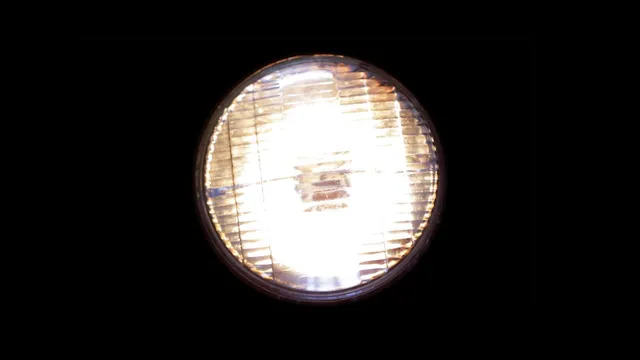
Would Headlights Work at Light Speed?
Based on Vsauce's video on YouTube. If you like this content, support the original creators by watching, liking and subscribing to their content.
Light’s propagation speed remains “C” for all observers, even when the source moves near light speed.
Briefing
A car can’t reach light speed, but imagining what happens to headlights at relativistic speeds turns into a deeper lesson: the speed of light stays the same for every observer, and that rule forces time and distance to shift in coordinated ways. The thought experiment starts with a simple question—if a ship moving near light speed turns on its headlights, do the beams shoot out normally, lag behind, or behave strangely? The answer is stranger than any “overflowing sink” metaphor: observers in different frames still measure light moving at the same universal speed, even though they disagree about how much time has passed and how far the light has traveled.
The key is that “C” is constant, not because light is powered by the motion of its source, but because measurements of time and space reorganize under motion. When a ship moves fast, the direction of travel compresses (the ship looks flattened), and clocks run slower relative to outside observers. Yet the light emitted from the headlights always propagates at light speed in every frame. That produces the familiar relativistic effect of blue shift toward the front of the moving source and red shift toward the back: the light’s energy is redistributed by the source’s motion, even though the propagation speed remains fixed.
A second, more counterintuitive step follows from how observers define a “second.” Suppose the distance light travels in one second is a “light second.” After one outside second, both beams have covered one light second. The crew on the moving ship also measures light speed as “C,” even though, from their perspective, less time has elapsed. Their “one second” finishes later in the outside frame because time dilation slows their clocks. In effect, disagreements about timing and distance “conspire” to keep the speed of light identical across frames.
Pushing the idea to the limit reveals why a light-speed car is impossible for anything with mass. At speeds approaching “C,” time for the moving object approaches a standstill. A massless vehicle would have no time to experience events at all: for it, there is no meaningful “before” and “after.” Light would never appear to move ahead of such a traveler, because the traveler would share light’s motion. In that sense, a photon-like “vehicle” wouldn’t be able to turn on headlights—there would be no time for the action to occur.
The discussion then pivots from physics to why the universe is built around this particular constant. If light could have traveled different distances in a second, why didn’t reality choose a different rule-set? The transcript points to several speculative frameworks: a multiverse where many universes exist with different properties; “baby universes” born inside black holes, with physical laws that slightly vary; and the simulation hypothesis, where simulated minds vastly outnumber real ones. It adds a small observational argument against the simulation idea: irrational numbers like π and √2 never terminate or repeat, so a programmer would need an unbounded amount of information to reproduce them exactly. Until such signs appear, the laws of physics remain what they are—anchored by the stubborn constancy of light speed.
Cornell Notes
The headlights-at-light-speed thought experiment shows why “C” must be constant for all observers: when relative motion changes how long a second lasts and how long distances appear, those shifts cancel out so every frame measures light traveling at the same speed. A moving ship’s headlights produce blue shift in the forward direction and red shift behind, reflecting energy changes from motion rather than any change in light’s propagation speed. Time dilation and length contraction become dramatic near light speed, making the same event look different across frames. Taking the limit to light speed implies a massless traveler with no meaningful “before” or “after,” so turning on headlights becomes impossible in any practical sense. The closing question asks why the universe has this rule at all, pointing to multiverse, black-hole cosmology, and simulation ideas.
Why doesn’t a moving car’s headlights “add” its speed to light, producing faster-than-light beams?
How can two observers disagree about how far light traveled if they both measure light speed as “C”?
What does length contraction look like for a near-light-speed ship?
Why is a “car made of light” not a workable way to experience turning on headlights?
What are the main speculative answers offered for why the universe has this particular light-speed rule?
Review Questions
- In the headlights thought experiment, what specific relativistic mechanism keeps the measured speed of light the same for both the moving crew and the outside observer?
- How do blue shift and red shift arise in the scenario, and why don’t they imply light is traveling faster than “C”?
- What does the transcript claim happens to the meaning of “time” for a massless object moving at “C,” and how does that affect the idea of turning on headlights?
Key Points
- 1
Light’s propagation speed remains “C” for all observers, even when the source moves near light speed.
- 2
Source motion changes the light’s energy distribution (blue shift forward, red shift backward) without changing the speed of light.
- 3
Time dilation and length contraction cause observers to disagree about elapsed time and distances while still agreeing on the measured value of light speed.
- 4
Near light speed, the ship’s shape compresses along the direction of travel relative to outside observers.
- 5
At light speed, only massless motion is possible; a massless traveler would have no meaningful “before” or “after,” undermining the idea of switching headlights on.
- 6
The transcript frames the deeper question as why physics has this invariant structure at all, then surveys multiverse, black-hole cosmology, and simulation hypotheses.
- 7
Irrational numbers like π and √2 are cited as a potential challenge to the simulation idea because they never terminate or repeat.