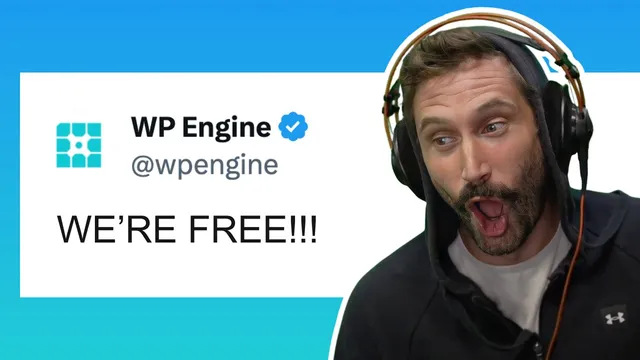
WP Engine Gets Legal Win
Based on The PrimeTime's video on YouTube. If you like this content, support the original creators by watching, liking and subscribing to their content.
WP Engine obtained a preliminary injunction requiring Automatic to stop blocking WP Engine’s access to WordPress.org resources and to stop interfering with WP Engine plugins.
Briefing
WP Engine won a preliminary injunction against Automatic (the WordPress.com parent company), forcing Automatic to stop blocking WP Engine’s access to WordPress.org resources and to stop interfering with WP Engine’s plugins. The ruling matters because WordPress.org functions like critical infrastructure for the WordPress ecosystem; when access is restricted or plugins are altered, thousands of sites can be disrupted at once—turning a technical dispute into an operational and business risk for hosting customers.
The conflict traces back to Automatic’s actions after WP Engine’s ACF plugin access was curtailed. WordPress.org reportedly shut off WP Engine’s ability to retrieve ACF from its npm-style repository, and Automatic also took control of WP Engine’s ACF plugin—releasing a version under the ACF name and slug that created confusion for users. WP Engine customers were reportedly required to check a box during login to confirm they were not affiliated with WP Engine, a step described as unusually aggressive and disruptive. Those measures reportedly persisted for months, prompting widespread backlash.
In court, WP Engine argued that Automatic’s conduct caused immediate and irreparable harm, including harm to business relationships and customer operations. Automatic and CEO Matt Mullenweg (referred to throughout as “Matt Mullen W”) had also launched a public campaign against WP Engine, accusing it of misusing the WordPress trademark and not contributing enough to the WordPress community. WP Engine’s lawsuit asked the court to prevent Mullenweg from restricting WP Engine’s access to WordPress.org resources.
Judge Araseli Martinez (spelled in the transcript as “araseli Martinez”) found WP Engine’s showing of irreparable harm persuasive enough to grant the preliminary injunction. The ruling required Automatic to restore access and functional capability for WP Engine’s customers and users, including steps such as removing the “not affiliated” checkbox and taking down a list of companies Automatic displayed on its site to track WP Engine customer departures. The transcript also notes that Automatic would need to remove the customer-tracking mechanism and reverse the login gate that singled out WP Engine.
Automatic responded with a post on X saying it was grateful for the injunction because it restores access and functionality, while also stating it looks forward to prevailing at trial. A spokesperson for Automatic, Megan Fox (as named in the transcript), told The Verge the company expects to win after “full fact discovery.”
Beyond the courtroom order, the transcript highlights a broader ecosystem concern: central points of control in software distribution create “one point of failure” risk. The discussion compares WordPress.org’s role to package repositories like npm, arguing that if a central authority can selectively block or alter access, trust erodes and the ecosystem must scramble for alternatives. While the injunction is temporary and the case is headed toward trial, the ruling is portrayed as a significant early check on Automatic’s ability to interfere with WP Engine’s plugin distribution and customer access—at least until a fuller merits review.
Cornell Notes
WP Engine secured a preliminary injunction against Automatic, requiring Automatic to stop blocking WP Engine’s access to WordPress.org resources and to stop interfering with WP Engine plugins. The court order also forces Automatic to undo customer-facing changes described as disruptive, including removing a “not affiliated with WP Engine” login checkbox and taking down a tracker listing companies leaving WP Engine. The dispute began after WordPress.org reportedly restricted WP Engine’s access to ACF distribution and then took control of the ACF plugin under the same name/slug, creating confusion for users. The injunction matters because WordPress.org acts as critical infrastructure for the WordPress ecosystem; interference can quickly translate into irreparable business and operational harm for hosting customers. The case continues toward trial, where Automatic says it expects to prevail after discovery.
What did the preliminary injunction require Automatic to change immediately?
How did the ACF plugin dispute escalate from access restrictions to broader customer disruption?
Why did the court view WP Engine’s harm as “irreparable” enough for emergency relief?
What role did public statements and alleged intent play in the dispute?
Why does the transcript repeatedly compare WordPress.org to npm-style package infrastructure?
What happens next after a preliminary injunction?
Review Questions
- What specific customer-facing changes did the preliminary injunction require Automatic to reverse?
- Why does central control over repositories increase ecosystem risk, according to the transcript’s comparisons?
- How did the dispute move from access restrictions to plugin takeover and user confusion?
Key Points
- 1
WP Engine obtained a preliminary injunction requiring Automatic to stop blocking WP Engine’s access to WordPress.org resources and to stop interfering with WP Engine plugins.
- 2
The court order required Automatic to remove a “not affiliated with WP Engine” login checkbox and to take down a tracker/list used to monitor WP Engine customer departures.
- 3
The dispute escalated after WordPress.org reportedly restricted WP Engine’s ability to access ACF distribution and then took control of the ACF plugin under the same name/slug, confusing users.
- 4
WP Engine’s lawsuit argued that Automatic’s actions caused immediate and irreparable harm, including damage to business relationships and customer operations.
- 5
Automatic responded that it expects to prevail at trial and characterized the injunction as restoring the status quo while the case continues.
- 6
The broader theme is that centralized package/repository control creates a “one point of failure” risk for the entire ecosystem if access can be selectively altered.