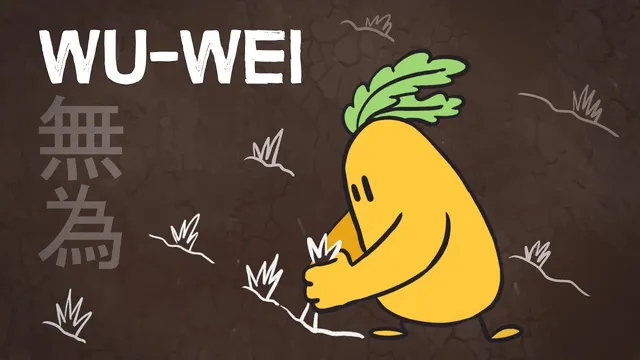
Wu-wei | The Art of Letting Things Happen
Based on Einzelgänger's video on YouTube. If you like this content, support the original creators by watching, liking and subscribing to their content.
Wu-wei is framed as “letting things happen,” where outcomes improve when effort aligns with nature’s timing instead of trying to override it.
Briefing
Wu-wei—often translated as “letting things happen”—is presented as a practical alternative to the modern habit of forcing outcomes. The core claim is that human effort works best when it aligns with nature’s rhythms rather than trying to override them; when people push against the flow, they invite avoidable trouble. The opening farmer parable makes the point bluntly: pulling crops to “make them grow faster” fails, and doubling watering drowns the plants. Success comes only when the farmer stops interfering, sows, waits, and then harvests at the right time—showing that influence is possible, but control is not.
From there, the discussion reframes wu-wei beyond passive inaction. “Non-action” and “doing nothing” are treated as incomplete translations; the more accurate emphasis is “effortless action,” meaning active engagement that still respects timing, context, and the limits of prediction. Lao Tzu’s warning about force is interpreted less as a ban on effort and more as a critique of forcing the flow of nature—pushing beyond constraints that the situation itself imposes. The text contrasts “intelligently making an effort” with busywork that ignores whether it’s the right moment. Even when action is appropriate, it must match the “game’s rhythm,” because acting out of turn turns planning into interference.
A concrete example sharpens the idea: going on a date. Overpreparation and rehearsing shift attention from the person in front of you to a desired result—being liked—creating pressure, nerves, and staged behavior. Letting go of outcomes allows spontaneity: with no time to overthink, a person can respond naturally in the moment. Zhuangzi’s perspective is used to explain why attaching to prospects distorts emotion and behavior; when the mind clings to what should happen, it blocks what is actually happening.
The deeper layer targets ego. Social conditioning, ideology, and past experience can “fill in gaps” with prejudice and fantasy, closing people off from reality. Wu-wei becomes a discipline of openness: returning to an “uncarved block,” an unburdened state that sees clearly because it isn’t dominated by intellectual baggage. Dr. Woei-Lien Chong’s interpretation is cited to emphasize emptiness as clarity—an egoless center that can observe relevant forces “undistorted” and respond “flawlessly.”
Finally, the discussion ties wu-wei to courage and receptivity in real domains like politics and diplomacy. Lao Tzu’s call to renounce knowledge and Zhuangzi’s story of Confucius and Yen Hui illustrate the same principle: using rigid expertise to lecture a tyrant is ego-driven and likely to fail, while “fasting of the heart” creates space to receive information and act in accordance with the situation as it unfolds. Wu-wei, in this telling, is not surrender—it’s responsive action grounded in clarity, timing, and humility before the world’s own motion.
Cornell Notes
Wu-wei is presented as “letting things happen” while still acting effectively. The farmer example shows that interfering with natural processes—pulling crops early or overwatering—backfires, while sowing, waiting, and harvesting at the right time works. The discussion argues that wu-wei is not passive “doing nothing,” but “effortless action”: choosing the right kind of effort at the right moment and avoiding forcing outcomes. A deeper layer links wu-wei to ego-lessness and openness, where intellectual baggage and fixed convictions distort perception. “Fasting of the heart” and the “uncarved block” are offered as practices that make people more receptive and responsive to the actual situation, enabling better outcomes in relationships and even governance.
Why does the farmer’s effort fail, and what does that imply about “control” versus “influence”?
How does wu-wei differ from “non-action” or “doing nothing”?
What does the date example reveal about forcing outcomes?
How does ego interfere with perception in this framework?
What is “fasting of the heart,” and why is it presented as more effective than lecturing with knowledge?
How does emptiness relate to responsiveness in Dr. Woei-Lien Chong’s interpretation?
Review Questions
- Give two examples from the transcript where forcing outcomes leads to worse results, and explain what “letting things happen” changes.
- Explain how “effortless action” can still involve effort. What determines when action is appropriate?
- Describe how ego distorts perception and name the practices or metaphors used to counter it (e.g., “uncarved block,” “fasting of the heart”).
Key Points
- 1
Wu-wei is framed as “letting things happen,” where outcomes improve when effort aligns with nature’s timing instead of trying to override it.
- 2
Forcing the flow of nature—pushing beyond constraints—creates unseen troubles, even when the intention is to succeed faster or more decisively.
- 3
Effortless action is not passive; it means acting responsively and at the right moment, such as sowing and harvesting rather than interfering mid-process.
- 4
Clinging to results (like wanting a date to succeed) distorts emotion and behavior, often producing staged or disingenuous actions.
- 5
Ego and fixed convictions can block clear perception by filling gaps with prejudice and fantasy, making people less able to see what’s actually happening.
- 6
Practices like “fasting of the heart” and returning to an “uncarved block” cultivate openness, enabling more accurate observation and better responses.
- 7
Wu-wei is presented as applicable beyond personal life—extending to governance, diplomacy, and other complex social contexts where receptivity matters.