You Can Do More Than You Think | The Growth Mindset
Based on Einzelgänger's video on YouTube. If you like this content, support the original creators by watching, liking and subscribing to their content.
Treat challenges as opportunities to learn rather than threats to self-worth.
Briefing
A “growth mindset” can turn setbacks into fuel—so people don’t just hope they’ll improve, they actively build the skills they used to assume were out of reach. The core message is that progress isn’t limited to innate talent; persistence, practice, and a willingness to fail can stretch performance far beyond what fixed assumptions predict. That shift matters because it changes what people chase: not proof of being “special,” but learning that makes future outcomes possible.
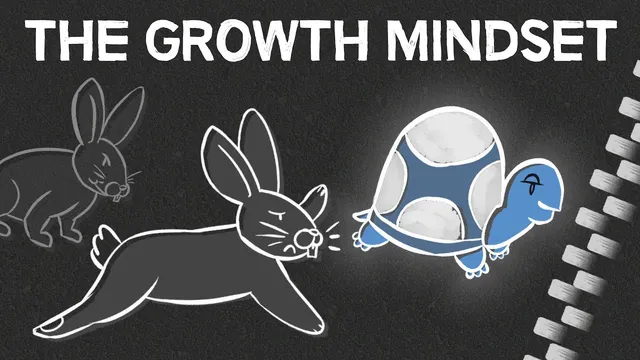
The turtle-and-rabbit race serves as the central metaphor. The rabbit wins early, then stops halfway to nap, confident that natural speed will carry him to victory. When he wakes, the turtle has already passed—because the turtle’s advantage isn’t raw ability but disciplined effort and determination. The story’s deeper point isn’t merely “don’t underestimate others.” It’s that the rabbit’s mindset treats ability as predetermined—rabbits are fast, turtles are slow—so the challenge becomes a stage for ego rather than improvement. The turtle, facing long odds, treats the race as a chance to test himself, fail if necessary, and keep going.
That mindset split is framed through psychologist Carol Dweck’s work in her book Mindset. Dweck’s distinction centers on how people respond to difficulty. Fixed-mindset learners tend to stay engaged only when tasks come easily; once challenges appear, interest drops because the goal becomes confirming intelligence or talent. They avoid feedback because criticism threatens self-worth. In Dweck’s formulation, fixed-mindset people expect ability to “show up on its own” before learning begins—if you have it, you have it; if you don’t, you don’t.
Growth-mindset learners treat challenges differently. They seek difficulty, welcome feedback, and interpret failure as a normal step toward mastery rather than evidence that they’re not good enough. Dweck’s observations extend beyond schoolwork into sports and even intelligence: intelligence is often treated as a fixed trait measured early, but evidence suggests it can be developed through training, methods, and practice. Growth-minded people focus on the process—stretching themselves—rather than protecting an image of being smart or talented.
The transcript also tackles why fixed mindsets persist. Ego plays a major role: failing feels like wasted effort, and change threatens a stable self-image. Learning new skills requires starting at “rookie” levels, which can look like incompetence to someone whose identity depends on being the best. Growth mindset counters that by making improvement the point, not the trophy.
Still, the growth mindset isn’t presented as unlimited. The transcript warns about “false positivity” and unrealistic expectations—some biological or experiential limits can’t be bypassed. A turtle can train and improve, but may not surpass a rabbit’s top speed. The practical takeaway is to replace irrational limiting beliefs with effort-based realism: aim high, learn from failure, and keep developing—while acknowledging that not every goal is biologically or contextually attainable.
Cornell Notes
The turtle-and-rabbit story illustrates a fixed-versus-growth mindset. The rabbit treats ability as predetermined and protects ego—so overconfidence and avoidance of improvement lead to failure. The turtle treats ability as developable through persistence, discipline, and effort, embracing setbacks as part of learning. Drawing on Carol Dweck’s Mindset, the transcript contrasts fixed mindsets (avoid challenges, resist feedback, lose interest when tasks get hard) with growth mindsets (seek challenge, welcome criticism, focus on process). The message matters because it reframes success as a byproduct of practice rather than proof of innate superiority—while still warning against unrealistic expectations.
How does the rabbit’s behavior reflect a fixed mindset rather than just bad luck?
What does the turtle’s approach add beyond the simple lesson “don’t underestimate others”?
What are the defining traits of a fixed mindset according to Carol Dweck’s framework in Mindset?
How does a growth mindset change what people do when tasks get hard?
Why does ego make fixed mindsets especially resistant to change?
What limitation is raised about growth mindset thinking?
Review Questions
- In the race metaphor, what specific choices show the rabbit prioritizing ego over growth?
- According to Dweck’s Mindset framework, how do fixed and growth mindsets differ in their response to feedback and difficulty?
- What does the transcript identify as the main psychological barrier to adopting a growth mindset, and how does it connect to fear of failure?
Key Points
- 1
Treat challenges as opportunities to learn rather than threats to self-worth.
- 2
Replace “ability is fixed” thinking with “skills can be developed through practice and effort.”
- 3
Welcome feedback and criticism as information that supports improvement, not as an attack on identity.
- 4
Embrace failure as a normal step toward mastery instead of proof that effort is pointless.
- 5
Focus on process and progress, not just outcomes or appearances of being “smart” or “talented.”
- 6
Be realistic about limits: effort can expand capability, but it may not overcome every biological or experiential constraint.
- 7
Recognize ego-driven avoidance—fear of looking incompetent can block learning and keep people stuck.