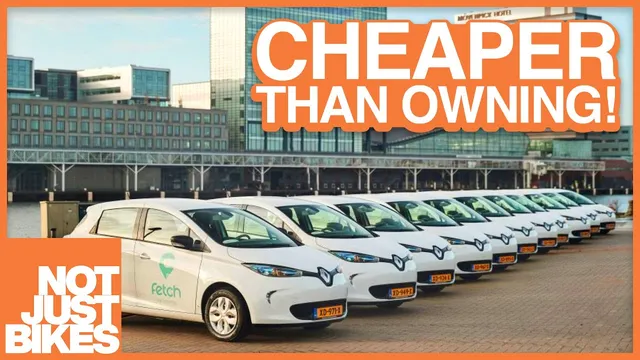
You Don't Need to Own a Car (If You Don't Drive to Work)
Based on Not Just Bikes's video on YouTube. If you like this content, support the original creators by watching, liking and subscribing to their content.
Car sharing can replace car ownership when driving needs are occasional, especially when public transit and walking cover commuting and errands.
Briefing
Owning a car can be unnecessary—and often expensive—when a city’s car-sharing system is good enough to cover the occasional trips that public transit and walking can’t. After years of relying on a simple rule—skip car ownership whenever driving to work isn’t required—this approach proved especially practical in places where car-dependent sprawl makes “walkable life” hard, such as Toronto. In those conditions, modern car sharing functions less like the painful rental-car experience and more like on-demand access: open an app, pick a vehicle, and drive within minutes.
A major misconception is that car sharing means booking a car like a vacation rental. Renting typically involves advance reservations, long lines, paperwork, and the risk of arriving to find the reserved car unavailable. Car sharing, by contrast, has evolved from early key-lockbox models and paper-based booking into app-based services where smartphones handle reservations, unlocking, and trip management. The transcript points to the long history of car sharing—from early electric experiments like Vitkar in Amsterdam (1974) to Toronto’s AutoShare launch in 2003—then emphasizes how today’s systems make the concept usable at scale.
Car-sharing programs generally fall into two models. Fixed-location systems park cars at designated spots around the city. They encourage familiarity with nearby vehicles and often provide a range of options, including small cars for solo trips and cargo vans for bulky errands—solving the “SUV can’t actually fit the stuff” problem. The tradeoff is less spontaneity: users typically book in advance and must return the car to its pickup location.
Free-floating systems, which dominate many newer app-based services, allow cars to be parked almost anywhere. That flexibility enables spontaneous trips and one-way rides, making the service feel closer to a self-driven taxi—often cheaper than taxis for short urban trips. Instead of obsessing over the cost of each ride, the transcript argues for comparing monthly totals: in one example, all-in car-share spending across trips (car, fuel/electricity, insurance, cleaning, maintenance, and even windshield wiper fluid) came to under $100, while owning a vehicle would have meant paying for insurance alone.
Reliability and hassle also shift in car sharing’s favor. When personal cars malfunctioned, the burden of towing, repairs, and lost time fell on the owner. Car-share vehicles are maintained because the company benefits from keeping them in service; when a problem occurred, a hotline arranged a replacement nearby and the user left the broken car for the company to handle, even receiving a discount. The system also reduces stress around damage, insurance claims, and break-ins.
Cost control is tied to usage patterns. Since average cars sit parked most of the time, ownership becomes a pay-for-idle expense. Car sharing only approaches ownership costs when driving needs are occasional—supporting the recurring policy: if driving to work isn’t necessary, don’t own a car. In Amsterdam, the transcript adds another layer: choosing electric-only car-sharing options to avoid exposing children to tailpipe pollution, then describing a typical trip workflow—app reservation, damage reporting, app-based unlocking, start button use, and fuel/electricity handled via cards, fobs, and charging credits. The conclusion is straightforward: in well-designed cities, car sharing can replace ownership while preserving access to a vehicle when it truly matters.
Cornell Notes
Car sharing can replace car ownership when driving is occasional, especially in cities where transit and walking handle most daily needs. The transcript contrasts painful traditional rentals with modern app-based car sharing that enables quick booking and smartphone unlocking. Two main models are described: fixed-location systems (more predictable, but less spontaneous) and free-floating systems (cars available almost anywhere, enabling one-way and spontaneous trips). The financial case centers on monthly totals rather than per-trip costs, arguing that ownership becomes expensive because cars spend most of their time parked. Reliability and reduced hassle also matter: car-share companies maintain vehicles and handle breakdowns, while users avoid insurance, repairs, and break-in stress.
Why does the transcript treat car sharing as fundamentally different from renting a car?
How do fixed-location and free-floating car-sharing models change day-to-day behavior?
What’s the core method for evaluating whether car sharing beats owning a car?
What reliability and hassle advantages are claimed for car sharing?
How does the transcript describe the practical steps of using a modern free-floating electric car share?
Review Questions
- What tradeoffs come with fixed-location car sharing compared with free-floating systems?
- Why does the transcript argue that monthly totals matter more than per-trip cost when deciding between ownership and car sharing?
- What operational steps in the app-based workflow reduce friction for electric car-share users?
Key Points
- 1
Car sharing can replace car ownership when driving needs are occasional, especially when public transit and walking cover commuting and errands.
- 2
Modern car sharing is app-based, enabling quick booking and smartphone unlocking, unlike traditional rentals that involve lines, paperwork, and agency visits.
- 3
Fixed-location car sharing offers predictability and a range of vehicle types but requires advance booking and returning to the pickup spot.
- 4
Free-floating car sharing supports spontaneity and one-way trips by allowing cars to be parked almost anywhere.
- 5
The cost argument hinges on monthly spending and the fact that cars are parked most of the time, making ownership a pay-for-idle expense.
- 6
Car-share systems reduce hassle by shifting maintenance, breakdown handling, and many insurance-related burdens to the service provider.
- 7
Electric-only car sharing can align with pollution-avoidance goals while still providing access to a vehicle through charging via fobs and credits.