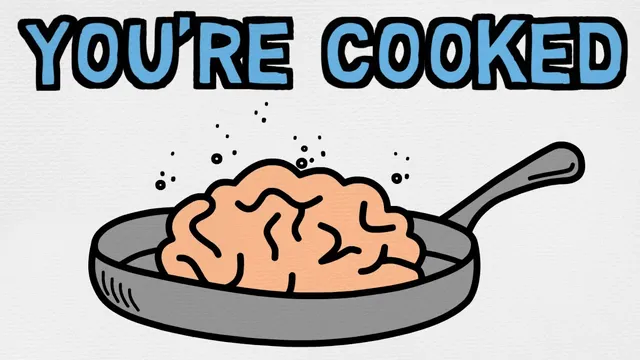
Your Brain Is FRIED - Here’s What To Do About It
Based on Better Than Yesterday's video on YouTube. If you like this content, support the original creators by watching, liking and subscribing to their content.
Unpredictable rewards (intermittent reinforcement) are a major driver of compulsive checking behavior on digital platforms.
Briefing
Modern digital platforms are engineered to hijack attention through unpredictable rewards, leaving many people mentally exhausted and unable to focus—often without realizing they’re doing it. The core claim is that this “fried brain” feeling isn’t a personal failure; it’s a predictable outcome of how human attention evolved for scarcity, while today’s feeds deliver constant stimulation.
The transcript frames the problem through everyday moments: picking up a phone for something simple turns into group chats, short videos, doomscrolling, and heated online debates—until the original purpose is forgotten. That pattern is treated as more than coincidence. Apps and platforms compete for engagement with notifications, pop-ups, breaking news, and algorithmic content, so each check becomes an invitation to chase whatever comes next. The result is not just distraction in the moment, but mental fatigue that accumulates across the day.
To explain why this works, the transcript draws on B.F. Skinner’s experiments with animals in a “Skinner Box.” When rewards arrive predictably, the behavior fades; when rewards arrive unpredictably, the behavior becomes compulsive. The same mechanism is compared to casinos, where intermittent wins keep gamblers pulling the lever. In the digital version, the “reward” is variable—sometimes a funny clip, a message from someone, a meme, or a headline—and sometimes nothing satisfying at all. Still, the anticipation of the next possible hit keeps users returning.
The transcript argues that the harm comes from scale and repetition. Even brief checks—opening an app, responding to a ping—consume mental energy. Human brains can only process so much information per day, so constant input leads to exhaustion even when activities feel passive, like watching TV on the couch. Over time, the mind loses the space needed for reflection, integration, and deeper thought, producing symptoms such as shallow thinking, burnout, reduced motivation, and difficulty focusing.
The proposed antidote starts with breaking “autopilot.” The first step is disrupting automatic behavior—small environmental changes that interrupt reflexive phone use, such as leaving the phone in another room or switching which pocket it’s kept in. Then comes curation: track which apps and sites are revisited out of habit, identify which notifications truly deserve attention, and remove the rest. The transcript recommends an “information diet”—turning off unnecessary notifications, unsubscribing from low-value content, and choosing a smaller set of high-quality sources so attention goes toward fewer, more meaningful inputs.
Importantly, the transcript rejects total abstinence. Relaxation and entertainment can be fine when consumed intentionally rather than habitually. Real rest is described as coming from less input, not more—especially through boredom. Quiet moments during walking, showering, or staring out a window are portrayed as where creativity and clarity often emerge. Finally, the transcript warns that feeds will keep getting faster and algorithms smarter, but insists awareness can create distance between urge and action. The practical goal is to reclaim attention so it’s something people choose, not something constantly taken—yielding clearer thinking, easier focus, and a less “fried” brain.
Cornell Notes
The transcript links mental exhaustion and poor focus to a reward system built into modern apps and feeds. Using Skinner’s “intermittent reinforcement” as the model, it argues that unpredictable rewards—likes, messages, viral posts—create compulsive checking loops similar to casino gambling. The damage isn’t one bad moment; it’s the daily accumulation of hundreds of small inputs that overwhelm a brain evolved for scarcity. Change begins by interrupting autopilot (e.g., moving the phone out of reach) and then curating the digital environment through an “information diet.” Intentional consumption and boredom are presented as ways to restore mental energy and make room for reflection and creativity.
How does intermittent reinforcement explain compulsive phone use?
Why does constant small checking lead to “mental fatigue” even when activities feel passive?
What does “disrupting autopilot” look like in practice?
What is an “information diet,” and how is it implemented?
Why does the transcript treat boredom as beneficial rather than something to avoid?
Review Questions
- What is intermittent reinforcement, and how is it used as an analogy for social media engagement?
- List two ways the transcript suggests interrupting automatic phone behavior, and explain why each works.
- How does the transcript distinguish intentional entertainment from passive, habit-driven consumption?
Key Points
- 1
Unpredictable rewards (intermittent reinforcement) are a major driver of compulsive checking behavior on digital platforms.
- 2
Mental fatigue comes from the cumulative effect of many small inputs, not only from long sessions or obvious “doomscrolling.”
- 3
Breaking autopilot starts with environmental friction—small changes like moving the phone out of reach or changing its location.
- 4
An information diet focuses on reducing low-value content by turning off unnecessary notifications and unsubscribing from habitual, draining sources.
- 5
Intentional consumption matters: entertainment can be restorative when chosen deliberately, but passive scrolling often increases exhaustion.
- 6
Boredom is framed as a practical tool for restoring attention and enabling creativity through stillness.
- 7
Awareness can create a gap between urge and action, helping people reclaim attention in an environment designed to profit from engagement.