Your Brain on Tech
Based on Vsauce's video on YouTube. If you like this content, support the original creators by watching, liking and subscribing to their content.
Ten days of 3D video gaming improved spatial memory performance compared with a non-gaming control condition.
Briefing
Hours of 3D video gaming appear to sharpen adults’ spatial memory and improve real-world navigation performance—without requiring brain implants or computer-only mazes. The work hinges on the hippocampus, a temporal-lobe structure tied to rapidly forming new associations and building spatial “maps,” and it tests whether training in digital space transfers to a large physical environment.
The experiment begins with a baseline battery: MRI scans focused on the hippocampus using diffusion MRI, plus memory tasks that probe both detail and spatial learning. Participants first complete an object recognition memory test, including a version that distinguishes nearly identical items—designed to stress fine-grained memory. They also perform a virtual Morris water maze, a standard rodent-style task where a hidden platform is located using spatial cues.
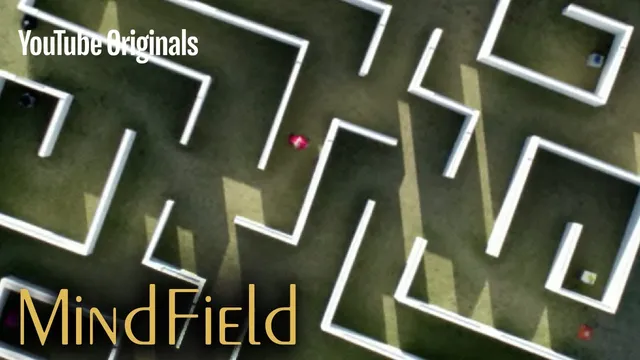
After the baseline, the study moves beyond screens. A full-scale, 3,600-square-foot maze is built for the participant to explore and learn, with walls tall enough to prevent a bird’s-eye view. Objects are embedded inside the maze, and later the participant must retrieve them from memory—first in a forward direction and then in reverse, with ordered sequences that require remembering both locations and the correct route. Performance is evaluated using speed, error counts, and whether the participant chooses optimal paths.
To isolate the effect of gaming, the study includes matched controls: look-alikes who complete the same maze and memory tests but play no video games for the next 10 days. After the gaming period, the participant repeats the object recognition task and the virtual water maze (with revised content) and then navigates a newly built, isomorphic maze designed to match difficulty while preventing simple memorization of the first layout.
Results point to measurable gains. In the object recognition task, the participant improves by 10 points—framed as roughly equivalent to decades of age-related change. In the virtual water maze, performance rises by 30%, and the participant reports using better strategies. In the physical maze, the participant gets faster from maze one to maze two while making the same number of errors; controls trend slightly worse on speed and errors when moving to the second maze. Structural brain changes are subtler: researchers don’t claim the hippocampus grows dramatically, but they do report changes in its shape across regions on both sides after the gaming period.
The broader takeaway links technology to plasticity rather than decline. Offloading memory to phones may free mental resources, but the study suggests the brain remains trainable in adulthood when it’s given challenging learning experiences. The closing reflection broadens the theme: past technologies—from writing to modern digital tools—have worried people about cognitive harm, yet they also reshaped minds in ways that enabled new forms of civilization and connection.
Cornell Notes
The study tests whether 10 days of 3D video gaming can improve adult spatial memory and real-world navigation. Baselines include diffusion MRI focused on the hippocampus plus object recognition and a virtual Morris water maze. After gaming, the participant repeats the tasks and navigates a large physical maze (including a reverse-direction retrieval phase) in a newly built, matched-difficulty layout. Compared with non-gaming controls, gaming improves object recognition scores, boosts virtual water maze performance, and increases speed in the physical maze without increasing errors. MRI analysis finds small but notable changes in hippocampal shape, supporting the idea that adult brains can still adapt when given spatial learning challenges.
Why does the hippocampus matter in this experiment’s logic?
What baseline tasks were used to measure memory before gaming?
How did the study test whether digital training transfers to the real world?
What role did controls play, and how were they matched?
What were the main performance and brain findings after 10 days?
Why does the experiment emphasize strategy and learning rather than “gaming as a shortcut”?
Review Questions
- How do the object recognition and water maze tasks differ in what they measure about memory?
- What design choices in the physical maze reduce the chance that performance is based on memorizing a single layout?
- Why would hippocampal shape changes be expected to be small even if spatial memory improves?
Key Points
- 1
Ten days of 3D video gaming improved spatial memory performance compared with a non-gaming control condition.
- 2
Baseline measurement combined diffusion MRI focused on the hippocampus with object recognition and a virtual Morris water maze.
- 3
A large physical maze (3,600 square feet) tested whether digital spatial training transfers to real navigation.
- 4
Performance scoring in the maze included speed, number of errors, and whether routes were optimal, including a reverse-navigation phase.
- 5
Controls who played no video games showed little or negative change when moving to a second maze, while the gaming condition improved speed without more errors.
- 6
MRI analysis suggested subtle hippocampal shape changes rather than a dramatic increase in size, aligning with limits on how much brain tissue can expand.