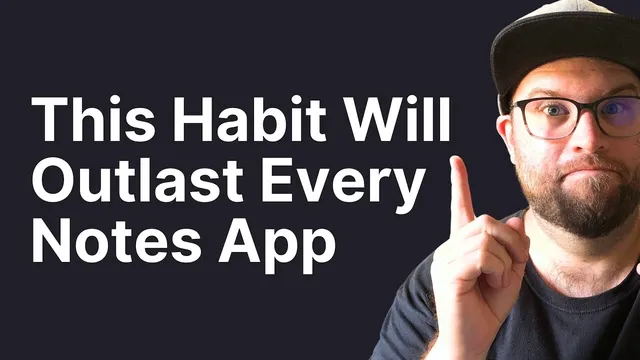
Your Notes App Is Useless—Unless You Do This
Based on Greg Wheeler's video on YouTube. If you like this content, support the original creators by watching, liking and subscribing to their content.
Progress in creativity depends on using existing mental “gifts,” not on acquiring new apps or systems.
Briefing
Progress in creativity and deep thinking doesn’t come from chasing the newest note-taking app or productivity system. It hinges on how people handle what they already have—especially the mental “gifts” they’ve been given—and whether they actually use them. A biblical parable from Luke 19:12–26 frames the stakes: a nobleman entrusts ten servants with one mina each, and when he returns, the servants who put their resources to work multiply them, while the one who buries his mina out of fear loses it. The moral is direct: valuing gifts means using them wisely, and neglect turns even existing potential into something others can take over.
That theme becomes a practical prescription for note-taking. Instead of treating more tools as the path to more ideas, the focus shifts to writing as the foundational skill that turns scattered thoughts into clarity. Writing is presented as a “domino” that, once it falls into place, makes the rest of the creative process easier: better understanding leads to better thinking, and thinking happens through writing. The goal isn’t polished output right away; it’s active engagement with ideas so they can be explored, refined, and turned into something usable.
Three concrete habits are offered to make writing happen consistently. First is a strict “atomic” practice: set a timer for two minutes and write about one single idea. If nothing else comes after two minutes, stopping is treated as a win; going longer is optional “icing on the cake.” The emphasis is on building a streak that can survive real life—two minutes a day is far more sustainable than ambitious targets like an hour.
Second, writing should start with a prompt rather than a blank page. The method is to place a quote at the top of the page and write what you think about that idea. A blank page is described as too open-ended, while a quote narrows attention and acts like a compass.
Third, people are encouraged to sketch their thoughts instead of aiming for final drafts. Early writing is framed as rough and unorganized on purpose—often a bulleted list that captures everything that comes to mind. The point is to begin at the start, not the end: a sketch creates momentum and structure for later refinement.
The takeaway is a simple challenge: before watching another productivity video or installing another tool, spend two minutes writing on one thought and follow where it leads. The argument is that existing ideas are already sufficient—what’s missing is the habit of using them.
Cornell Notes
Creativity and deep understanding depend less on new tools and more on how people use what they already have. A Luke 19 parable is used to stress that “gifts” grow through wise use, while fear and inaction lead to loss. Writing is presented as the key habit that turns scattered thoughts into clarity, making thinking and understanding possible. Three tactics make writing easier: write for two minutes on one idea, start with a quote instead of a blank page, and sketch thoughts in rough form (often as bullet points) before polishing. The practical challenge is to spend two minutes writing before seeking another app or video for inspiration.
Why does the parable in Luke 19:12–26 matter for a note-taking habit?
What is the “atomic” writing method, and why is it designed to be short?
How does starting with a quote beat starting with a blank page?
Why is sketching thoughts (instead of drafting perfectly) emphasized?
What’s the core claim about tools versus habits?
Review Questions
- What does the Luke 19 parable suggest happens when someone avoids using what they’ve been given?
- How do the three writing tactics (two-minute timer, quote prompt, and sketching) reduce friction compared with traditional “start writing” advice?
- If someone feels stuck creatively, what immediate action is recommended before seeking another tool or video?
Key Points
- 1
Progress in creativity depends on using existing mental “gifts,” not on acquiring new apps or systems.
- 2
Writing is treated as the foundational skill that converts scattered thoughts into clarity and enables deeper thinking.
- 3
A sustainable practice is two minutes of writing on one idea, with stopping at the timer counted as success.
- 4
Starting with a quote narrows focus and prevents the blank-page problem from stalling progress.
- 5
Sketching rough thoughts (often as bullet points) lowers pressure and helps ideas take shape before polishing.
- 6
Before looking for more tools or inspiration, spend two minutes writing and follow where the thought leads.