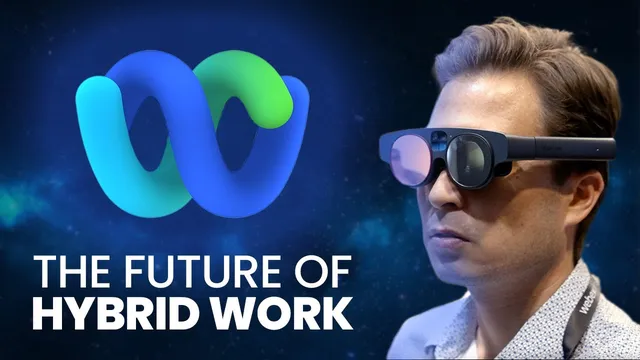
Your Workday in 2025 (better with AI)
Based on Tiago Forte's video on YouTube. If you like this content, support the original creators by watching, liking and subscribing to their content.
Cinematic meeting design—multi-angle video, shallow depth of field, and seamless switching—aims to reduce fatigue from long, static video sessions.
Briefing
By 2025, workplace collaboration is expected to feel less like a grind of long, exhausting video calls and more like “distance zero” participation—where people in offices and remote locations experience the same meeting presence, with AI smoothing over the gaps. The biggest shift comes from redesigning meetings around cinematic video techniques: higher-quality visuals, shallow depth of field, multiple camera angles, and seamless switching that tracks where the action is. Automatic face tracking then removes the need to sit perfectly still, zooming in on whoever is speaking and zooming out during group discussion so participants can move naturally while staying visible.
That visual overhaul matters because meeting fatigue is tied to how people experience video. The transcript contrasts short, 4–5 minute calls that feel manageable with longer sessions that can stretch to two and a half hours or more—formats that increasingly resemble watching a movie. The proposed fix borrows from film language rather than forcing people to endure static camera framing. The result is a new style of virtual meeting that behaves like it has an invisible “conductor” orchestrating the camera work in real time.
Audio quality is treated as the next make-or-break factor. Instead of relying solely on better networks, generative AI is positioned as a real-time repair layer for missing or garbled sound. When connectivity drops, the system listens to what was said immediately before and after and fills in the missing audio so participants rarely notice the interruption. There’s also a clear boundary on what can be reconstructed: if sustained packet loss becomes too extreme—such as losing around 30 seconds—there’s no guarantee the missing segment can be accurately recreated. The approach works best when enough surrounding context exists to predict the likely content.
Under the hood, the transcript ties this reliability to bandwidth and redundancy strategies. By encoding audio with a fraction of the bandwidth needed for top quality, the system can allocate extra redundancy frames inside packets. If one packet (or its frames) fails to arrive, later packets carry enough “stub” information to reconstruct what was lost—leading to “crystal clear” audio even during severe spikes. In tests cited, typical packet loss of 5–10% degrades quality, but the system claims it can maintain clarity through spikes of 80–90% packet loss.
Hybrid reality also introduces a different problem: people step away. The AI is described as muting video and audio automatically when someone leaves (to avoid background noise like flushing toilets, barking, or kids yelling), then detecting return and generating an AI summary of what was missed. Those summaries can include added context such as reactions, emojis, applause, and who stepped away and when. The same mechanism is framed as a way to “attend” only the parts someone needs, with AI filling in the rest at the level of detail requested.
Finally, the transcript broadens the lens beyond meetings. AI assistants are portrayed as increasingly embedded across workplace tools—answering why someone was added to a messaging channel, adjusting writing tone to be more professional, and helping teams navigate hybrid work that still lacks a universal playbook. The takeaway is pragmatic: stay open and collaborative while AI expands options for working from anywhere with more consistent presence and fewer friction points.
Cornell Notes
Collaboration in 2025 is framed around “distance zero,” where remote and in-office participants experience meetings as if they were together. Cinematic meeting design—multi-angle video, shallow depth of field, and automatic face tracking—reduces the need to sit still and combats meeting fatigue from long, static video sessions. Generative AI also targets audio failures by reconstructing missing speech in real time using context before and after interruptions, supported by redundancy strategies that can recover from heavy packet loss. When people step away, automatic muting and AI-generated catch-up summaries aim to preserve continuity, including reactions and participation details. The broader message: hybrid work remains messy, so teams should stay curious while AI assistants handle more of the coordination and follow-through.
What does “distance zero” mean in the context of hybrid meetings?
Why does the transcript emphasize “cinematic meetings” rather than just better video?
How does generative AI handle missing audio during poor connectivity?
What redundancy mechanism is described for maintaining audio clarity under packet loss?
What happens when someone steps away from a meeting?
How do AI assistants extend beyond conferencing in the workplace?
Review Questions
- Which combination of video techniques and AI behaviors is presented as the main antidote to meeting fatigue?
- What conditions make generative audio reconstruction more reliable, and what example is given where it may fail?
- How do redundancy frames and packet loss recovery work together to preserve audio quality?
Key Points
- 1
Cinematic meeting design—multi-angle video, shallow depth of field, and seamless switching—aims to reduce fatigue from long, static video sessions.
- 2
Automatic face tracking is positioned as a “hands-free” way to keep the active speaker framed, enabling more natural movement during calls.
- 3
Generative AI can reconstruct missing audio in real time by using context from what was said immediately before and after interruptions.
- 4
Audio reliability is also supported by redundancy: later packets carry stub frames that allow reconstruction when earlier packets are lost.
- 5
Automatic muting and AI-generated catch-up summaries help participants rejoin after stepping away, including reactions and participation context.
- 6
Hybrid work still lacks a universal solution, so the practical guidance is to stay open, curious, and collaborative while AI handles more coordination.
- 7
AI assistants are expanding beyond meetings into everyday workplace workflows like messaging explanations and tone rewriting.