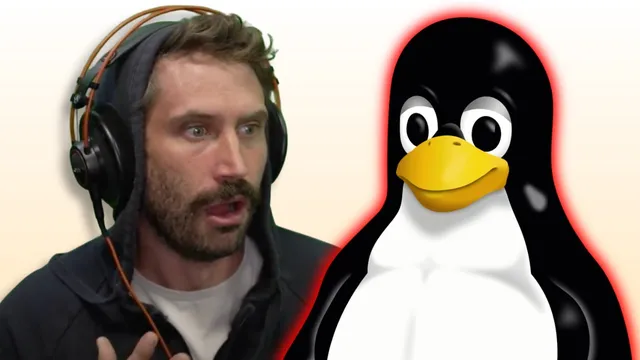
You're A Furry If You Use This Linux Distro
Based on The PrimeTime's video on YouTube. If you like this content, support the original creators by watching, liking and subscribing to their content.
Linux distro selection is treated as identity shorthand, with communities attaching stereotypes to each choice.
Briefing
Linux distribution choices get treated like identity badges—complete with jokes, stereotypes, and a running “guilty by association” checklist. The central through-line is that people often pick a distro for reasons that go beyond hardware compatibility or package availability, then use that choice to signal personality, politics, and even lifestyle preferences. The transcript leans hard into internet culture: Arch users get lumped into a mashup of ricing, niche hobbies, and contrarian energy; Debian users are framed as “old and reliable” but slightly out of date; Fedora is portrayed as the kind of distro that attracts people with a strong superiority complex; and Kali Linux is tied to security “hacker phases,” often more cosplay than actual penetration work.
Amid the banter, there’s also a more grounded set of practical opinions. Ubuntu is described as the default on-ramp for most Linux newcomers, largely because it “just works,” while Pop!_OS is treated as Ubuntu with a different flavor and a focus on stability and package variety. The Debian side gets praised for being the “rookie” Linux option—generally dependable, with updates that don’t demand constant attention—though driver issues can still force manual fixes like adjusting symlinks. A key friction point is update strategy: once users rely on the system’s upgrade flow, they may not think about it much, but getting newer tools (like Git) can push them toward adding PPAs, which raises trust concerns about “random” third-party repositories.
The transcript then pivots into a broader critique of how Linux communities behave. It mocks the tendency to turn distro selection into a personality cult—complete with “cult of personality” vibes—while also acknowledging that communities form around shared tooling and aesthetics. NixOS is singled out as especially interesting because of its workflow: switching directories and landing in different environments feels seamless, and the ecosystem’s culture is portrayed as unusually intense. There’s also a recurring theme of “engineering” as performance: people hand-roll updates, obsess over dotfiles, and treat setup choices—editors, navigation tools, even chair ergonomics—as proof of competence.
By the end, the conversation expands beyond distros into social media ecosystems and identity overlap. Rumble is compared to YouTube in the way Truth Social is compared to Twitter, and the transcript maps platforms to demographic vibes (Mastodon, X/Twitter, TikTok, Instagram, YouTube) while insisting YouTube is the all-encompassing “overlord” that contains everyone. The overall message is less about which distro is objectively best and more about how Linux choices become shorthand for who someone is, what they value, and which online subcultures they want to belong to—often with more humor and exaggeration than technical substance.
Cornell Notes
Linux distribution choices function like identity signals, with each distro attached to recognizable internet stereotypes. Ubuntu is framed as the default entry point for newcomers, while Pop!_OS and Debian are praised for stability and “it just works” behavior, tempered by occasional driver or repository headaches. The transcript highlights a real tradeoff: staying on a dependable update path versus chasing newer software via PPAs, which can feel risky. Arch and NixOS are treated as culture-heavy ecosystems—Arch tied to ricing and contrarian vibes, NixOS to an unusually distinctive environment workflow. The bigger takeaway is that community norms and aesthetics often matter as much as technical fit.
Why does Ubuntu come up as the “default” choice, and what practical benefits are mentioned?
What’s the main downside of relying on stable update behavior, according to the transcript?
How are Debian and driver issues portrayed?
What makes NixOS stand out in the transcript’s workflow discussion?
How does Kali Linux get framed beyond pure security tooling?
What’s the transcript’s broader point about distro choice and community identity?
Review Questions
- Which specific software-update tradeoff (and example tool) is used to illustrate why users might add PPAs despite trusting issues?
- What workflow feature is credited to NixOS that makes directory-based command execution feel different from other setups?
- How does the transcript connect Linux distro stereotypes to broader online identity and social media behavior?
Key Points
- 1
Linux distro selection is treated as identity shorthand, with communities attaching stereotypes to each choice.
- 2
Ubuntu is portrayed as the easiest on-ramp for newcomers because it tends to “just work.”
- 3
Pop!_OS is framed as Ubuntu-derived but with a different emphasis, while Debian is described as dependable and “old and reliable.”
- 4
Stable update behavior reduces day-to-day friction, but chasing newer tools can force users toward PPAs.
- 5
Driver problems on Debian are described as sometimes requiring manual symlink adjustments between library versions.
- 6
Arch and NixOS are portrayed as culture-heavy ecosystems—Arch tied to ricing/contrarian vibes and NixOS to distinctive environment switching.
- 7
The discussion expands from distros into social media ecosystems, arguing that platforms overlap with demographic and subculture identity.