You're not late. How to Make 2025 a Year You're Proud Of
Based on Ali Alqaraghuli, PhD's video on YouTube. If you like this content, support the original creators by watching, liking and subscribing to their content.
Treat “starting late” as acceptable and focus on building a system that fixes follow-through rather than chasing perfection.
Briefing
A practical way to make 2025 a year someone can stand behind hinges on one core shift: stop treating “starting late” as a moral failure and instead build a 12-month system that fixes the hardest bottleneck first—execution. The framework is designed for people who struggle with time blindness, procrastination, and follow-through, especially those with ADHD tendencies. It argues that awareness, beliefs, and strategy matter, but they only translate into real outcomes once a person can reliably initiate tasks, complete them, and iterate based on feedback.
The plan begins by locating where someone falls on the ADHD spectrum, because that placement determines how long the first phase should last. Higher on the spectrum often means stronger creativity and the ability to hyperfocus, but also more difficulty executing plans in the real world. That execution gap is framed as “executive dysfunction,” where the brain struggles to perform even simple actions. The model then lays out a four-layer structure for achieving any goal: awareness (knowing desires, patterns, and traumas), mindset (beliefs shaped by past emotional pain), cognition (how to strategize and make decisions), and execution (turning plans into action). The key ordering claim is blunt: execution must come first, because many people already have ideas and intelligence but can’t bring them to fruition.
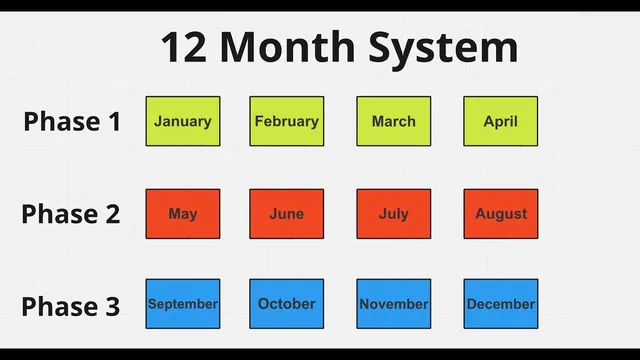
Phase one—execution—lasts at least four months and focuses on building external systems that compensate for internal time and memory issues. A central tool is a calendar used as a constant, visible “time reminder” and as a to-do list. The transcript gives a concrete example: integrating Google Tasks inside Google Calendar so tasks and time cues live together. Execution systems also include goal-setting and prioritization, environment design (a desk that invites work, tools kept ready, fewer friction points), and “external clocks” and trackers to reduce missed commitments.
During this phase, the emphasis is on action over perfection. Research and planning are treated as secondary to getting feedback from doing—try things, let them break, then fix them. Personal experience is used to reinforce the point: switching majors multiple times, then settling into electrical engineering and later systems-focused graduate work, with early attention to execution rather than perfect planning.
Once execution systems are working, the plan shifts to mindset, targeting avoidance and self-sabotage. Avoidance is described as emotionally driven reluctance to act, while self-sabotage is linked to fear of failure (including fear of success disguised as fear of not handling outcomes). Only after execution and mindset are stabilized does cognition come into play—mental models, probabilistic and systems thinking, and decision-making frameworks that help build “assembly line” style processes in business.
An alternative approach—building all systems in parallel—is mentioned but discouraged unless someone naturally thinks in systems and can manage multiple streams of learning. The overarching promise is transformation across the four layers: awareness, mindset, cognition, and execution—using external supports to make results happen in the real world, not just in intention.
Cornell Notes
The 12-month system for making 2025 “something to be proud of” prioritizes execution first, especially for people with ADHD tendencies who struggle with time blindness and follow-through. The framework is built on four layers—awareness, mindset, cognition, and execution—but execution is treated as the prerequisite that turns beliefs and strategy into real outcomes. Phase one (at least four months) focuses on building external execution systems: a constantly visible calendar (including Google Tasks inside Google Calendar), goal prioritization, and environment design that reduces friction. After execution is reliable, mindset work targets avoidance and self-sabotage, and only then does cognition work emphasize mental models and systems thinking. The ordering matters because without action, advanced thinking can’t prevent procrastination or self-sabotage.
Why does the framework start with execution rather than mindset or cognition?
How does the plan use the ADHD spectrum to set the timeline?
What specific execution systems are recommended in the first phase?
What does “mindset” work target after execution systems are in place?
Why does cognition come last in the ordering?
When is building all systems at once acceptable?
Review Questions
- What are the four layers in the framework, and which one is treated as the prerequisite for the others?
- Give two examples of external systems used to solve execution problems, and explain how they address time blindness or memory issues.
- Why does the transcript treat avoidance and self-sabotage as later-stage problems rather than the starting point?
Key Points
- 1
Treat “starting late” as acceptable and focus on building a system that fixes follow-through rather than chasing perfection.
- 2
Use the ADHD spectrum placement to decide how long execution-building should take, since time blindness and procrastination change the timeline.
- 3
Build execution systems first: keep a visible calendar as both time reminder and to-do list, with tasks integrated (e.g., Google Tasks inside Google Calendar).
- 4
Design the environment to reduce friction—organize the workspace, keep tools ready, and make starting easier than avoiding.
- 5
Prioritize action over perfect planning; use feedback from doing to iterate and repair what breaks.
- 6
After execution is reliable, address mindset problems like avoidance and self-sabotage, including fear of failure disguised as fear of success.
- 7
Only after execution and mindset are stable should cognition-heavy work (mental models and systems thinking) be used to scale decisions and processes.