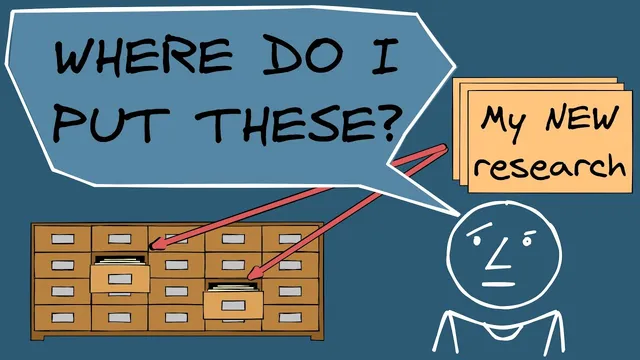
Zettelkasten with Obsidian: Researching a new topic - Where do you put your new permanent notes?
Based on Zsolt's Visual Personal Knowledge Management's video on YouTube. If you like this content, support the original creators by watching, liking and subscribing to their content.
Refine a new topic by starting with a clearly articulated research question, experimenting with multiple versions until it feels precise.
Briefing
Starting a brand-new topic inside a Zettelkasten system doesn’t have to begin from scratch. The core move is to write a well-formed research question first, then anchor every early finding—especially literature notes—directly inside that question note. That approach turns “where do these new notes go?” into a clear workflow: the question becomes the organizing container until enough permanent notes accumulate to support linking and expansion.
The process begins with articulating the research question. Because answers only help if the question is specific, the workflow includes experimenting with multiple versions of the question until it feels right. Once the question is stable, it’s placed into the system using the existing structure: the creator checks the overview notes to see where the question fits. If a suitable location exists, the question is added there; if not, it’s stored under “12 favorite problems,” which acts as a fallback entry point for new lines of inquiry.
A question note is then used as a working research hub. In the example, the question is: “What basic rules should I follow when choosing my color palette for note taking and sketching in general?” The question note contains two key areas: a section for permanent notes and a section for research. As research begins, the workflow pulls from both personal notes and external sources—books, blogs, YouTube, and podcasts. When something useful appears, it becomes a literature note, and each literature note includes a succinct summary.
Those summaries are embedded directly into the question note. The benefit is practical: when the topic is unfamiliar, the question note provides a single-page overview of competing findings, making it easier to understand the landscape before committing to permanent notes. The system also keeps sources organized in a dedicated “sources” area, with subfolders for books, blogs, YouTube, tweets, and other learning materials. Literature notes are stored in their designated source locations, while their summary snippets are reused inside the question note for fast scanning.
After enough literature notes and summaries are collected to articulate the topic, the workflow shifts to permanent notes. In the color-theory example, four permanent notes are created, including one about using the red-yellow-blue wheel instead of the RGB wheel because color theory aligns with the former. Permanent notes are placed under the question note in a horizontal hierarchy. That “flat” structure is intentionally maintained until there are roughly 10–20 permanent notes, since meaningful links between ideas require a broader understanding of the topic first.
Once that threshold is reached, the workflow becomes routine: new insights from reading, watching, or noticing something in the world get recorded in the right place automatically—inside the active question note—reducing friction when extending the Zettelkasten over time. The overall message is that new topics should start with a question container and embedded summaries, not with immediate linking or guesswork about where notes belong.
Cornell Notes
New topics in a Zettelkasten system start with a carefully written research question, placed into the existing overview structure (or into “12 favorite problems” if no fit exists). The question note acts as a hub with two sections: permanent notes and research. During early research, literature notes are created from books, blogs, YouTube, podcasts, and personal notes, and each literature note includes a succinct summary that gets embedded into the question note for quick overview. After enough summaries accumulate to understand the topic well enough to articulate ideas, permanent notes are written and stored under the question note in a flat hierarchy until there are about 10–20 notes, at which point linking becomes easier. This reduces friction and makes ongoing research feel “business as usual.”
How does the workflow decide what to write first when a topic is completely new?
Where does a new question note go if the system already has many permanent notes on related subjects?
What role does the question note play during early research?
How are sources organized while still keeping the question note readable?
When does the workflow switch from research notes to permanent notes, and how are permanent notes structured initially?
What concrete example shows the difference between early research and later permanent notes?
Review Questions
- What are the two sections inside a question note, and how does each section get used over time?
- Why does the workflow keep permanent notes in a flat hierarchy until there are about 10–20 notes?
- How does embedding literature-note summaries into the question note change the way early research is reviewed?
Key Points
- 1
Refine a new topic by starting with a clearly articulated research question, experimenting with multiple versions until it feels precise.
- 2
Place the question note into the existing overview structure when possible; otherwise, store it under “12 favorite problems.”
- 3
Use the question note as a hub with separate areas for permanent notes and research.
- 4
Create literature notes from books, blogs, YouTube, podcasts, and personal notes, and include a succinct summary in each literature note.
- 5
Embed those literature summaries directly into the question note to build a one-page overview of findings.
- 6
Write permanent notes only after enough research summaries accumulate to understand the topic well enough to articulate ideas.
- 7
Keep permanent notes in a flat, horizontal hierarchy until there are roughly 10–20 notes, then link ideas more effectively.