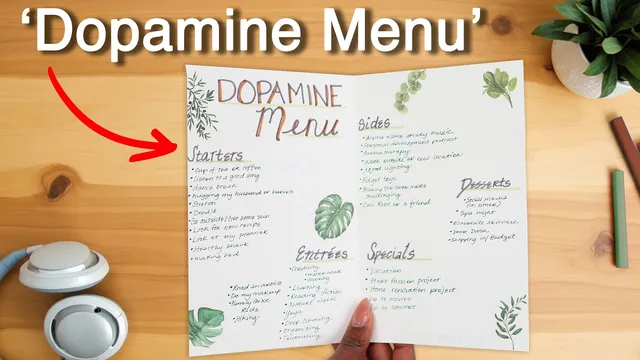
10X productivity with a DOPAMINE menu to end your doom scrolling!
Based on Dr. Tiffany Shelton's video on YouTube. If you like this content, support the original creators by watching, liking and subscribing to their content.
Doom scrolling is framed as a predictable response to low executive control during cravings, especially in HALT states (Hungry, Angry, Lonely, Tired).
Briefing
Doom scrolling isn’t just a “bad habit”—it’s often a predictable response to low executive control and overstimulation, and a “dopamine menu” is presented as a practical way to interrupt it. The core idea is that when cravings hit—especially during Hungry, Angry, Lonely, or Tired (HALT) moments—people struggle to make good choices in the moment because the prefrontal cortex has to do heavy lifting: recall better options, plan steps, and initiate action. When dopamine is low or the brain is overloaded, that decision-making becomes too hard, so the mind reaches for fast, familiar stimulation like endless feeds, impulsive shopping, or bingeing.
The dopamine menu approach, credited to Jessica McCabe and Eric Tivers, reframes the problem as a mismatch between “cheap” stimulation and the kind that truly fills someone up. Endless scrolling is likened to trying to fill a stimulation “glass” with an eyedropper: it feels rewarding briefly but doesn’t deliver enough genuine satisfaction. The fix is to pre-select activities that reliably produce more meaningful dopamine—so the next time a craving strikes, the person can choose from a prepared menu rather than trying to invent a plan while dysregulated.
To make that usable, the menu is structured like a restaurant: appetizers, entrees, sides, specials, and desserts. Appetizers are quick bursts (about 2–15 minutes) meant to stop the slide into doom scrolling—examples include warm tea and stretching. Entrees take longer (around 45 minutes) and fit longer breaks or transitions between major tasks; examples include water coloring (paired with the Japanese concept Wabi-sabi, embracing imperfection) and reading fiction for enjoyment rather than self-improvement. Sides are “alongside” activities that make dreaded tasks more tolerable—aroma therapy with scents like lavender or citrus, plus adding challenge via a timed Pomodoro-style push. Specials are high-reward activities reserved for bigger time blocks, such as vacations, starting a passion project, swimming or a jacuzzi, Pilates, shopping, or a full glam makeup session. Desserts are infrequent treats for intense pleasure and relaxation, like a spa night, elaborate skin care, timed social media, or takeout after a hard day.
The plan doesn’t end at creativity. Consistency is treated as the make-or-break factor, with a warning against building a “fancy plan” and bailing when action is required. Habit formation is then tackled using strategies from Atomic Habits: make the doom-scrolling habit invisible (delete apps, remove junk food), unattractive (write down how it makes you feel), difficult (remove payment info, disable accounts), and unsatisfying (add accountability such as a “doom scroll jar” consequence). For the menu habit itself, the guidance is to make it obvious (post copies and create a digital version), attractive (use appealing design and names), easy (prepare “ingredients” like a meditation spot or guitar already out), and satisfying (track daily use with a checklist).
Overall, the dopamine menu is positioned as a structured substitute for in-the-moment decision-making—especially during HALT and similar slumps—so people can regain control of time and attention instead of letting cravings dictate the day.
Cornell Notes
The dopamine menu framework targets doom scrolling by solving a decision-making problem that shows up during cravings. When people are Hungry, Angry, Lonely, or Tired (HALT) or otherwise dysregulated, executive functioning in the prefrontal cortex becomes harder to access, so the brain defaults to fast stimulation like endless feeds or shopping. A dopamine menu pre-lists activities that deliver more satisfying dopamine, organized into categories: appetizers (2–15 minutes), entrees (~45 minutes), sides, specials, and desserts. The method also borrows from Atomic Habits to make doom scrolling harder (delete apps, remove payment info, add accountability) and make the menu easier to use (post it, prep “ingredients,” and track daily checkoffs).
Why does doom scrolling become especially likely during certain emotional or physical states?
What’s the “stimulation mismatch” at the center of the dopamine menu idea?
How is a dopamine menu structured, and what kinds of activities fit each category?
What does “coping ahead” mean in this context?
Which Atomic Habits-style changes make doom scrolling harder and the menu habit easier?
How does the menu help when someone has already deleted apps but still reaches for the phone?
Review Questions
- How does the dopamine menu reduce the executive-function burden during HALT or other slumps?
- Match at least two activities to the correct dopamine menu categories (appetizer, entree, side, special, dessert) and explain why each fits.
- What four changes make doom scrolling less likely, and what four changes make the dopamine menu more likely to be used consistently?
Key Points
- 1
Doom scrolling is framed as a predictable response to low executive control during cravings, especially in HALT states (Hungry, Angry, Lonely, Tired).
- 2
A dopamine menu works by replacing in-the-moment decision-making with pre-selected, genuinely satisfying activities.
- 3
Organize the menu into appetizers (2–15 minutes), entrees (~45 minutes), sides, specials, and desserts so choices match time and energy levels.
- 4
Use “coping ahead”: plan trigger responses before cravings hit, then choose from the menu when boredom or distraction strikes.
- 5
Break doom scrolling using Atomic Habits tactics: make it invisible, unattractive, difficult, and unsatisfying (including accountability).
- 6
Build the menu habit by making it obvious, attractive, easy (prep “ingredients”), and satisfying (daily tracking/checkoffs).
- 7
Consistency is treated as essential; the menu only helps if it’s used repeatedly, not just created.