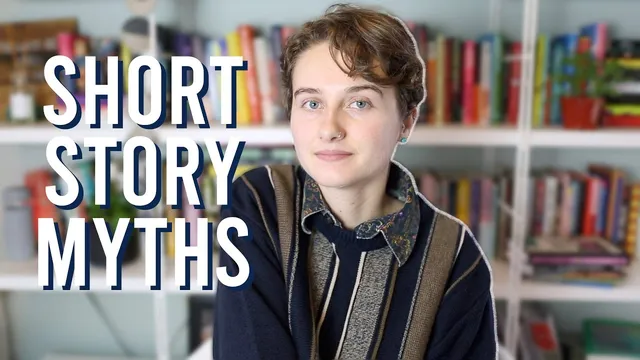
11 Misconceptions About Short Fiction
Based on ShaelinWrites's video on YouTube. If you like this content, support the original creators by watching, liking and subscribing to their content.
Short stories don’t have to deliver a moral or philosophical message; entertainment, character study, voice, atmosphere, and experimentation are valid aims.
Briefing
Short fiction doesn’t need a moral, isn’t inherently “easy,” and isn’t defined by a strict word-count ceiling—most of the common complaints about short stories trace back to how they’re taught and how people misunderstand what the form is for. The biggest misconception is that short stories exist primarily to deliver a theme or message. While themes can show up naturally, short stories can also be built for entertainment, character study, voice, atmosphere, or even pure experimentation. Treating a story like it must hand over a philosophical statement—or a condescending lesson—misses the point of what short fiction can accomplish in a focused space: revealing something about a character, often without requiring a grand takeaway about humanity.
Another cluster of myths says short stories are limiting because they’re short, or that they’re restrictive because they must be “about” one thing. The argument here flips that logic: shortness can create freedom. With only a few thousand words, writers can take risks, experiment with structure, and break rules without the long-term commitment that novels demand. The same logic is used to challenge the idea that poetry is “free” while short stories are “constrained.” In this view, the short form’s brevity is what makes it a playground.
The transcript also tackles the beginner-versus-advanced framing. Short stories can be a strong entry point because they help writers practice fundamentals and iterate quickly, but they aren’t a training wheel. Difficulty shifts rather than disappears: novels require long-range organization and balancing multiple elements, while short stories demand extreme precision—getting everything right in a small amount of space. The speaker’s personal takeaway is that what feels hardest often depends on exposure; a first short story assignment can feel tougher than a novel when someone has little practice with the form.
Audience and market myths get a reality check too. Short stories may have a smaller mainstream footprint than novels, but literary magazines and collections still draw readers, including online audiences. The barrier is often discovery: novels come with a clearer pitch on the back cover, while short stories require a leap of faith when encountered in magazines or online.
Several technical misconceptions are also corrected. There’s no universal word-count limit where a story stops being “short.” Gray areas between short story, novella, and flash fiction depend on structure and marketing rather than a hard cutoff. Short stories also aren’t limited to plot-free character pieces; they can be plot-driven, voice-driven, or atmosphere-driven. Likewise, “character-driven” doesn’t strictly require a visible character transformation—sometimes the character changes, and sometimes the story changes the reader’s understanding of the character.
Finally, the transcript addresses publishing and skill overlap. Magazines typically require first publication rights, so previously published work often can’t be submitted again, but traditionally published collections commonly include stories that appeared in magazines. And learning short fiction isn’t separate from learning novels: the overlap in craft is substantial, especially the ability to accomplish a lot efficiently in a limited space. The overall message: short stories are a distinct, demanding form with multiple purposes—and boredom isn’t inherent to the format, but to the quality of the work and the reader’s tastes.
Cornell Notes
Short fiction is often misunderstood as a vehicle for themes, morals, or beginner-level practice. The transcript argues that short stories can be entertainment, character study, voice, atmosphere, or experimentation—and that a theme or message is optional rather than mandatory. Short stories aren’t automatically easier than novels; they can be harder to execute well because they require precision in a small space, while novels demand long-range organization. Audience size is smaller mainly because short stories are harder to discover, not because they lack readers. Publishing rules are nuanced: magazines usually want first rights, but traditionally published collections frequently include stories previously published in magazines.
Why is “short stories must have a theme/message” treated as a misconception?
How does the transcript justify the idea that short stories can be “freer” than novels?
What’s the real difference in difficulty between writing novels and writing short stories?
What does “short stories can’t be plot-driven” get wrong?
How does the transcript redefine “character-driven” writing?
What are the publishing misconceptions about reprints and collections?
Review Questions
- Which goals besides “delivering a message” does the transcript say short stories can prioritize?
- What does the transcript claim about whether short stories require a character to change in a visible arc?
- How does the transcript distinguish magazine first-rights rules from the reality of traditionally published short story collections?
Key Points
- 1
Short stories don’t have to deliver a moral or philosophical message; entertainment, character study, voice, atmosphere, and experimentation are valid aims.
- 2
Shortness can increase creative freedom by reducing long-term constraints and encouraging risk-taking in structure and execution.
- 3
Difficulty between novels and short stories isn’t inherent; novels often demand long-range organization, while short stories often demand extreme precision in limited space.
- 4
Short stories can be plot-driven and character-driven in multiple ways, including stories where the reader’s understanding shifts even if the character doesn’t visibly transform.
- 5
There’s no single universal word-count cutoff that automatically turns a short story into a novella; structure and marketing create the gray areas.
- 6
Magazine submissions usually require first publication rights, but traditionally published collections frequently include stories that previously appeared in magazines.
- 7
Writing short fiction can strengthen novel writing by teaching efficiency—how to accomplish a lot in a small number of pages.