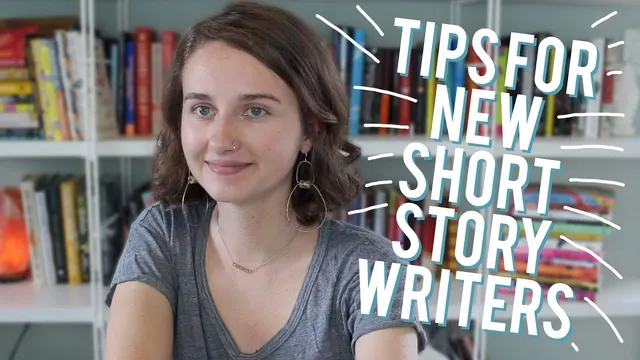
12 Tips for New Short Story Writers
Based on ShaelinWrites's video on YouTube. If you like this content, support the original creators by watching, liking and subscribing to their content.
Treat theme as an outcome of story specifics, not a substitute for concrete situation and character behavior.
Briefing
Short story success often comes down to keeping the narrative specific, focused, and immediately legible—so readers stay oriented while the character’s conflict drives momentum. Instead of chasing a “deep theme” at the expense of story, new writers are urged to build from concrete situation and character actions, then let meaning emerge through specificity rather than abstraction. A short story can absolutely be “just” an engaging journey through interesting people; the danger is treating theme as a puzzle the reader must solve instead of a byproduct of what happens on the page.
The craft advice starts with specificity as the antidote to vagueness. In limited space, every detail must do work: writers should seed characters early with a few distinctive, revealing facts—three unique details can be enough to make someone feel real. Specificity also applies to events and settings: a party becomes sharper when it’s tied to what’s being celebrated, where it’s happening, and how it’s described. The same principle governs character construction in short fiction, where development often looks different than in novels; some stories intentionally omit names or faces, but they still rely on internal depth and concrete impressions to remain vivid.
To prevent short stories from stalling, the inciting incident should land early—ideally within the first paragraph or at least the first page—because many beginners either omit it or place it too late. Scope control follows: writers coming from novel-length habits often let the cast multiply, so keeping the cast to two characters (or only a few, if confidence grows) helps maintain focus on a relationship and reduces clarity problems. Flashbacks are treated similarly: they’re not forbidden, but beginners should use them sparingly so the “fictive present” carries the story’s structural integrity.
Plot and pacing guidance centers on compression. Conflict should exist on multiple planes—internal (within the character), interpersonal (between characters), and societal (against environment or social forces)—even if some elements stay subtle. For plot, the story should orbit one singular core event, with surrounding scenes magnetized to that moment. Timeframe matters too: shorter is easier to manage, and month- or year-spanning narratives tend to create navigation and clarity issues for early writers.
Momentum also comes from action. A conversation-only scene can feel inert, so characters should be doing something specific while they talk—slaughtering chickens, clearing a greenhouse overrun by vines, or otherwise turning interpersonal tension into physical work that also heightens environmental conflict. The ending should crystallize around a choice: what decision does the character make, and what active behavior embodies it? Pairing that choice with a subtle “bird’s-eye” reflective moment near the climax can wrap the story up with emotional and thematic closure without overt explanation.
Finally, suspense should not come from withholding basic information. Short stories have little room to earn confusion, so readers need concrete clarity early. The payoff in most short fiction comes from excavation—how the character got here—rather than from surprise reveals that arrive too late to matter. The overall message is practical: make the situation clear, keep the scope tight, and let conflict and action do the heavy lifting.
Cornell Notes
The strongest advice for new short story writers is to prioritize concrete story mechanics over abstract theme. Writers should build from specific situation and character details, then use conflict on three planes (internal, interpersonal, societal) to generate tension. Keeping the inciting incident early, limiting cast size, restricting flashbacks, and compressing timeframe help prevent scope creep and clarity problems. Plot should revolve around one core event, and scenes should include active tasks rather than conversation alone. Endings land best when they hinge on a character’s choice, ideally paired with a subtle reflective moment near the climax.
Why does focusing on theme sometimes derail a short story, and what should replace it?
How can a writer create a convincing character in limited space?
What structural moves help prevent a short story from feeling slow or unfocused?
How should conflict be handled in a short story?
What’s a practical way to craft plot in short fiction?
What makes short story endings stronger?
Review Questions
- Which techniques in the advice most directly prevent scope creep in short fiction (cast size, flashbacks, inciting incident timing, timeframe)?
- How would you identify the “one singular event” that should anchor a short story you’re drafting?
- What would count as a character’s “active choice” in your current story draft, and how could you show it through action rather than reflection?
Key Points
- 1
Treat theme as an outcome of story specifics, not a substitute for concrete situation and character behavior.
- 2
Seed characters early with a small set of distinctive details (about three) to make them feel fully realized in limited space.
- 3
Place the inciting incident in the first paragraph or at least the first page to avoid slow starts.
- 4
Keep scope tight by limiting the cast (often two characters) and using flashbacks sparingly so the present tense carries momentum.
- 5
Generate tension through conflict on three planes: internal, interpersonal, and societal/environmental.
- 6
Build plot around one core event and keep the timeframe as short as possible to reduce clarity problems.
- 7
Make endings hinge on a character’s choice shown through active behavior, and avoid withholding basic information for suspense.