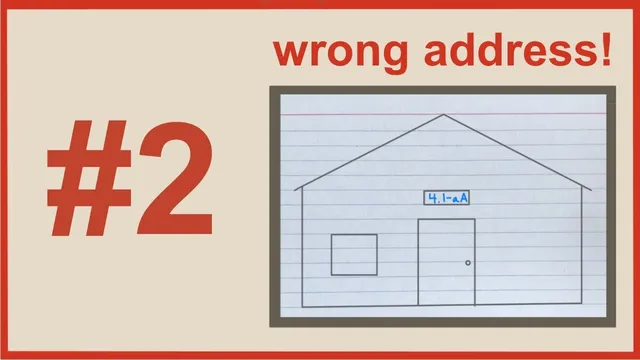
# 2 - What kind of addresses should you put on your Zettelkasten cards?
Based on FP's video on YouTube. If you like this content, support the original creators by watching, liking and subscribing to their content.
Unique alphanumeric IDs make cross-referencing precise, especially when each card is an atomic note with one main idea.
Briefing
Zettelkasten cards benefit from unique identifiers because they turn references into simple, reliable connections—especially when each card holds a single main idea (an “atomic note”). With an alphanumeric address on every card, linking one note to another becomes as straightforward as using a building’s street address: the reference can point to the exact card. In practice, this reduces ambiguity and supports building “sequence of notes” (German: *Folgezettel*), where ideas develop step-by-step through linked references. When a card contains multiple ideas, the address alone may not be enough; readers may also need instructions like “look at the second sentence,” which makes referencing less clean.
The transcript then surveys five distinct ways people assign those addresses, using examples tied to well-known Zettelkasten practitioners. First comes Niklas Luhmann’s approach, which uses alphanumeric IDs where punctuation marks in numbers function as separators. In German notation, commas in the numeric parts serve the same role as periods in U.S. formatting; for example, “4,1,2A” corresponds to “4.1.2A.” The key takeaway is that Luhmann’s system relies on both numbers and letters, with separators that create a structured hierarchy.
Second is Bob Doto’s method. Doto’s addresses also mix numbers and letters, but the structure avoids periods entirely because each number is directly followed by a letter and each letter by a number. That means an address like “4a1a” can be read without relying on punctuation separators.
Third is Scott Shepard’s interpretation of Luhmann-style numbering. Shepard emphasizes that Luhmann’s first number in an address—often even when it’s a single digit—belongs to the thousands range, which is why Shepard’s own numbered cards typically start with large numbers. Shepard also uses slashes instead of periods to separate parts of the alphanumeric address.
Fourth is Dan Alasa’s approach, described through his book *How to Make Notes and Write*. Alasa treats the left-side numbers as nested categories (like folders), while the number on the right identifies the specific card containing a single idea. He uses forward slashes to clearly distinguish between “folder cards” (category structure) and “idea cards” (actual notes).
Finally, the creator’s own system is presented as closely aligned with Alasa’s, with one practical adjustment: a hyphen replaces the slash. The reason is technical rather than conceptual—an Obsidian replica of the analog Zettelkasten can’t use slashes in file titles, so the hyphen keeps the addresses consistent across both formats.
The overall message is pragmatic: any of these five addressing styles can work, and the choice matters less than maintaining unique, consistent identifiers that make cross-referencing and incremental reasoning easier.
Cornell Notes
Unique identifiers on Zettelkasten cards make cross-referencing efficient and dependable, particularly when each card is an “atomic note” with a single main idea. Addresses act like note “street addresses,” enabling references to point directly to the correct card and supporting step-by-step thinking through linked notes (*Folgezettel*). The transcript compares five real-world addressing styles: Niklas Luhmann’s alphanumeric IDs with punctuation separators (commas in German notation), Bob Doto’s punctuation-free number-letter alternation, Scott Shepard’s thousands-leading structure and slash separators, Dan Alasa’s nested-category numbers with slashes to separate folder-like categories from idea cards, and a hyphen-based variant used to match Obsidian file-title constraints. The practical conclusion: the exact format matters less than consistency and clarity.
Why do unique IDs matter in a Zettelkasten, and when do they matter most?
How does Niklas Luhmann’s addressing scheme use numbers, letters, and punctuation?
What’s distinctive about Bob Doto’s addresses compared with Luhmann’s?
What two practical rules does Scott Shepard highlight about Luhmann-style numbering?
How does Dan Alasa’s system separate “folder” structure from “idea” cards?
Why does the transcript’s author use hyphens instead of slashes in their own addresses?
Review Questions
- Which referencing problem becomes more likely when a Zettelkasten card contains multiple ideas, even if it has a unique address?
- Compare Luhmann’s punctuation-based separators with Doto’s punctuation-free number-letter alternation. What parsing advantage does Doto’s format create?
- In Alasa’s scheme, what do the left-side numbers represent versus the right-side number, and how do slashes (or hyphens) help readers interpret that structure?
Key Points
- 1
Unique alphanumeric IDs make cross-referencing precise, especially when each card is an atomic note with one main idea.
- 2
Unique IDs support *Folgezettel* by enabling step-by-step sequences of linked notes.
- 3
Niklas Luhmann’s addresses use both numbers and letters, with punctuation separators that differ by regional numeric conventions (commas in German behaving like periods in U.S.).
- 4
Bob Doto’s addresses avoid punctuation by alternating numbers and letters, making boundaries readable without periods.
- 5
Scott Shepard highlights Luhmann-style numbering patterns such as thousands-leading first numbers and uses slashes as separators.
- 6
Dan Alasa uses nested category numbers (folder-like) plus a right-side idea-card number, separated by slashes to clarify structure.
- 7
A hyphen-based variant can preserve the same addressing logic across analog cards and Obsidian when slashes are disallowed in file titles.