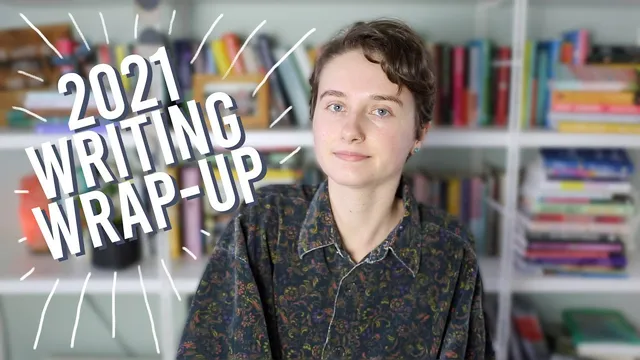
2021 Writing Wrap-Up + 2022 Writing Goals (except I have none oops)
Based on ShaelinWrites's video on YouTube. If you like this content, support the original creators by watching, liking and subscribing to their content.
Her 2021 output skewed toward editing and finishing existing work rather than starting lots of new drafting, with novels totaling 56,335 words and short fiction dropping to three completed pieces.
Briefing
2021 ended up being a year of writing “stasis” for ShaelinWrites—less about producing new work and more about editing, burnout recovery, and managing expectations. The biggest takeaway isn’t a dramatic creative breakthrough; it’s the mismatch between what felt like a productive year and what the numbers and goals later revealed. After tallying drafts, revisions, and publications, the year reads like a partial success: meaningful accomplishments happened, but several planned milestones didn’t, largely due to delays and a mid-year emotional burnout that sharply reduced output.
On the word-count front, novels totaled 56,335 words, with the majority coming from drafting and finishing a single ongoing project. The year’s active novel drafting centered on Holding a Ghost (40,065 words), while Honey Vinegar stayed in revision mode rather than reaching a completed editing finish. Additional novel work included a smaller fantasy side project, Where We Seek Dawn (8,084 words), and early development on Salt Birds, where the first two chapters were written but full drafting hadn’t officially begun.
Short fiction was notably lighter than prior years. Only three flash/short pieces were completed (14,744 words), and including one unfinished story she plans to return to brings the total to 15,590 words. Several stories did get drafted or finished across the year—such as “I Am a Wolf” (followed by “Tabula Rasa”), plus later flash pieces like “After Hours” and “Kill Sand”—but the overall pattern was fewer new drafts and more editing. She frames this as intentional, too: short stories had started to feel overwhelming because editing demanded too much time, so she wanted to ease off.
Poetry also underperformed relative to her earlier targets. A self-imposed challenge to write one poem per month produced 214 words for the year, bringing her poetry total to 72,139 words overall. She attributes the low output to time spent editing short stories and a burnout that left her unable to focus between July and October, with much of September lost to a camping trip.
Publication brought the clearest “win.” Three stories were published in 2021, with the standout being “Zug’s Wong,” which was long-listed for the CBC Prize and then published online in Plenitude. Other published work included “At Least Holding a Dear Mouse 1829” in Carousel and a story in Prism International’s Wonder-themed issue (featuring a unicorn). She also mentioned a forthcoming story in revisions, not yet officially accepted.
Goals were limited to three, and she missed two. She didn’t finish editing Honey Vinegar due to outside delays, and she finished the first draft of Holding a Ghost but didn’t complete the developmental edit—partly because she didn’t want to juggle two mentally heavy editing projects at once. She did revise her first short story collection, Pareidolia, but only began in late fall and pushed through quickly. For 2022, she’s abandoning formal yearly goals, arguing that life circumstances can swing writing plans unpredictably; instead, she’ll “roll with the punches.” Her personal priority is setting stronger boundaries on her platform, including posting less frequently to protect herself from burnout again.
Cornell Notes
ShaelinWrites’ 2021 wrap-up shows a year where editing and burnout management outweighed new drafting. She wrote 56,335 words of novels (mostly Holding a Ghost), far fewer short stories than in earlier years, and only 214 words of poetry despite a one-poem-per-month plan. Publication was a bright spot: three stories were published, including “Zug’s Wong,” long-listed for the CBC Prize. Of her three 2021 goals, she missed finishing Honey Vinegar’s editing and didn’t complete the developmental edit for Holding a Ghost, though she did revise Pareidolia and met a reading target of 50 books. For 2022, she plans to skip formal yearly writing goals and focus on boundaries to avoid another burnout cycle.
How did 2021’s word counts reflect the kind of writing work she actually did?
What were the main reasons her 2021 goals didn’t fully land?
Which publications mattered most, and why?
How did burnout and life logistics change her writing output?
Why is she dropping formal 2022 writing goals?
What boundary-setting change does she plan to make on her platform?
Review Questions
- Which specific projects drove most of her 2021 novel word count, and which goal-related project didn’t reach its intended milestone?
- How did her approach to short fiction change in 2021, and what did she say was making short stories feel overwhelming?
- What two reasons does she give for not completing developmental editing on Holding a Ghost, and how do those reasons connect to her broader decision about 2022 goals?
Key Points
- 1
Her 2021 output skewed toward editing and finishing existing work rather than starting lots of new drafting, with novels totaling 56,335 words and short fiction dropping to three completed pieces.
- 2
Holding a Ghost was the main drafting engine for the year (40,065 words), while Honey Vinegar remained in revision and didn’t finish editing in 2021.
- 3
Short fiction volume fell because editing demands made her feel overwhelmed; she intentionally wanted to write fewer short stories.
- 4
Poetry underperformed relative to her monthly plan (214 words) due to editing time and a burnout that reduced her ability to write from July through October.
- 5
She published three stories in 2021, with “Zug’s Wong” long-listed for the CBC Prize and later published in Plenitude.
- 6
Two of her three 2021 goals weren’t fully met: Honey Vinegar’s editing finished late (or not at all in 2021), and Holding a Ghost’s developmental edit didn’t happen.
- 7
For 2022, she’s skipping formal yearly writing goals and focusing on stronger platform boundaries to prevent another burnout cycle.