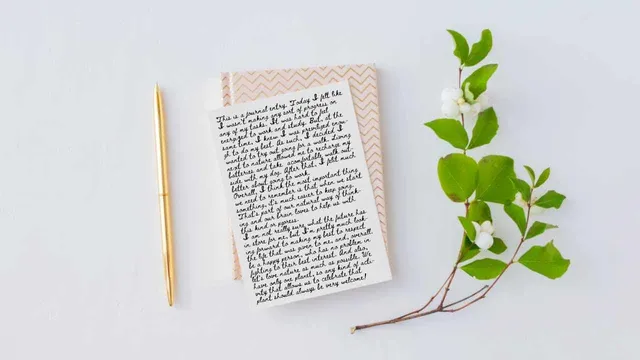
3 Things You Can Learn With Journaling
Based on Mariana Vieira's video on YouTube. If you like this content, support the original creators by watching, liking and subscribing to their content.
Daily freeform journaling for 30 days can turn scattered thoughts into clearer identity by capturing questions, doubts, and musings on paper.
Briefing
A 30-day journaling challenge—done with simple tools, no prompts, and a strict separation from day-to-day planning—helped one writer turn scattered thoughts into clearer identity, firmer opinions, and deeper self-reflection. Starting from a history of feeling overwhelmed by writing down “innermost feelings,” she committed to daily, freeform journaling for a month, aiming to avoid making it feel like a chore or a performance about handwriting or aesthetics.
The practice was deliberately low-friction: a lined Moleskine notebook and a black fineliner, with entries written whenever the moment fit—during lunch, after waking, or before bed—rather than at a fixed time. She also avoided prompts, not because prompts are useless, but because she wanted to generate her own ideas and follow what was actually on her mind. Just as important, she kept journaling distinct from planning. If she needed to remember what happened on a specific day, she relied on Google Calendar or a paper planner; the journal was reserved for reflection, not event logs.
Her month produced a wide range of entry lengths, from one or two paragraphs to pages-long reflections. Many entries began as “random thoughts” triggered by conversations or reading, but they often developed into essay-like passages. To keep topics organized, she titled each entry; when a new theme emerged, she closed the current entry and started a new one under the same timestamp.
The most notable outcome was a shift in how time felt during the pandemic. In January 2021, time seemed to slow down, and she found herself savoring small moments. Alongside that came a stronger sense of identity: more than 30 entries captured questions, doubts, and musings about the world—thoughts that previously would have been lost in conversation or forgotten. Re-reading the pages became a “ritual of self-knowledge,” making her personality feel visible on paper.
She also reported gaining sharper opinions. Her journal ranged from toxic complaining to reflections on the lack of control, and even sudden takes on pop culture like how “The Queen’s Gambit” could be better. Rather than treating those views as something to share publicly, she framed writing as a way to confirm what she thinks and give feelings direction instead of letting them drift without destination. By prioritizing values and themes through reflection, she felt she was clarifying decisions and perspectives for life.
She connected these personal results to research on expressive writing: a 2005 study links expressive writing to emotional and physical health benefits and describes it as a therapeutic self-help tool for organizing memories and reflecting on past events; a 2008 study ties journal writing to improved academic autonomy and research ability; and a 2016 nursing education study suggests journaling may affect compassion satisfaction, burnout, and compassion fatigue in registered nurses. The takeaway is practical and behavioral: free journaling—especially without prompts—can push deeper than surface-level reflection, while prompts can still be useful as a starting point if they don’t block exploration of what’s underneath.
Cornell Notes
A 30-day journaling challenge focused on freeform writing—no prompts, no fixed schedule, and no event-logging—aimed to make reflection feel natural rather than burdensome. Using a lined Moleskine notebook and a fineliner, the writer wrote daily whenever inspiration struck and kept planning separate via Google Calendar or a paper planner. Over the month, entries ranged from short paragraphs to two-page reflections, often triggered by conversations or reading. The biggest changes were a slower sense of time during the pandemic, a stronger sense of identity from repeatedly capturing doubts and questions, and more defined opinions that helped clarify values and decisions. Research cited in the transcript supports journaling’s potential benefits for mental health, autonomy, and even nurse well-being.
Why did the challenge avoid prompts and fixed writing times?
How did she keep journaling from becoming a diary or a task list?
What did her month of entries look like in practice?
What personal outcomes stood out most by the end of the month?
How did writing down opinions change how she understood herself?
What research-based benefits were cited to support journaling?
Review Questions
- What specific rules did the writer use to keep journaling reflective rather than logistical, and why did those rules matter?
- How did avoiding prompts shape the kind of insights she reported gaining about identity and opinions?
- Which cited studies (2005, 2008, 2016) correspond to which categories of benefits, and what real-world populations were mentioned?
Key Points
- 1
Daily freeform journaling for 30 days can turn scattered thoughts into clearer identity by capturing questions, doubts, and musings on paper.
- 2
Flexibility in timing (writing whenever it fits) can reduce the risk of journaling becoming a chore.
- 3
Separating journaling from planning—using calendars/planners for events—helps maintain a reflective tone instead of turning the journal into a diary.
- 4
Free journaling without prompts can produce deeper exploration than prompt-driven writing, which may otherwise keep thoughts at the surface.
- 5
Re-reading journal entries can function as a self-knowledge ritual, making recurring themes and personality traits more visible.
- 6
Writing opinions down can give feelings direction and help clarify values that inform real-life decisions.
- 7
Research cited in the transcript links expressive writing to mental and physical health benefits, academic autonomy, and potential well-being effects in nursing contexts.