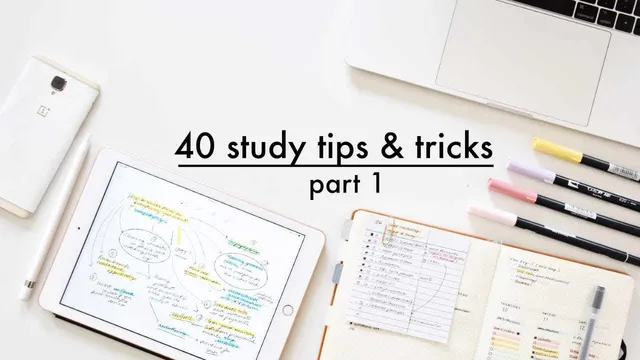
40 Study Tips, Tricks & Hacks // Part. 1 REMAKE
Based on Mariana Vieira's video on YouTube. If you like this content, support the original creators by watching, liking and subscribing to their content.
Add classes and homework to a daily planner to map the week and estimate study time realistically.
Briefing
A practical study system built around planning, organization, and active review can turn scattered schoolwork into a predictable weekly routine—without relying on last-minute cramming. The core idea is to treat studying like a managed schedule: map classes and homework into a daily planner, then structure each subject so materials are easy to find, tests are practiced in advance, and focus is protected with timed breaks.
The first layer is time and structure. Incorporating classes and homework into a daily planner gives a “glimpse” of the week and clarifies how much time each study session needs. Color-coding classes across notes, planners, textbooks, and binders adds a visual system for staying organized. When a syllabus isn’t provided, creating a personal one from assigned textbooks or materials helps set a roadmap. From that syllabus, study guides become a checklist: before each topic, draw two boxes labeled for a midterm and a final, then check them off after finishing the relevant chapter so nothing gets skipped.
The second layer is accessibility and retrieval. Students are urged to reference material throughout—moving beyond isolated reading by linking small pieces of information across notes, textbooks, and syllabi so answers can be found quickly. A “dashboard” on the first page of a notebook or binder—filled with sticky notes for questions, homework, and page numbers—acts as a command center that can be reopened at home to continue where work left off. Textbooks are also customized with tabs and flagged charts, tables, and graphics so key content stands out and can be reached instantly.
The third layer is practice and momentum. Printing tests, exercises, and exams and keeping them in the end of a binder creates realistic practice that mirrors what will appear on assessments. Before finals, a special planning sheet organizes study by chapters and/or topics, helping allocate time across subjects. Intensive work is scheduled by saving at least one afternoon or morning weekly for deep study, described as a “life-saver” when homework and projects overwhelm the normal routine. Preparation in advance—summarizing the upcoming chapter and bringing major topics to class—helps when professors revisit earlier material.
Finally, the approach emphasizes discipline and focus. Students should not leave tasks behind even during lighter classes; instead, they should create their own projects to keep learning active. Questions generated during study should be written down and sent to professors or classmates via school groups. Timed study with breaks is treated as non-negotiable: set an alarm for 1 to 1.5 hours, take a 15-minute break, and avoid studying more than two hours straight to prevent slipping focus. Other tactics include condensing tools (one planner instead of multiple), working on the least interesting task first, printing PDFs instead of studying only on a computer, and continuing to review if a session ends early. The result is a system that makes studying easier to start, harder to derail, and more likely to pay off on exams.
Cornell Notes
The study strategy centers on turning schoolwork into a structured weekly routine. It starts by mapping classes and homework into a daily planner, then using color-coding and custom syllabi to keep subjects organized. Study guides, dashboards, and textbook tabs make information easy to retrieve, while printed tests and topic planning sheets create realistic exam practice. Focus is protected with timed sessions and mandatory breaks, plus rules like tackling the least enjoyable tasks first and continuing review if time remains. The payoff is fewer missed topics, faster access to answers, and more consistent preparation for midterms and finals.
How does building a daily planner improve studying beyond just “staying organized”?
Why create a personal syllabus and study guide with midterm/final checkboxes?
What’s the purpose of a “dashboard” in a notebook or binder?
How do printing and physical organization support learning and focus?
What rules help prevent study sessions from becoming inefficient?
What should a student do if they finish studying earlier than planned?
Review Questions
- Which three systems in this plan most directly improve “finding information fast” during studying?
- How do the midterm/final checkboxes in a study guide change the way a student tracks progress?
- What break-and-timing rules are used to maintain focus, and why is the two-hour limit emphasized?
Key Points
- 1
Add classes and homework to a daily planner to map the week and estimate study time realistically.
- 2
Use consistent color-coding across notes, planners, textbooks, and binders so subjects are visually separated.
- 3
Create a syllabus when none is provided, then build topic study guides with midterm and final checkboxes to prevent missed chapters.
- 4
Make materials retrieval easier with a dashboard of sticky-note questions/page numbers and customized textbook tabs for charts, tables, and graphics.
- 5
Practice with printed tests, exercises, and exams kept in the binder so study mirrors the assessment format.
- 6
Protect focus with timed study blocks (1–1.5 hours) and mandatory 15-minute breaks, avoiding more than two hours straight.
- 7
Increase efficiency by working on the least interesting task first and continuing with review if a session ends early.