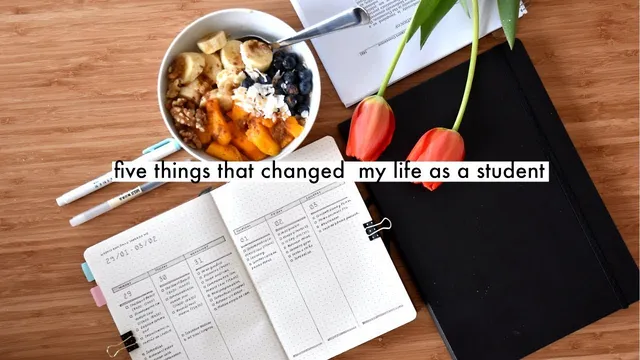
5 HABITS THAT CHANGED MY LIFE » simplifying
Based on Mariana Vieira's video on YouTube. If you like this content, support the original creators by watching, liking and subscribing to their content.
Block Sundays out of planners entirely to prevent weekend study from expanding into personal time.
Briefing
A cluster of small, deliberate lifestyle changes—protecting Sundays, shifting study work into the morning, cooking ahead, cutting Facebook, and embracing minimalism—helped this student reclaim time, reduce stress, and build steadier routines for college life.
The biggest shift came from blocking out Sundays on the calendar. During undergrad, entire weekends were consumed by studying and class preparation, leaving little true downtime and creating a stressful cycle of being stuck at home trying to meet self-set goals. After moving out and eliminating the commute, she gained hours back and decided in 2018 to treat Sundays as off-limits: not just “planned lightly,” but not even referenced in weekly planners. Her weekly spreads run Monday through Saturday, then restart—an intentional design meant to stop the urge to fill Sundays with school tasks and instead reserve the day for family, friends, and personal time without extra scheduling.
Productivity also became less of a tug-of-war with her natural rhythm. Although she identified as a morning person, she had been studying at night and compensating by waking up late. The improvement came from getting up earlier and using the morning for gym time right after breakfast, household cleanup, and focused creative or academic work such as writing essays and doing YouTube-related projects. Evenings became lighter and more restorative: journaling, reading, and meal prepping for the next day are now handled after class.
Meal prep is presented as a daily wellbeing lever rather than a one-time task. By setting aside about half an hour each day to prepare meals and snacks for tomorrow, she reports better energy levels and mood, plus a practical advantage over campus food. The payoff is framed as both immediate—healthier choices and steadier disposition—and long-term, since the habit reduces reliance on convenience options.
A major distraction reset followed with the decision to delete Facebook in December 2017. After removing the account, phone use dropped, and working on a laptop no longer triggered the same urge to scroll. That freed “hours per week” for activities that feel calming or personally developmental, while also shrinking distractions during class and at home.
Finally, she argues for a minimalist approach to studying culture. Social media can pressure students to constantly upgrade supplies, chase new note-taking systems, and restart planners monthly. Her counter is to filter what’s worth attention and invest in what actually matters—skipping the cycle of buying pens every two weeks or hoarding notebooks “just because.” Knowing what’s enough, she says, is foundational for starting a personal development routine that fits real life, not trends.
The episode also includes a sponsor message for Skillshare, an online learning community with classes in design, photo, organization, and language learning, offering a limited-time promotion for new members.
Cornell Notes
The core message is that life gets easier when routines are designed to protect time, match natural energy, and reduce distractions. Blocking Sundays from planners prevents weekend study from swallowing rest and lowers stress. Shifting the heaviest work to earlier mornings—gym, home tasks, and creative/academic work—creates calmer evenings for journaling, reading, and prep. Daily meal prep supports energy and wellbeing, while deleting Facebook cuts scrolling time and improves focus. A minimalist studying mindset rejects social-media pressure to buy supplies or constantly change systems, focusing instead on what’s truly enough.
Why does blocking out Sundays matter more than simply “studying less” on weekends?
How does moving study work to the morning change the rest of the day?
What role does daily meal prep play in her wellbeing, and what does it replace?
What changes after deleting Facebook, beyond “less social media”?
How does a minimalist studying lifestyle counter social-media pressure?
Review Questions
- Which habit most directly reduces stress in her routine, and what specific mechanism makes it work (calendar design, time allocation, or behavior change)?
- How does her morning schedule support her evening schedule, and what tasks are assigned to each time block?
- What are the two main sources of distraction she targets, and how does each one change weekly time use?
Key Points
- 1
Block Sundays out of planners entirely to prevent weekend study from expanding into personal time.
- 2
Use mornings for high-focus work and physical routines, then reserve evenings for lower-intensity reflection and prep.
- 3
Set aside about half an hour daily for meal prep to stabilize energy and reduce reliance on campus food.
- 4
Delete Facebook to cut scrolling time and remove a recurring distraction during both class and home study.
- 5
Adopt a minimalist studying approach by filtering social-media advice and avoiding constant supply upgrades or system-chasing.
- 6
Treat “what’s enough” as a guiding principle for building sustainable routines rather than chasing trends.