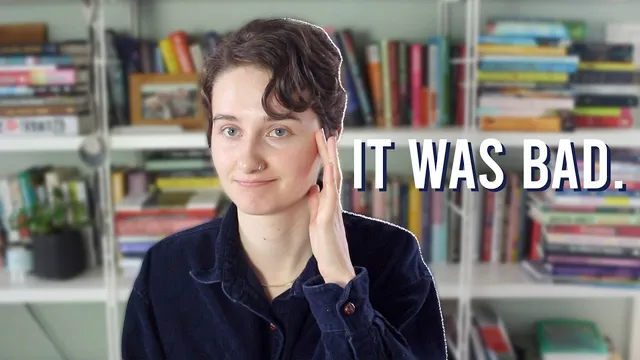
5 Things I Got (very) Wrong About Writing Craft
Based on ShaelinWrites's video on YouTube. If you like this content, support the original creators by watching, liking and subscribing to their content.
Cliffhangers should fit the genre and story purpose; forcing them can add random elements that never pay off.
Briefing
A set of early writing habits—picked up from TV, YA conventions, and online validation culture—did more to slow development than to improve craft. The biggest takeaway is that “writerly” instincts often come from what feels natural or impressive in the moment, not from what actually serves story clarity, pacing, and reader understanding.
First, the habit of ending every chapter with a cliffhanger came from episodic TV expectations. In her early middle-grade/adventure/mystery work, cliffhangers were forced and often “dumb,” adding random new elements just to create suspense—elements that rarely went anywhere. That approach made chapters feel engineered rather than earned, and it also encouraged a mismatch between technique and genre. Over time, she became anti-cliffhanger, arguing that the hook-at-the-end strategy only helps when it fits the kind of story being told.
Second, she equated writing speed with skill. Because online communities reward visible output and because readers are the proof, she chased faster drafting as a stand-in for craft. She could finish a book in one to three months as a teenager, then treated shorter timelines as progress. But the focus on volume replaced attention to scale and revision, leaving drafts that weren’t actually good. Speed could help some writers, but it isn’t a reliable indicator of quality or mastery.
Third, she believed everything that happened to a character had to stay in the manuscript. Writing in first person present tense—common in YA—made it easy to over-include because the narrative follows the character in real time. That led to bloated travel sequences, unnecessary technical explanations, and scenes that existed only because they “happened” (like an awkward hospital interaction she couldn’t realistically portray). The lesson: if a detail is a technicality or doesn’t advance the story, it can be cut without harming authenticity.
Fourth, she over-prepared dialogue. Instead of starting a conversation at the point where it becomes meaningful, she delayed the important topic through pages of setup and side talk. The result was awkward pacing and buried plot-relevant lines—an inversion of “get in late, get out early.” She later learned that scenes can work with minimal dialogue if the key line is delivered clearly, without padding.
Fifth, she struggled with clarity because she feared being “overt.” Professors repeatedly flagged confusion, and one instructor insisted that the story was close to publishable but would lose an editor immediately due to clarity problems. Her anxiety about exposition and stating emotions pushed her toward abstraction—implying goals, motivations, and feelings so deeply that readers couldn’t perceive themes or information. The fix was learning to tell more when needed: information is the basic unit of story, and well-written exposition can be unpacked on the page rather than hidden behind symbolism. The overarching message is blunt: subtlety without legibility is just obscurity, and craft improves when the writing serves the reader’s ability to follow and feel what matters.
Cornell Notes
Early writing mistakes traced back to misleading “rules” she absorbed from TV pacing, YA style, and the desire for online validation. She forced cliffhangers at the end of every chapter, treated speed as proof of skill, and overstuffed drafts by including every character experience. In dialogue, she padded conversations with long preambles, burying the plot-relevant lines. Her biggest long-term issue was clarity: fear of being overt pushed her toward abstraction, making goals, emotions, and themes hard for readers to perceive. The practical lesson across all five points is to prioritize reader comprehension and story function—cut what’s unnecessary, start dialogue where it matters, and use telling/exposition when it improves legibility.
Why did forcing cliffhangers harm her early manuscripts, even when suspense seemed like a good idea?
How did chasing writing speed stall her development?
What problem can first person present tense create during revision?
What does “get in late, get out early” mean in practice for dialogue?
Why did her fear of exposition lead to clarity problems?
Review Questions
- Which of the five misconceptions is most likely to show up in your own drafts, and what specific change would you make first?
- How would you decide whether a cliffhanger is appropriate for a chapter in your genre and audience?
- What signs suggest your dialogue is padding rather than advancing plot or character?
Key Points
- 1
Cliffhangers should fit the genre and story purpose; forcing them can add random elements that never pay off.
- 2
Drafting speed is not a reliable measure of writing skill; quality depends on craft, revision, and story scale.
- 3
Narrative POV choices can encourage over-inclusion; first person present tense can make it easy to keep unnecessary details.
- 4
Dialogue pacing improves when conversations start at the point of relevance and end before fluff takes over.
- 5
Clarity is not the enemy of subtlety; burying information too deeply can make themes and motivations invisible.
- 6
Exposition and direct emotional statements can be necessary—well-written telling helps readers follow and care.